
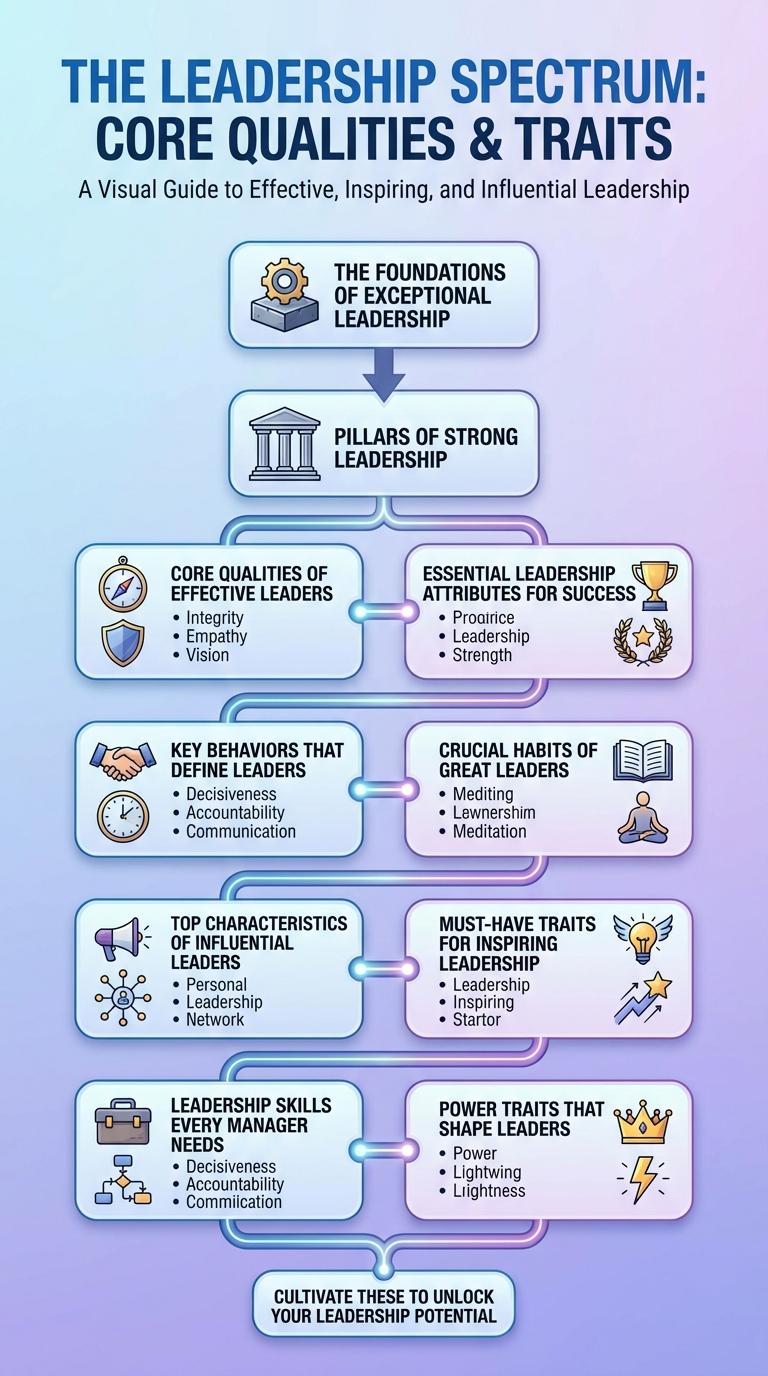
Effective leadership hinges on key traits such as communication, integrity, and adaptability that inspire and motivate teams. Visualizing these attributes through an infographic simplifies complex concepts, making them easier to understand and apply. This visual guide highlights essential leadership qualities that drive success in any organization.
Core Qualities of Effective Leaders
| Core Quality | Description |
|---|---|
| Vision | Ability to set clear, strategic goals that guide a team or organization towards long-term success. |
| Integrity | Consistent honesty and strong moral principles that build trust and respect among followers. |
| Communication | Effective exchange of ideas and information to align team efforts and foster collaboration. |
| Empathy | Understanding and genuinely caring about the feelings and perspectives of others to enhance team cohesion. |
| Decisiveness | Ability to make timely and confident decisions, especially under pressure or uncertainty. |
Must-Have Traits for Inspiring Leadership
Effective leadership hinges on a core set of traits that inspire trust, motivate teams, and drive success. Key must-have traits include clear communication, emotional intelligence, and unwavering integrity. These qualities empower leaders to create a positive environment and navigate challenges with confidence.
Top Characteristics of Influential Leaders
Influential leaders shape organizations and inspire teams through distinct qualities. Their leadership traits drive success and foster trust within their environment.
- Visionary Thinking - Influential leaders have a clear and compelling vision that guides strategic decisions and motivates others to pursue common goals.
- Effective Communication - They articulate ideas with clarity and listen actively, ensuring alignment and engagement across teams.
- Emotional Intelligence - High emotional intelligence enables leaders to manage relationships empathetically and resolve conflicts proficiently.
- Adaptability - Successful leaders adjust swiftly to changing circumstances, maintaining focus and directing resources efficiently.
- Integrity - Leading with honesty and strong ethical principles builds trust and credibility among followers and stakeholders.
Key Behaviors That Define Leaders
Effective leadership is defined by key behaviors such as clear communication, decisiveness, and empathy. Leaders inspire trust and motivate teams by demonstrating integrity and accountability consistently. Emphasizing adaptability enables leaders to navigate change and drive sustained success.
Essential Leadership Attributes for Success
Effective leadership drives success by embodying key attributes that inspire and guide teams. Recognizing essential leadership traits helps individuals develop skills critical for impactful management and decision-making.
- Emotional Intelligence - The ability to understand and manage emotions fosters strong relationships and effective team collaboration.
- Visionary Thinking - Leaders with a clear vision inspire direction and motivate others toward common goals.
- Decisiveness - Making timely, informed decisions enhances organizational efficiency and confidence.
Pillars of Strong Leadership
Effective leadership is built on foundational traits that empower individuals to inspire and guide others. Strong leaders exhibit qualities that foster trust, drive innovation, and promote collaboration.
- Integrity - Leaders demonstrate honesty and strong moral principles to earn respect and trust.
- Communication - Clear and persuasive communication ensures alignment and motivates teams towards shared goals.
- Vision - A compelling vision provides direction and inspires commitment to long-term objectives.
Mastering these pillars cultivates a resilient leadership style capable of adapting to challenges and inspiring continuous growth.
Crucial Habits of Great Leaders
Great leaders embody crucial habits that drive success and inspire teams. These traits foster trust, innovation, and resilience within organizations.
Effective communication and emotional intelligence are foundational for leadership excellence. Consistent self-improvement and adaptability ensure leaders navigate challenges effectively.
Leadership Skills Every Manager Needs
What are the essential leadership skills every manager needs to succeed? Effective communication and decision-making stand at the core of strong leadership. These skills empower managers to inspire teams and navigate complex challenges efficiently.
Which leadership traits enhance team motivation and performance? Empathy and adaptability help managers connect with employees and adjust strategies in dynamic environments. Such traits foster trust and resilience within the workforce.
How does strategic thinking benefit managerial leadership? Strategic thinking allows managers to anticipate future opportunities and risks, guiding their teams toward long-term success. It is crucial for aligning daily operations with organizational goals.
Why is emotional intelligence critical for managers? Emotional intelligence enables leaders to understand and manage their emotions and those of their team members. This skill improves conflict resolution and promotes a positive work culture.
What role does accountability play in effective leadership? Accountability ensures managers take responsibility for their decisions and actions, setting a standard for team members. This trait builds reliability and drives consistent performance.
Power Traits That Shape Leaders
Power traits are essential characteristics that define effective leadership. These traits enable leaders to influence, inspire, and drive their teams toward success.
The key power traits include confidence, decisiveness, empathy, integrity, and vision. Mastering these traits helps leaders build trust, motivate others, and navigate challenges with resilience.