
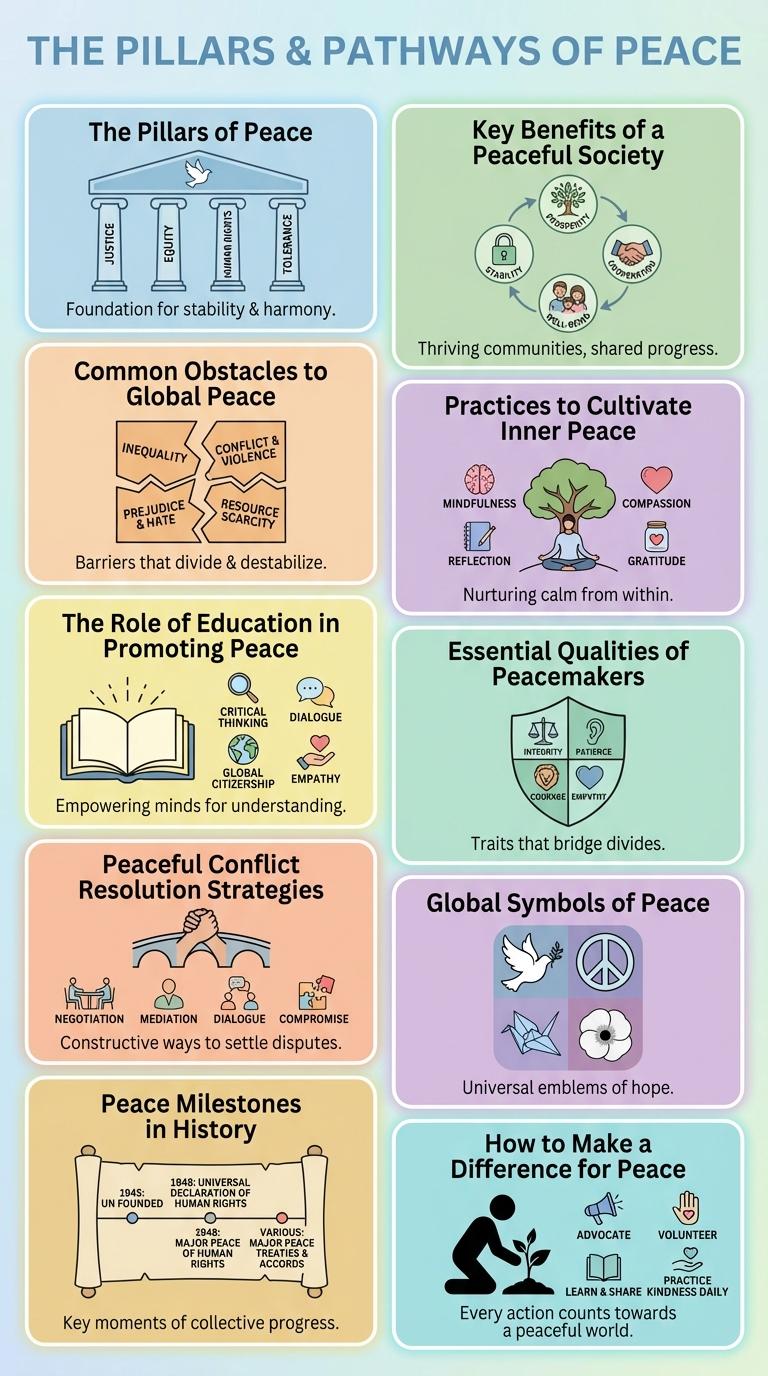
Infographics about peace visually convey the importance of harmony, conflict resolution, and global cooperation. They highlight key statistics, historical milestones, and actionable steps to promote understanding and reduce violence. Such graphics serve as powerful tools to educate and inspire individuals toward a more peaceful world.
The Pillars of Peace
Peace is built on fundamental pillars that sustain harmony and stability within societies. These pillars include justice, equality, and dialogue, each playing a crucial role in resolving conflicts and promoting understanding. Strengthening these elements fosters a culture of peace that benefits individuals and communities worldwide.
Key Benefits of a Peaceful Society
A peaceful society fosters stability, enabling economic growth and improved quality of life for all citizens. Reduced conflict leads to safer communities where individuals can thrive without fear.
Social harmony encourages collaboration, boosting innovation and cultural exchange. Mental health benefits arise as stress and violence decline, promoting overall well-being.
Common Obstacles to Global Peace
Global peace remains a critical goal hindered by numerous complex challenges. Understanding these obstacles can help focus efforts on effective solutions.
- Conflict and War - Armed conflicts cause widespread destruction and hinder diplomatic resolutions.
- Economic Inequality - Disparities in wealth foster resentment and social instability, undermining peace efforts.
- Political Corruption - Corrupt leadership erodes trust in institutions and fuels unrest.
Practices to Cultivate Inner Peace
Practices to cultivate inner peace include meditation, mindfulness, and deep breathing exercises. These techniques help reduce stress, enhance emotional stability, and foster a sense of calm. Consistent practice can lead to improved mental clarity and a balanced state of mind.
The Role of Education in Promoting Peace
How does education contribute to the promotion of peace worldwide?
Education fosters understanding, tolerance, and cooperation among diverse communities. It equips individuals with critical thinking skills essential for resolving conflicts peacefully.
What key educational elements promote a culture of peace?
Curricula that emphasize human rights, empathy, and conflict resolution techniques are crucial. These elements help students appreciate diversity and develop peaceful communication skills.
Which populations benefit most from peace-focused education?
Youth in conflict-prone areas gain resilience and non-violent problem-solving tools. Educators and communities also strengthen social cohesion through inclusive learning environments.
What role do schools play in peacebuilding?
Schools act as safe spaces where respect and dialogue are modeled daily. They create opportunities for collaborative activities that build trust among students from different backgrounds.
How can educational policies support sustainable peace?
Policies that integrate peace education into national curriculums ensure long-term commitment. Investment in teacher training and resources amplifies the impact of peace education programs.
Essential Qualities of Peacemakers
Peacemakers embody essential qualities that foster harmony and resolve conflicts effectively. Their actions promote understanding, patience, and empathy in every interaction.
Core traits include active listening and compassion, enabling them to bridge divides and build trust. Courage and humility empower peacemakers to face challenges and embrace diverse perspectives.
Peaceful Conflict Resolution Strategies
Peaceful conflict resolution strategies promote harmony and understanding by addressing disagreements without violence. These methods foster cooperation and build lasting relationships.
- Active Listening - Engaging fully with the speaker to understand their perspective and emotions accurately.
- Mediation - Involving a neutral third party to help conflicting sides reach a mutually acceptable agreement.
- Negotiation - Collaboratively discussing differences to find a solution that satisfies all parties involved.
Global Symbols of Peace
| Symbol | Meaning |
|---|---|
| Dove with Olive Branch | Represents hope, peace, and harmony worldwide |
| Peace Sign () | Popular symbol originating from nuclear disarmament movements |
| White Poppy | Symbolizes remembrance and a commitment to peace |
| Olive Branch | Ancient emblem of peace and reconciliation |
| V Sign (Two Fingers) | Represents victory and peace, widely used in protests |
Peace Milestones in History
Peace has shaped the course of human history through key events promoting harmony and understanding. These milestones mark significant progress in the pursuit of global stability and cooperation.
- The Treaty of Westphalia (1648) - Ended the Thirty Years' War, establishing the foundation of modern state sovereignty and diplomatic relations.
- The Congress of Vienna (1815) - Reshaped Europe after the Napoleonic Wars, promoting a balance of power to prevent future large-scale conflicts.
- The League of Nations (1920) - The first international organization aimed at maintaining world peace and preventing war through collective security.
These peace milestones demonstrate humanity's ongoing commitment to resolving conflicts and fostering international cooperation.