
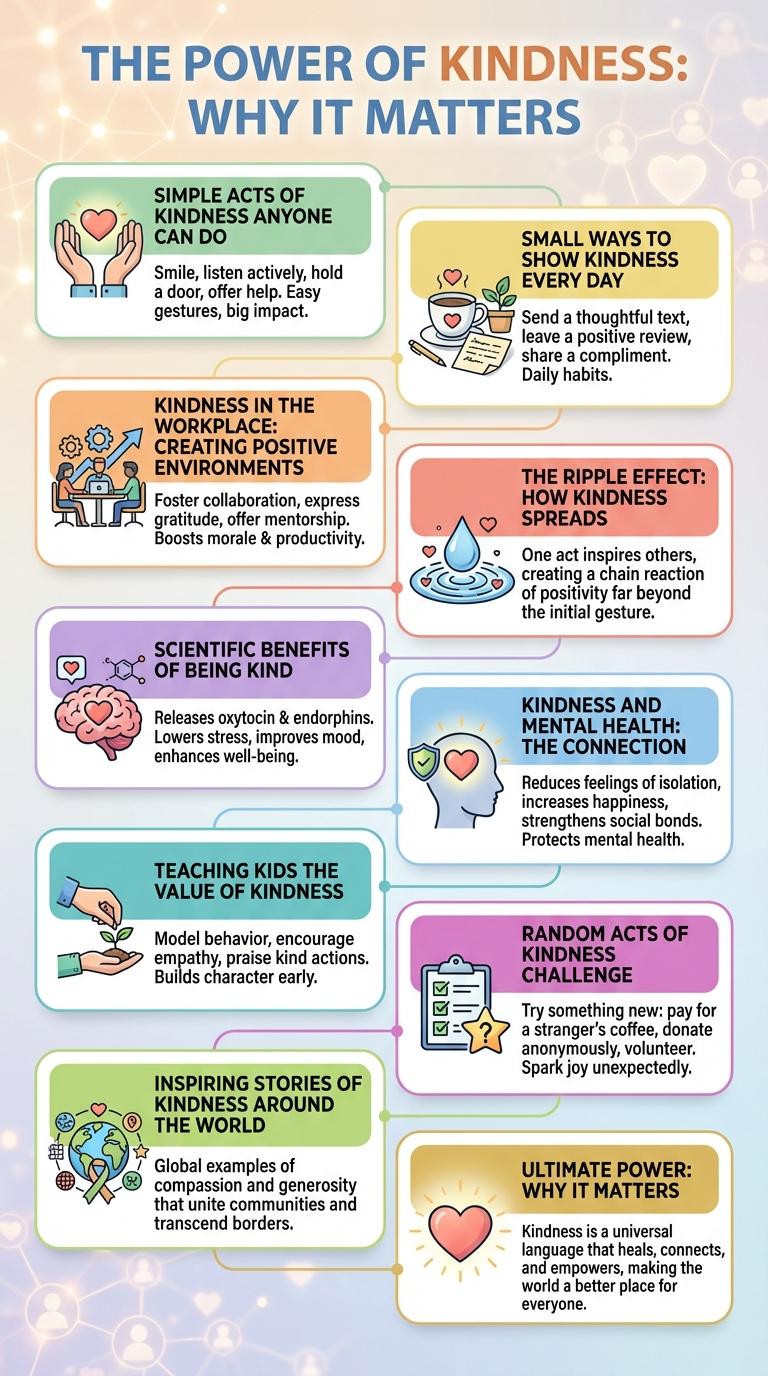
Kindness enhances emotional well-being by fostering positive connections and reducing stress levels. Acts of kindness improve social bonds and create a more supportive community environment. Practicing kindness regularly contributes to both mental and physical health benefits.
The Power of Kindness: Why It Matters
Kindness holds extraordinary power in transforming lives and communities. Acts of kindness release oxytocin, reducing stress and promoting happiness for both giver and receiver. Embracing kindness fosters empathy, strengthens social bonds, and cultivates a positive environment that benefits mental and physical health.
Simple Acts of Kindness Anyone Can Do
| Simple Act | Impact |
|---|---|
| Smile at a stranger | Boosts mood and spreads positivity |
| Hold the door open | Creates a moment of kindness and respect |
| Compliment someone | Increases confidence and happiness |
| Help carry groceries | Reduces stress and builds community |
| Send a thank-you note | Expresses gratitude and strengthens relationships |
Kindness in the Workplace: Creating Positive Environments
How does kindness impact the workplace environment? Kindness fosters collaboration and reduces stress among employees. Positive interactions increase job satisfaction and overall productivity.
What are key benefits of kindness at work? Kindness improves communication and builds trust within teams. It enhances employee morale and lowers turnover rates.
Which behaviors demonstrate kindness in the workplace? Active listening, offering help, and expressing gratitude are common examples. Recognizing coworkers' achievements promotes a supportive culture.
How can organizations encourage kindness? Implementing kindness training and recognizing kind acts supports positive behavior. Leadership modeling kindness sets a strong example for all employees.
What is the relationship between kindness and workplace performance? Kind workplaces experience higher creativity and problem-solving abilities. Kindness leads to stronger employee engagement and business success.
The Ripple Effect: How Kindness Spreads
Kindness creates a ripple effect that extends far beyond the initial act. One small gesture can inspire others to act generously, multiplying positivity across communities.
Research shows that acts of kindness improve mental health, foster social connections, and reduce stress. These benefits encourage a cycle of giving, spreading kindness exponentially.
Scientific Benefits of Being Kind
Kindness triggers positive changes in the brain that improve emotional well-being. Scientific studies confirm that acts of kindness benefit both mental and physical health.
- Improved Heart Health - Performing kind acts releases oxytocin, which helps lower blood pressure and protect the heart.
- Enhanced Mood - Kindness increases serotonin and dopamine, promoting feelings of happiness and reducing depression symptoms.
- Reduced Stress - Engaging in altruistic behaviors lowers cortisol levels, decreasing stress and improving overall resilience.
Teaching Kids the Value of Kindness
Teaching kids the value of kindness fosters empathy and strengthens social bonds. Encouraging compassionate behavior early leads to lifelong positive relationships and emotional intelligence.
Kindness helps children develop a supportive community and improves their mental well-being.
- Modeling Kindness - Children learn best through example, so demonstrating kind actions encourages them to act similarly.
- Positive Reinforcement - Praising kind behavior motivates children to continue practicing empathy and generosity.
- Storytelling and Role-Playing - Using stories and role-play activities teaches kids the impact of kindness in relatable ways.
Random Acts of Kindness Challenge
Engage in the Random Acts of Kindness Challenge to spread positivity in your community. Simple actions like complimenting a stranger or helping a neighbor create ripple effects of goodwill. Track your daily kindness deeds to inspire others and promote a culture of compassion.
Kindness and Mental Health: The Connection
Kindness positively impacts mental health by reducing stress and enhancing emotional well-being. Acts of kindness trigger the release of serotonin and oxytocin, which promote feelings of happiness and connection.
Practicing kindness can lower symptoms of anxiety and depression while boosting self-esteem. Creating a habit of kindness leads to stronger social bonds and a more resilient mindset.
Small Ways to Show Kindness Every Day
Kindness can transform everyday moments into meaningful connections. Simple actions have the power to brighten someone's day and foster a caring community.
- Smile at Strangers - A genuine smile can lift spirits and create a positive atmosphere around you.
- Offer Compliments - Complimenting someone's effort or appearance encourages confidence and goodwill.
- Hold the Door - Small courtesies like holding the door show respect and consideration for others.
- Listen Actively - Giving full attention when someone speaks demonstrates empathy and support.
- Share Resources - Donating time, skills, or items can significantly impact someone in need.
Consistently practicing these small gestures contributes to a kinder, more connected world.