
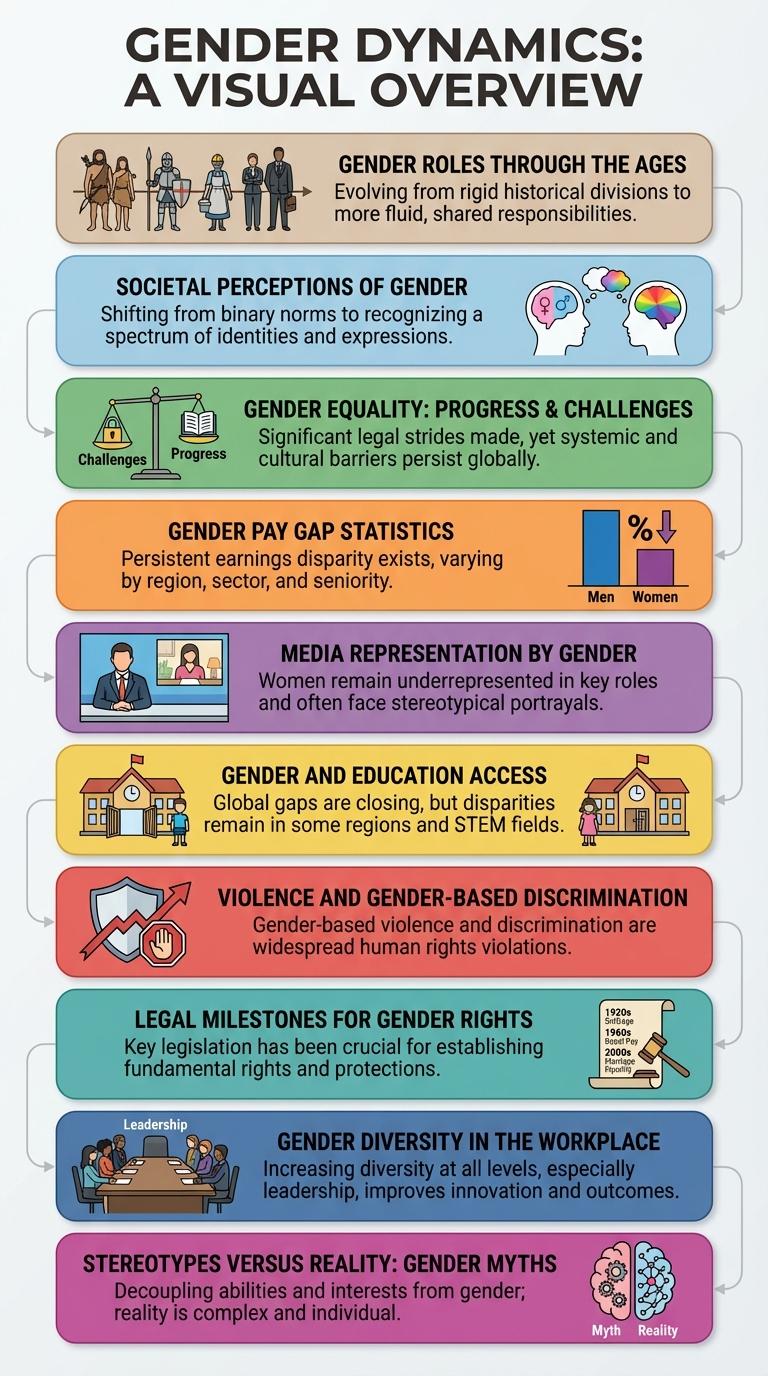
Gender plays a crucial role in shaping societal norms, behaviors, and expectations, influencing everything from career choices to social interactions. Understanding these dynamics through an infographic provides clear, visual insights into how gender impacts various aspects of life. This approach highlights key statistics and trends that illuminate ongoing challenges and progress in gender equality.
Gender Roles Through the Ages
Gender roles have evolved significantly over the centuries, influenced by cultural, economic, and social changes. Traditionally, societies assigned distinct responsibilities to men and women, shaping expectations and behaviors in family and work life.
In early agricultural societies, men typically handled external tasks such as hunting and farming, while women managed domestic duties and child-rearing. The Industrial Revolution shifted some roles, introducing women into the workforce, although often in limited capacities.
Societal Perceptions of Gender
Societal perceptions of gender shape individual experiences and cultural norms worldwide. These perceptions influence roles, behaviors, and expectations assigned to different genders.
Traditional gender roles often dictate that men are seen as providers and women as caregivers, reinforcing stereotypes. Media representation plays a significant role in perpetuating or challenging these gender norms. Increasing awareness and education promote more inclusive attitudes, fostering equality across diverse communities.
Gender Equality: Progress & Challenges
Gender equality remains a crucial goal in modern society, promoting equal rights, responsibilities, and opportunities across all genders. Despite notable progress, disparities persist in areas like income, education, and political representation.
Globally, women represent 39% of the labor force but earn approximately 20% less than men on average. Gender-based violence and cultural stereotypes continue to hinder full social and economic participation for many individuals.
Gender Pay Gap Statistics
The gender pay gap remains a critical issue reflecting income disparity between men and women in the workforce. Understanding these statistics helps clarify the ongoing challenges in achieving pay equity across industries.
- Women earn approximately 84% of what men earn - This average wage ratio highlights persistent income inequality in many countries.
- The gap widens in senior management roles - Women in executive positions often experience lower pay relative to their male counterparts.
- Industry sectors influence the pay gap size - Fields like technology and finance tend to show larger disparities compared to education and healthcare.
Addressing these discrepancies requires targeted policies and increased transparency to promote fair compensation for all genders.
Media Representation by Gender
Media representation by gender reveals significant disparities in visibility and portrayal, with men often depicted in authoritative roles while women are shown in supportive or domestic positions. Studies indicate women make up less than 30% of speaking characters in top-grossing films, highlighting underrepresentation. This imbalance contributes to societal stereotypes and influences public perception of gender roles globally.
Gender and Education Access
Access to education varies significantly between genders worldwide, influencing social and economic outcomes. Gender disparities in education access remain a critical challenge for achieving equality.
- Enrollment Rates - Girls in low-income countries are 20% less likely to enroll in primary school compared to boys.
- Completion Rates - Female students have a 15% lower secondary school completion rate globally.
- Barriers to Education - Cultural norms and safety concerns limit girls' access to education in many regions.
Violence and Gender-Based Discrimination
| Statistic | Detail |
|---|---|
| Global Violence Rates | 1 in 3 women worldwide experience physical or sexual violence in their lifetime |
| Gender-Based Discrimination | Women earn on average 20% less than men for equivalent work globally |
| Domestic Violence | Over 30% of women face domestic violence in at least one region worldwide |
| Legal Protection Gaps | 40% of countries lack laws addressing violence against women comprehensively |
| Impact on Mental Health | Gender-based violence survivors are twice as likely to suffer depression and anxiety disorders |
Legal Milestones for Gender Rights
What are the key legal milestones that have shaped gender rights in society?
Legal milestones have played a crucial role in advancing gender equality worldwide. Landmark laws and court rulings have progressively dismantled discrimination and established protections for gender rights.
| Year | Legal Milestone |
|---|---|
| 1920 | Women gain the right to vote in the United States (19th Amendment). |
| 1963 | Equal Pay Act signed into law in the US to reduce wage disparity. |
| 1979 | Convention on the Elimination of All Forms of Discrimination Against Women (CEDAW) adopted by the UN. |
| 2015 | Same-sex marriage legalized nationwide in the US (Obergefell v. Hodges). |
| 2020 | Increased global recognition of transgender rights through new policies and legal reforms. |
Gender Diversity in the Workplace
Gender diversity in the workplace enhances creativity, innovation, and decision-making by incorporating varied perspectives. Companies with higher gender diversity report increased financial performance and employee satisfaction. Promoting inclusive policies and equal opportunities supports a balanced and productive work environment.