
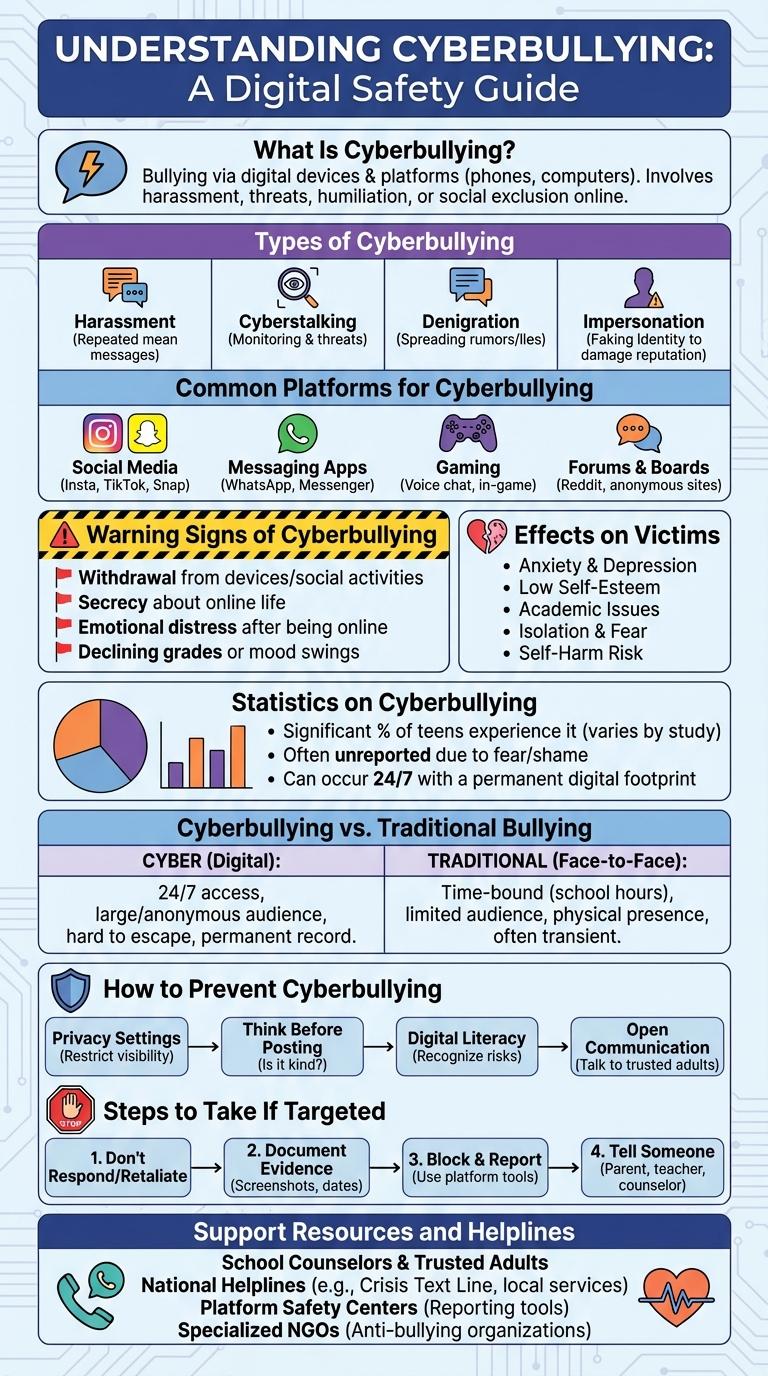
Cyberbullying poses a serious threat to the safety and well-being of individuals online, impacting mental health and self-esteem. Infographics effectively illustrate the prevalence, types, and consequences of cyberbullying in a clear and accessible way. Visual representation enhances awareness and encourages proactive measures to combat this harmful behavior.
What Is Cyberbullying?
Cyberbullying involves the use of digital technology to harass, threaten, or humiliate someone. It occurs through social media, messaging platforms, and other online channels.
- Definition - Cyberbullying is intentional and repetitive behavior aimed at causing harm or distress to an individual online.
- Platforms - Common venues include social networks, chat apps, gaming communities, and email.
- Forms - Includes spreading rumors, sending threatening messages, sharing embarrassing content, and impersonation.
Types of Cyberbullying
| Type of Cyberbullying | Description |
|---|---|
| Harassment | Repeated sending of offensive, rude, and insulting messages |
| Flaming | Online fights using angry and vulgar language |
| Impersonation | Hacking into someone's account to send damaging messages |
| Outing | Sharing private, embarrassing information or images publicly |
| Exclusion | Deliberately excluding someone from online groups or activities |
Common Platforms for Cyberbullying
Cyberbullying frequently occurs on popular social media platforms where users interact daily. These platforms provide a space for anonymity, making it easier for bullies to target victims without immediate consequences.
Instagram, Facebook, and Twitter are among the most common platforms for cyberbullying incidents. Messaging apps like WhatsApp and Snapchat also facilitate direct harassment through private messages. Online gaming communities are emerging as significant environments for cyberbullying due to their large, active user bases.
Warning Signs of Cyberbullying
Cyberbullying often manifests through sudden changes in mood or behavior, such as withdrawal from social activities or increased anxiety. Look for signs like unexplained reluctance to use digital devices, frequent distress after online interactions, or secretive behavior about social media usage. Recognizing these warning signs early can help protect individuals from further online harassment and emotional harm.
Effects on Victims
Cyberbullying causes significant emotional and psychological damage to victims, impacting their daily lives and mental health. Awareness of these effects is crucial for prevention and support efforts.
- Depression - Victims often experience persistent sadness and loss of interest in activities they once enjoyed.
- Anxiety - Constant fear and worry stem from repeated online harassment and threats.
- Low Self-Esteem - Negative online interactions damage victims' confidence and self-worth.
- Social Withdrawal - Victims may isolate themselves to avoid further bullying and judgment.
- Academic Decline - Concentration and performance in school often suffer due to emotional distress.
Understanding these effects helps create supportive environments to protect and assist cyberbullying victims.
Statistics on Cyberbullying
How widespread is cyberbullying among youth today? Nearly 37% of young people between the ages of 12 and 17 have experienced cyberbullying at some point. This growing issue affects both victims' mental health and social well-being.
| Statistic | Detail |
|---|---|
| 37% | Youth aged 12-17 who have been cyberbullied |
| 59% | Bullying incidents occurring on social media platforms |
| 70% | Percentage of cyberbullying victims reporting negative mental health effects |
| 30% | Students avoiding school due to cyberbullying fears |
| 90% | Instances where cyberbullying events go unreported |
Cyberbullying vs. Traditional Bullying
Cyberbullying involves using digital platforms to harass or intimidate others, while traditional bullying occurs in physical settings like schools. Both forms cause emotional harm but differ in reach, permanence, and anonymity.
- Reach - Cyberbullying can spread rapidly online, affecting victims beyond geographical boundaries.
- Anonymity - Perpetrators in cyberbullying often remain anonymous, unlike traditional bullying with identifiable aggressors.
- Duration - Cyberbullying content persists indefinitely on the internet, whereas traditional bullying incidents are usually time-limited.
How to Prevent Cyberbullying
Preventing cyberbullying involves educating individuals about respectful online behavior and the impact of their words. Encourage the use of privacy settings and strong passwords to protect personal information. Promote open communication, so victims feel safe reporting cyberbullying incidents to trusted adults or authorities.
Steps to Take If Targeted
Cyberbullying can cause emotional distress and impact mental health. Taking the right steps quickly helps protect your well-being and online safety.
Save evidence like screenshots, messages, and posts as proof. Report the behavior to the platform's support or abuse team immediately.
Block and mute the cyberbully to prevent further contact. Talk to trusted friends, family, or professionals to get emotional support.
Consider adjusting privacy settings to limit who can contact or view your profile. Seek legal advice if threats or harassment escalate beyond online interactions.