
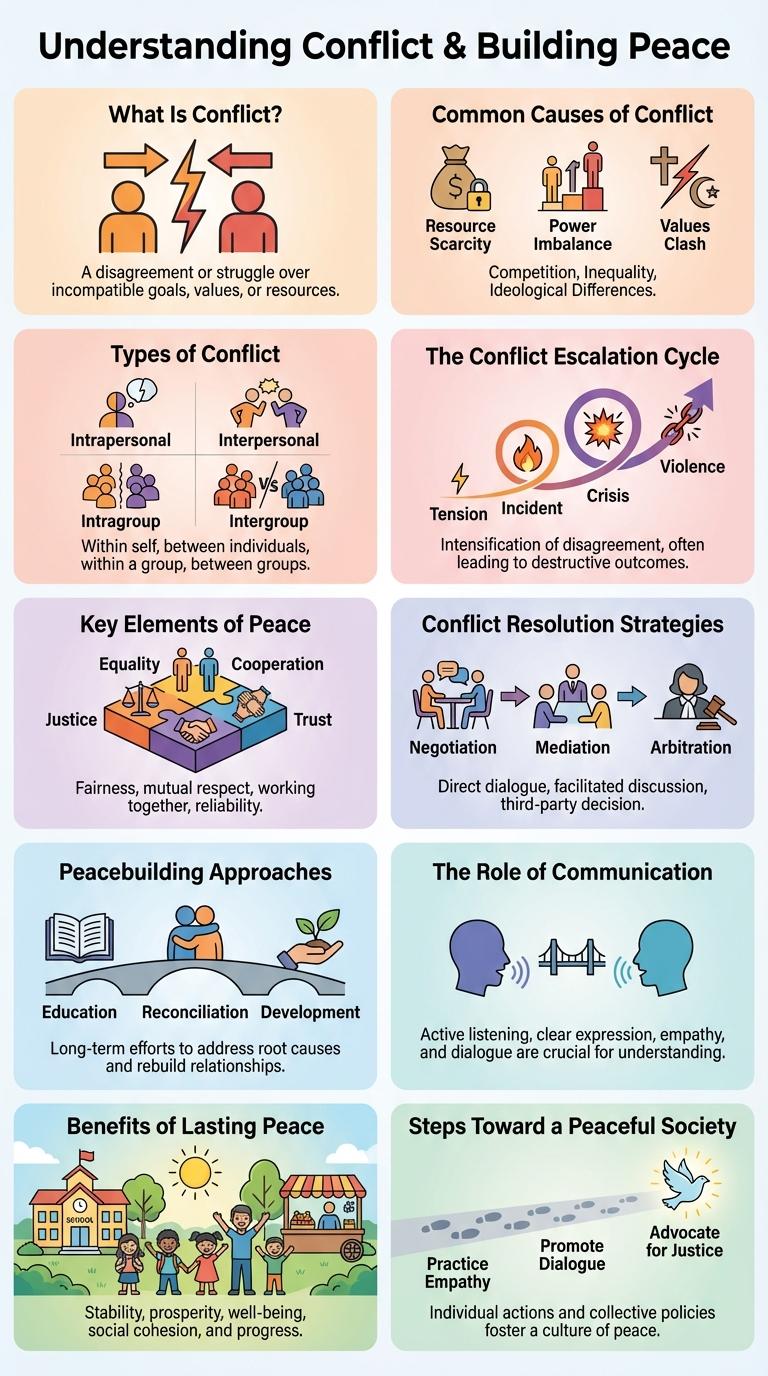
Conflicts arise from differences in beliefs, values, and interests, often leading to misunderstandings and tension. Understanding the root causes and dynamics of conflict is essential for fostering effective communication and collaboration. Visualizing these concepts through an infographic helps clarify pathways to peace and conflict resolution strategies.
What Is Conflict?
Conflict arises when two or more parties have opposing interests, values, or goals. It can occur at personal, social, or international levels, affecting relationships and societies.
Understanding the root causes of conflict helps in resolving disagreements effectively. Conflict is not always negative; it can lead to growth and positive change when managed properly.
Common Causes of Conflict
Conflicts often arise from misunderstandings, scarce resources, and differing values or beliefs. Economic disparities and competition for power frequently escalate tensions between groups. Recognizing these common causes helps in developing effective strategies for peacebuilding and conflict resolution.
Types of Conflict
Conflicts arise in various forms, influencing relationships and environments differently. Understanding these types aids in addressing and resolving disputes effectively.
Interpersonal conflict occurs between individuals due to personal differences or misunderstandings. Organizational conflict involves disputes within groups or institutions, often linked to roles or resources. Societal conflict encompasses larger-scale disagreements impacting communities or nations, including political or cultural tensions.
The Conflict Escalation Cycle
Conflict often follows a predictable escalation cycle, impacting relationships and communities. Understanding each stage aids in effective conflict resolution and peacebuilding.
- Trigger Event - An initial incident sparks disagreement or tension between parties.
- Frustration and Tension - Negative emotions build, increasing stress and communication breakdowns.
- Polarization - Parties adopt opposing positions, reducing willingness to collaborate.
- Conflict Escalation - Actions intensify, leading to open confrontation or hostility.
- Resolution or Stalemate - Conflict concludes through negotiation, intervention, or prolonged impasse.
Recognizing these stages enables proactive strategies to de-escalate conflicts and promote lasting peace.
Key Elements of Peace
Understanding conflict and peace involves recognizing the key elements that contribute to a sustainable and just society. Peace is more than the absence of violence; it includes justice, security, and mutual respect among communities.
Key elements of peace include dialogue, which fosters communication and understanding between conflicting parties. Another crucial element is reconciliation, which helps repair relationships and build trust for lasting harmony.
Conflict Resolution Strategies
Conflict resolution strategies are essential for managing disputes and fostering peaceful interactions. Common approaches include negotiation, mediation, and arbitration, each tailored to address specific types of conflicts. Effective conflict resolution promotes understanding, cooperation, and long-term peace in personal, organizational, and international contexts.
Peacebuilding Approaches
Effective peacebuilding requires diverse approaches tailored to complex conflict environments. Understanding these methods enhances sustainable resolution and long-term harmony.
- Dialogue Facilitation - Promotes communication between conflicting parties to build trust and mutual understanding.
- Reconciliation Programs - Addresses historical grievances and fosters forgiveness to heal divided communities.
- Economic Development - Supports stability by improving livelihoods and reducing poverty-related tensions.
The Role of Communication
Effective communication plays a crucial role in resolving conflicts and fostering lasting peace. Clear dialogue helps parties understand different perspectives and build trust.
- Active Listening - Engaging fully with others' messages reduces misunderstandings and promotes empathy.
- Open Dialogue - Encouraging honest and respectful conversations helps identify common ground for solutions.
- Nonverbal Cues - Recognizing body language and facial expressions supports accurate interpretation of emotions and intentions.
Benefits of Lasting Peace
What are the benefits of lasting peace for societies? Lasting peace fosters economic growth by attracting investments and encouraging sustainable development. It also enhances social well-being by reducing violence and improving community trust.
How does peace contribute to education and health? Stable environments allow for better access to quality education and healthcare services. Children and families can thrive without the disruptions caused by conflict.
Why is lasting peace important for environmental protection? Peaceful conditions enable collaborative efforts in natural resource management and conservation. This cooperation helps preserve ecosystems and promotes long-term sustainability.
In what way does peace support political stability? Nations with lasting peace experience stronger governance and institutional trust. This stability leads to effective policymaking and respect for human rights.
How does lasting peace impact global relations? Peaceful countries are more likely to engage in diplomacy, trade, and cultural exchange. These interactions promote mutual understanding and global cooperation.