
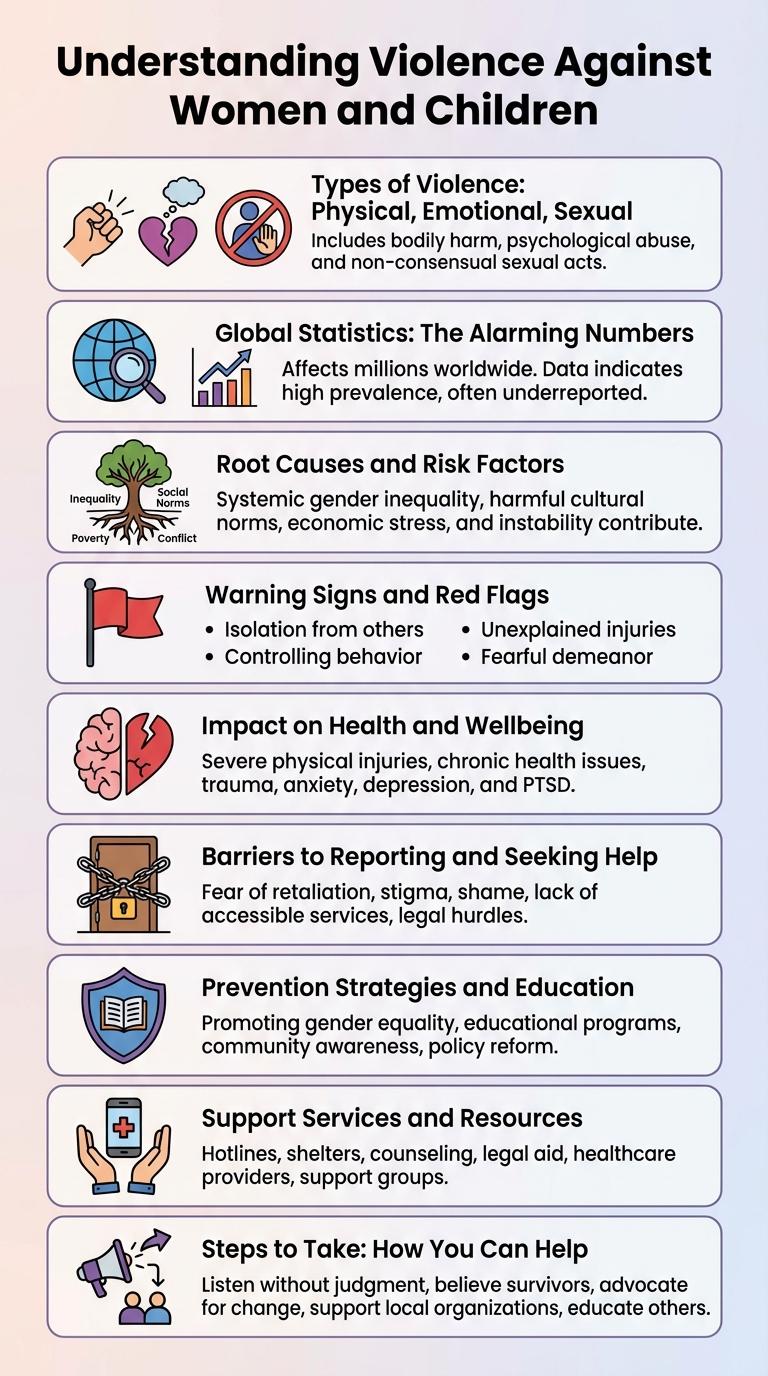
Violence against women and children remains a critical global issue with devastating physical and psychological effects. Infographics visually depict alarming statistics and key facts, raising awareness and fostering understanding of this pervasive problem. Highlighting trends and prevention strategies helps mobilize communities and policymakers toward meaningful action.
Understanding Violence Against Women and Children
Violence against women and children encompasses physical, emotional, and sexual abuse that jeopardizes their safety and well-being. Understanding the root causes, such as power imbalances, social norms, and economic dependency, is essential for effective prevention and intervention. Comprehensive awareness campaigns and support services empower survivors and foster safer communities.
Types of Violence: Physical, Emotional, Sexual
Violence against women and children manifests in various destructive forms that severely impact their physical and mental well-being. Identifying the types of violence is crucial for intervention and support.
Physical, emotional, and sexual violence represent major categories that threaten the safety and dignity of victims.
- Physical Violence - Involves intentional use of force causing injury, pain, or impairment to women and children.
- Emotional Violence - Encompasses verbal abuse, psychological manipulation, and controlling behaviors that harm mental health.
- Sexual Violence - Includes any non-consensual sexual act, exploitation, or harassment targeting women and children.
Global Statistics: The Alarming Numbers
Violence against women and children remains a critical global issue, with 1 in 3 women experiencing physical or sexual violence in their lifetime. Every year, millions of children face abuse, neglect, and exploitation, impacting their physical and mental well-being. These alarming statistics highlight the urgent need for global action to protect vulnerable populations and promote safety and justice.
Root Causes and Risk Factors
Violence against women and children stems from deep-rooted societal issues and personal vulnerabilities that increase risk. Understanding these root causes and risk factors is essential for effective prevention and intervention strategies.
- Gender inequality - Unequal power dynamics and discrimination create conditions that normalize violence against women and children.
- Economic stress - Financial hardship and poverty increase family tension and vulnerability to abuse.
- Exposure to violence - Witnessing or experiencing violence in childhood raises the likelihood of both victimization and perpetration in later life.
Warning Signs and Red Flags
Violence against women and children often begins with subtle warning signs that can be easily overlooked. Recognizing these red flags early is crucial for prevention and intervention.
Common warning signs include unexplained injuries, anxiety, withdrawal from social activities, and sudden changes in behavior. Emotional abuse may manifest as excessive fear, low self-esteem, or reluctance to speak openly. Awareness of these indicators helps protect vulnerable individuals and promotes timely support.
Impact on Health and Wellbeing
Violence against women and children severely affects physical, mental, and emotional health. Injuries, chronic conditions, anxiety, depression, and PTSD are common consequences.
The impact extends to long-term wellbeing, hindering educational and economic opportunities. Survivors often face social isolation and reduced quality of life, perpetuating cycles of abuse and poverty.
Barriers to Reporting and Seeking Help
| Barriers to Reporting | Barriers to Seeking Help |
|---|---|
| Fear of Retaliation or Further Violence | Lack of Access to Support Services |
| Social Stigma and Shame | Financial Dependence on Abuser |
| Lack of Trust in Authorities | Limited Awareness of Legal Rights |
| Cultural and Religious Norms | Isolation and Limited Transportation |
| Fear of Child Custody Loss | Language Barriers and Communication Issues |
Prevention Strategies and Education
How can education help prevent violence against women and children?
Educational programs raise awareness about the signs and consequences of abuse. Teaching respect and equality from a young age reduces the risk of violence.
What are effective prevention strategies for protecting women and children from violence?
Community support systems and accessible reporting channels empower victims to seek help. Policies that enforce strict penalties against offenders reinforce safety.
Why is early intervention important in preventing violence against women and children?
Early intervention addresses harmful behaviors before they escalate into abuse. It also offers victims timely support, reducing long-term trauma.
How do schools contribute to violence prevention among children?
Schools implement anti-bullying and anti-violence programs that promote healthy relationships. They provide safe environments where children learn conflict resolution.
What role does public awareness play in stopping violence against women and children?
Public awareness campaigns challenge societal norms that tolerate abuse. They encourage bystander intervention and foster a culture of zero tolerance.
Support Services and Resources
Support services and resources play a critical role in addressing violence against women and children. Access to specialized help can provide safety, counseling, and legal assistance for survivors.
- 24/7 Helplines - Confidential phone services offer immediate crisis intervention and emotional support.
- Safe Shelters - Secure housing provides refuge and protection from abusers for women and children.
- Counseling Services - Professional mental health support aids in trauma recovery and empowerment.
- Legal Aid - Free or low-cost legal assistance helps survivors navigate restraining orders and custody cases.
- Community Outreach - Awareness programs educate communities about prevention and available resources.
Comprehensive support networks enhance recovery outcomes and reduce the risk of further violence.