
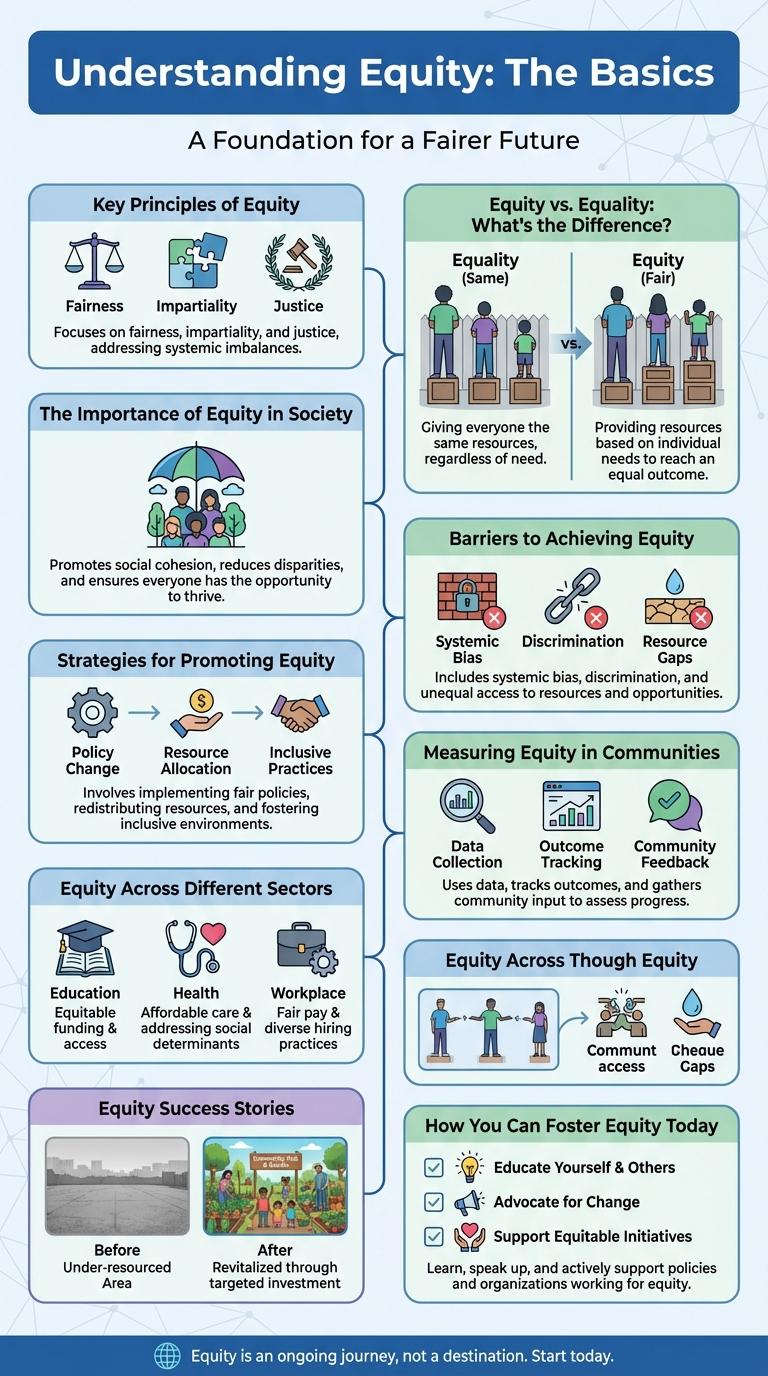
Equity ensures fair treatment, access, and opportunities for all individuals by addressing systemic barriers and disparities. It plays a crucial role in creating inclusive environments where diverse needs are recognized and met. This infographic visually breaks down key concepts and strategies for promoting equity across various sectors.
Understanding Equity: The Basics
Equity represents ownership in an asset, such as a company or property, after deducting liabilities. It reflects the residual value that shareholders or owners have in the entity.
Understanding equity is crucial for investors and stakeholders to assess financial health and ownership stakes. Common forms of equity include common stock, preferred stock, and retained earnings.
Key Principles of Equity
Equity ensures fair treatment, access, and opportunity for all individuals by recognizing and addressing systemic barriers. It focuses on creating balanced outcomes by tailoring support to meet diverse needs.
- Fairness - Equity involves distributing resources based on individual needs to achieve fair outcomes.
- Inclusion - Ensuring all voices are heard and represented is essential for equitable environments.
- Accessibility - Removing obstacles that prevent individuals from benefiting equally promotes true equity.
- Recognition of Diversity - Valuing differences such as race, gender, and ability informs equitable policies.
- Accountability - Measuring progress and holding systems responsible helps sustain equity efforts.
Equity vs. Equality: What's the Difference?
What is the difference between equity and equality? Equality means providing the same resources or opportunities to everyone. Equity involves distributing resources based on individual needs to achieve fair outcomes.
The Importance of Equity in Society
Equity ensures fair access to resources, opportunities, and rights for all individuals, regardless of their background. Promoting equity contributes to social stability and economic growth by reducing disparities.
Equity addresses systemic barriers that prevent marginalized groups from thriving in society. Inclusive policies based on equity promote equal participation in education, employment, and healthcare.
- Reduces Inequality - Equity helps bridge the gap between disadvantaged and privileged groups, fostering a more balanced society.
- Enhances Social Cohesion - When resources and opportunities are distributed fairly, communities experience greater trust and cooperation.
- Supports Economic Development - Equitable access to education and employment drives innovation and boosts overall economic productivity.
Barriers to Achieving Equity
Barriers to achieving equity include systemic inequalities embedded in social, economic, and political structures that disproportionately impact marginalized communities. Limited access to quality education, healthcare, and employment opportunities perpetuate disparities across different demographics. Overcoming these obstacles requires targeted policies, inclusive practices, and continuous evaluation to promote fairness and equal opportunity for all individuals.
Strategies for Promoting Equity
Equity involves ensuring fair treatment, opportunities, and outcomes for all individuals by recognizing and addressing systemic barriers. Effective strategies for promoting equity require targeted actions that account for diverse needs and experiences.
Implementing inclusive policies that consider the unique challenges faced by marginalized groups is essential. Equitable resource allocation ensures that communities with the greatest needs receive appropriate support. Ongoing education and training raise awareness and foster a culture of inclusivity within organizations and society.
Measuring Equity in Communities
Measuring equity in communities involves assessing access to resources, opportunities, and outcomes across diverse populations. Key indicators include income distribution, education quality, healthcare accessibility, and housing stability. Data-driven infographics visualize disparities and progress, enabling targeted interventions for inclusive development.
Equity Across Different Sectors (Education, Health, Workplace)
| Sector | Key Equity Focus |
|---|---|
| Education | Access to quality education for all socioeconomic backgrounds, reducing achievement gaps through inclusive curricula, equitable funding, and support services. |
| Health | Equal access to healthcare services, addressing social determinants of health, eliminating disparities in treatment, and improving outcomes for marginalized populations. |
| Workplace | Promoting diversity and inclusion, fair pay, equal opportunities for advancement, and eliminating discrimination based on gender, race, or disability. |
| Cross-Sector Benefits | Enhanced social cohesion, improved economic productivity, and sustained community well-being through equitable policies and practices. |
Equity Success Stories
Equity success stories highlight how fair treatment and access to resources lead to positive outcomes. These stories demonstrate the powerful impact of equity in various communities and sectors.
- Increased Education Access - Initiatives that provide scholarships and mentorship have significantly boosted college enrollment rates among underrepresented groups.
- Workplace Diversity Improvements - Companies adopting equitable hiring practices show higher employee satisfaction and innovation levels.
- Health Equity Gains - Community health programs targeting marginalized populations result in reduced disease rates and improved wellness.
Equity success stories inspire continued efforts toward a more just and inclusive society.