
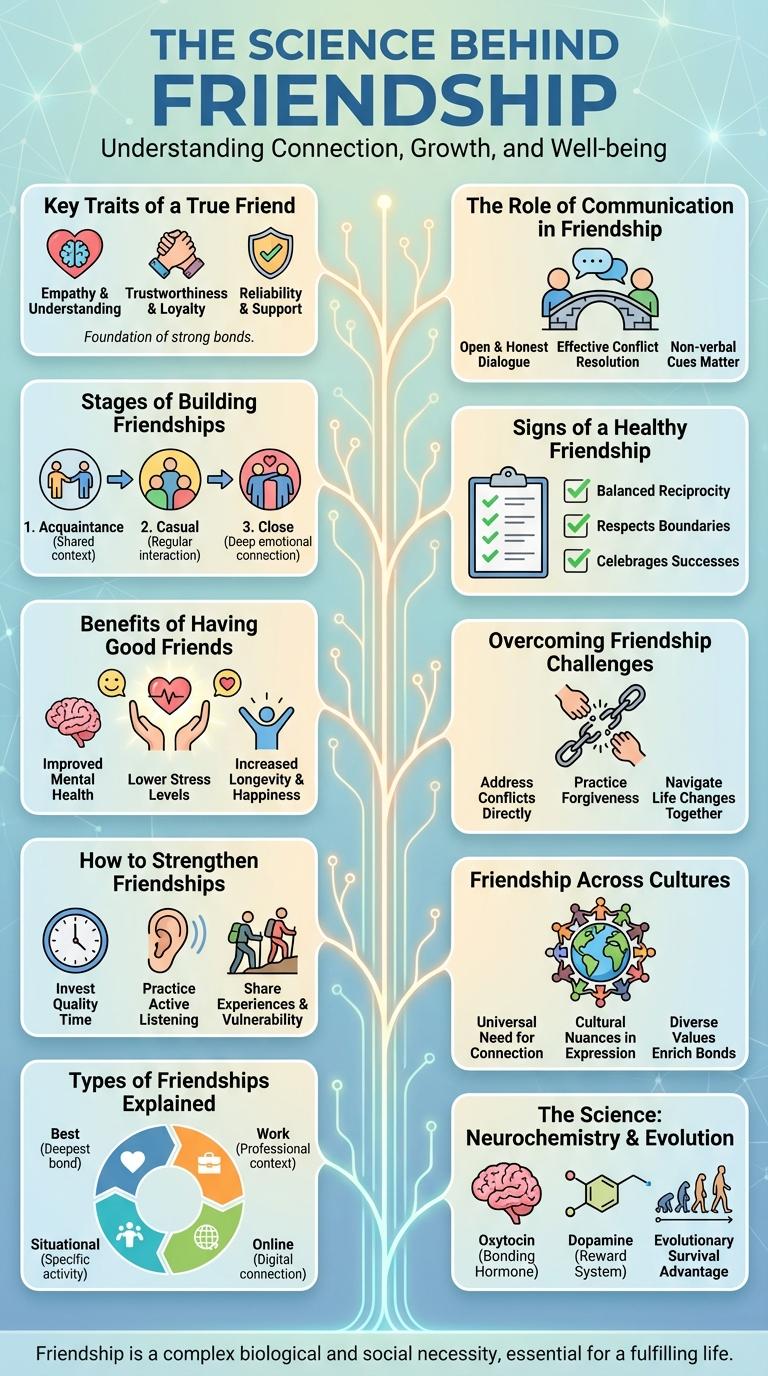
Friendship strengthens social bonds and enhances emotional well-being through trust and shared experiences. Infographics visually represent these key aspects, highlighting communication, empathy, and mutual support. This format makes complex relationship dynamics easy to understand and appreciate.
The Science Behind Friendship
Friendship plays a crucial role in mental and physical health. Scientific research reveals the biological and psychological mechanisms that form and sustain friendships.
- Oxytocin Release - Known as the "bonding hormone," oxytocin strengthens social connections and trust between friends.
- Brain Activity - Areas like the prefrontal cortex and ventral striatum activate during positive social interactions, reinforcing friendship rewards.
- Stress Reduction - Close friendships lower cortisol levels, reducing stress and enhancing overall well-being.
Understanding the science behind friendship highlights its importance for emotional resilience and longevity.
Key Traits of a True Friend
Friendship is built on trust, empathy, and mutual respect. True friends provide support and understanding through life's challenges.
Key traits of a true friend include honesty, loyalty, and effective communication. These qualities strengthen bonds and create lasting connections.
Stages of Building Friendships
Friendships develop through distinct stages that build trust and connection over time. Understanding these stages helps nurture meaningful and lasting relationships.
- Initiation - This stage involves first impressions and initial conversations that determine mutual interest.
- Exploration - Individuals share personal stories and values to assess compatibility and deepen understanding.
- Establishment - Friends solidify trust and commitment through regular interactions and support.
- Maintenance - Continuous communication and shared experiences sustain the friendship over time.
- Transformation - Friendships may evolve, grow, or fade based on life changes and personal growth.
Benefits of Having Good Friends
Why is having good friends important for your well-being? Good friends provide emotional support and help reduce stress. Their presence promotes happiness and boosts overall mental health.
What are the key benefits of strong friendships? Friends encourage healthy habits and motivate personal growth. They also enhance your sense of belonging and improve self-confidence.
How do friendships impact physical health? Positive social connections are linked to lower blood pressure and a stronger immune system. Friends can inspire you to maintain a more active lifestyle.
Can friends influence your longevity? Studies show that people with strong social ties tend to live longer. Friendships contribute to resilience against life's challenges and reduce the risk of chronic diseases.
What role do friends play in personal development? Good friends offer valuable feedback and new perspectives. They help develop communication skills and foster empathy and understanding.
How to Strengthen Friendships
| How to Strengthen Friendships | Key Actions |
|---|---|
| Effective Communication | Listen actively, share openly, and express appreciation frequently |
| Quality Time | Engage in shared activities, plan regular meetups, prioritize meaningful interactions |
| Trust Building | Be reliable, keep confidences, and demonstrate honesty consistently |
| Support and Empathy | Offer help during challenges, celebrate successes, understand emotions deeply |
| Conflict Resolution | Address problems calmly, forgive mistakes, seek mutual understanding |
Types of Friendships Explained
Friendships can be categorized into several types based on the level of emotional connection and interaction frequency. Close friendships involve deep trust and regular communication, while casual friendships are characterized by occasional contact and limited personal sharing. Acquaintances, on the other hand, represent the most superficial form of friendship, with minimal emotional involvement.
The Role of Communication in Friendship
Effective communication is the foundation of strong and lasting friendships. It fosters understanding, trust, and emotional support between friends.
- Active Listening - Paying full attention helps friends feel valued and understood.
- Open Expression - Sharing thoughts and feelings honestly strengthens emotional bonds.
- Conflict Resolution - Clear and respectful communication resolves misunderstandings and maintains harmony.
Signs of a Healthy Friendship
Healthy friendships are built on trust, mutual respect, and open communication. Recognizing the signs of a strong friendship helps maintain meaningful connections.
Key signs include honest conversations where both friends feel heard and valued. Support during difficult times strengthens the bond, showing reliability and care. Shared laughter and enjoyment highlight a positive and balanced relationship.
Overcoming Friendship Challenges
Friendship faces challenges such as misunderstandings, distance, and conflicting priorities. Effective communication and empathy help resolve conflicts and strengthen bonds. Consistent effort and trust build resilience, allowing friendships to overcome obstacles and thrive.