
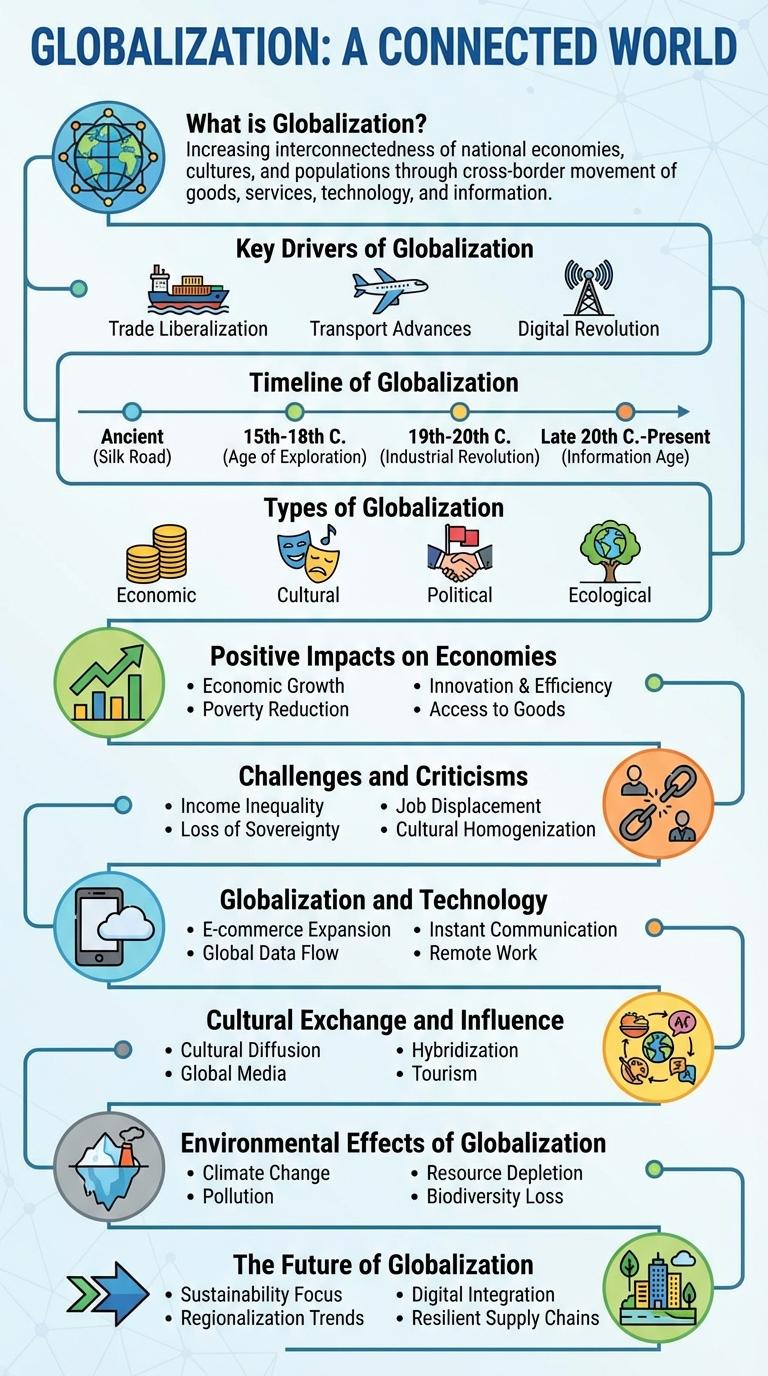
Globalisasyon transforms economies by connecting markets, cultures, and technologies worldwide. It accelerates information exchange and fosters international collaboration, reshaping how businesses and societies interact. Understanding its impact through visual data highlights trends in trade, communication, and cultural integration.
What is Globalization?
Globalization refers to the process of increasing interconnectedness and integration among countries, economies, and cultures worldwide. It involves the exchange of goods, services, information, and ideas across international borders.
Globalization impacts economic growth, cultural exchange, and technological advancement. It creates opportunities and challenges in areas such as trade, communication, and global cooperation.
Key Drivers of Globalization
Globalization is driven by key factors that connect economies, cultures, and technologies worldwide. These drivers accelerate the exchange of goods, services, and information on a global scale.
Technological advancements in communication and transportation reduce barriers, making global interaction faster and more efficient. Economic policies favoring free trade and investment create opportunities for international cooperation and market expansion.
Timeline of Globalization
Globalization is a complex process of increasing interconnectedness among countries, economies, and cultures. Key events from the Age of Exploration in the 15th century to the digital revolution in the 21st century have accelerated this phenomenon. Understanding the timeline of globalization reveals how trade, technology, and communication have shaped our world.
| Period | Key Event |
|---|---|
| 15th Century | Age of Exploration begins, connecting Europe to Asia and the Americas. |
| 19th Century | Industrial Revolution boosts global trade and migration. |
| 1944 | Bretton Woods Conference establishes global financial institutions. |
| 1990s | Internet emergence revolutionizes global communication. |
| 2000s-Present | Rise of multinational corporations and digital economy. |
Types of Globalization
Globalization encompasses various types including economic, cultural, technological, and political globalization. Economic globalization involves the integration of markets and trade worldwide, enhancing international business and investment. Cultural globalization spreads ideas, values, and traditions across borders, while technological globalization drives innovation and connectivity through the exchange of information and communication technologies.
Positive Impacts on Economies
Globalization fosters economic growth by enabling the free flow of goods, services, and capital across borders. It creates opportunities for emerging markets to integrate into the global economy, boosting development and wealth.
- Increased Trade Volumes - Globalization expands markets, allowing countries to export and import a wider variety of goods efficiently.
- Foreign Direct Investment Growth - Open economies attract investments that improve infrastructure and create jobs.
- Technology Transfer - Sharing innovations accelerates productivity gains in developing nations.
Economic integration through globalization promotes higher standards of living worldwide.
Challenges and Criticisms
What are the main challenges of globalisasyon? Globalisasyon creates economic disparities between wealthy and developing nations, often leading to exploitation of labor. It also causes cultural homogenization, risking the loss of local traditions and identities.
Why do critics oppose globalisasyon? Critics argue that it benefits multinational corporations more than local communities, increasing income inequality. Environmental degradation due to expanded industrial activities is another major concern linked to globalisasyon.
Globalization and Technology
| Aspect | Details |
|---|---|
| Globalization Definition | The increasing interconnectedness of economies, cultures, and populations driven by trade, investment, and technology. |
| Technology's Role | Advances in communication, transportation, and digital technology accelerate global integration. |
| Communication Innovations | Internet, smartphones, and social media enable instant global information exchange and collaboration. |
| Transportation Improvements | Faster air travel, container shipping, and logistics support global supply chains and market access. |
| Economic Impact | Technology fosters global markets, outsourcing, and digital commerce expanding economic opportunities worldwide. |
Cultural Exchange and Influence
Globalization promotes the widespread exchange of cultural practices and ideas, connecting diverse societies worldwide. This process enhances mutual understanding and influences various cultural aspects such as language, cuisine, and arts.
- Cultural Diffusion - Globalization facilitates the spread of cultural elements like music, fashion, and traditions across countries.
- Language Exchange - Increased interaction leads to the adoption of foreign words and bilingualism in many communities.
- Cross-Cultural Collaboration - Artists and creators from different backgrounds collaborate, resulting in innovative cultural expressions.
Environmental Effects of Globalization
Globalization accelerates economic growth by increasing trade and investment across countries. This rapid integration impacts the environment in significant ways.
- Increased Carbon Emissions - Global transportation and industrial activity contribute to higher greenhouse gas emissions.
- Deforestation - Expanding agriculture and resource extraction for global markets lead to loss of forests.
- Pollution Spread - Industrial pollutants and waste often cross borders, affecting air and water quality worldwide.