
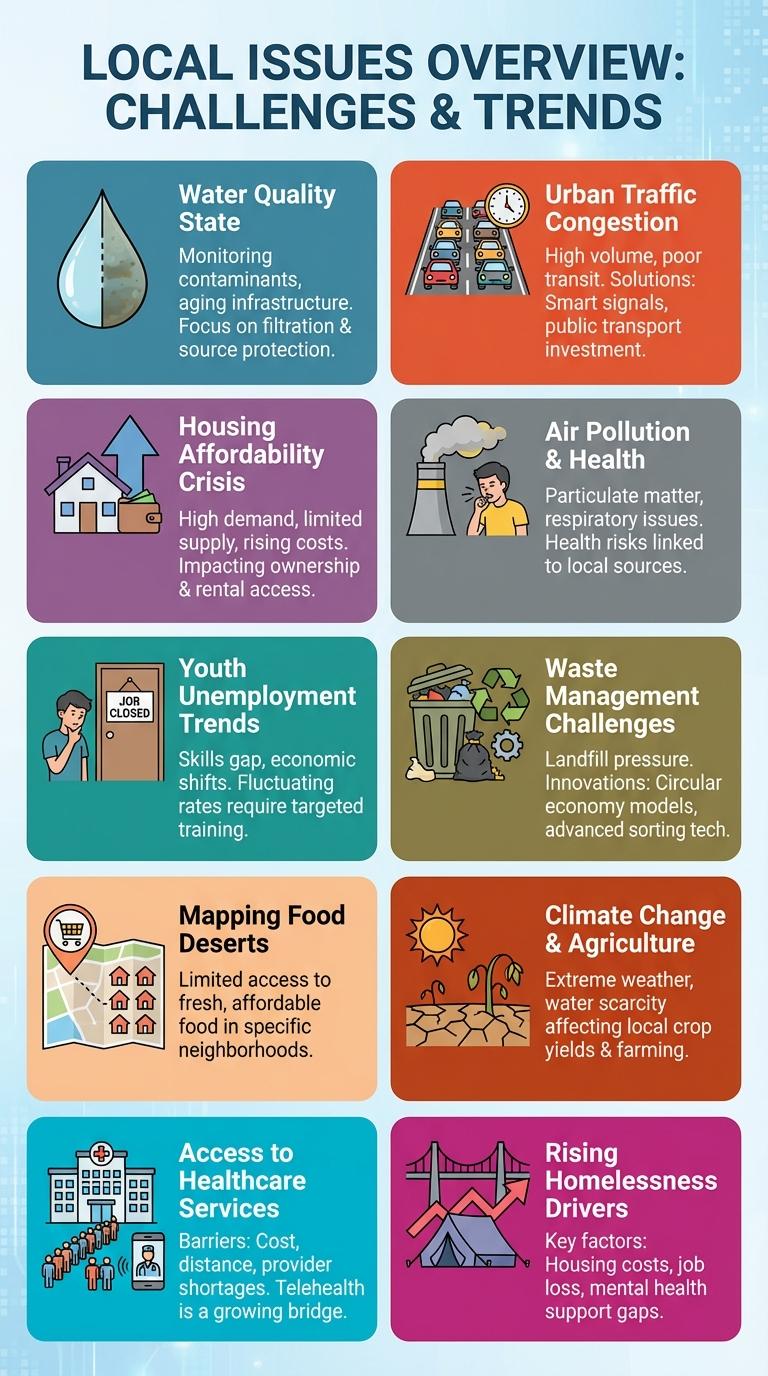
This infographic highlights a pressing local issue, presenting key data and insights to drive community awareness and action. Visual elements distill complex information into clear, impactful statistics that illustrate the extent and urgency of the problem. Engaging graphics foster better understanding and encourage residents to participate in solutions.
The State of Water Quality in [Region Name]
The State of Water Quality in the Great Lakes Region reveals significant challenges due to industrial pollution and agricultural runoff. Contaminants such as phosphorus and nitrogen contribute to harmful algal blooms affecting aquatic ecosystems and drinking water safety.
Efforts by local governments and environmental organizations aim to reduce pollution through stricter regulations and habitat restoration projects. Regular water quality monitoring indicates gradual improvements, but ongoing vigilance is essential to protect public health and biodiversity.
Urban Traffic Congestion: Causes and Solutions
What causes urban traffic congestion and what are effective solutions to address it? Urban traffic congestion primarily results from increased vehicle density, insufficient infrastructure, and poor urban planning. Implementing public transportation, optimizing traffic signals, and encouraging carpooling can significantly alleviate congestion.
| Causes | Solutions |
|---|---|
| High vehicle volume | Expand public transit systems |
| Limited road capacity | Develop dedicated bus and bike lanes |
| Poor traffic management | Use smart traffic signal technology |
| Urban sprawl | Promote mixed-use development |
| Lack of alternative transportation | Encourage carpooling and ride-sharing |
Housing Affordability Crisis in [City/Area]
The Housing Affordability Crisis in San Francisco has reached unprecedented levels, impacting residents' ability to secure safe and stable homes. Rapid rent increases and limited housing supply are driving many families to seek alternatives outside the city.
This infographic highlights the key factors contributing to the crisis and its effects on the local community.
- Soaring Rent Prices - Average monthly rent has increased by 25% over the past five years.
- Low Housing Supply - New housing developments meet only 40% of the current demand.
- Displacement of Residents - Nearly 20% of renters have been forced to move due to unaffordable costs.
Air Pollution Levels and Health Impact Locally
| Air Pollution Parameter | Local Impact and Data |
|---|---|
| PM2.5 Concentration | Average local levels: 35 ug/m3; exceeds WHO recommended limit of 10 ug/m3; linked to increased respiratory diseases. |
| Nitrogen Dioxide (NO2) Levels | Urban traffic areas measured up to 60 ppb; correlates with higher asthma incidence among children. |
| Ozone (O3) Concentration | Peak summer readings surpass 70 ppb; causes throat irritation and exacerbates chronic lung conditions. |
| Health Impacts | Local data shows 25% increase in hospital admissions for respiratory illnesses during high pollution episodes. |
| Mitigation Efforts | Introduction of low emission zones reduced pollutant levels by 15% in affected areas over the last two years. |
Youth Unemployment Trends in Our Region
Youth unemployment in our region has reached a critical level, with rates soaring above the national average. This trend poses significant challenges for economic growth and social stability.
The youth unemployment rate currently stands at 18%, compared to the national average of 12%. Key sectors affected include manufacturing and retail, where job opportunities have declined by 15% over the past five years. Efforts to provide vocational training and internships aim to bridge the skills gap and improve employment outcomes for young people.
Waste Management Challenges and Innovations
Waste management remains a critical challenge in many regions, impacting public health and environmental sustainability. Innovative technologies and policies are emerging to address waste reduction and improve recycling efficiency.
- Increasing Waste Generation - Urbanization and consumerism lead to rising volumes of municipal solid waste, overwhelming existing disposal systems.
- Limited Recycling Infrastructure - Many areas lack adequate recycling facilities, resulting in low recovery rates and high landfill dependency.
- Adoption of Smart Waste Technologies - Sensor-based bins and AI-driven sorting enhance collection efficiency and material recovery.
- Community Engagement Initiatives - Educational programs encourage waste segregation and promote circular economy principles among residents.
- Policy and Regulation Enhancements - Governments implement stricter waste disposal laws and incentives to support sustainable waste management practices.
Mapping Food Deserts in [Local Area]
Mapping food deserts in [Local Area] reveals neighborhoods with limited access to affordable and nutritious food. These areas often lack grocery stores, farmers' markets, and healthy food providers.
Residents in food deserts face higher risks of diet-related health problems such as obesity and diabetes. Identifying these zones helps policymakers target resources and support local food initiatives.
Climate Change Effects on Local Agriculture
Climate change significantly impacts local agriculture through altered rainfall patterns, increased temperatures, and more frequent extreme weather events. These changes reduce crop yields, threaten food security, and disrupt traditional farming practices. Adaptation strategies such as drought-resistant crops and advanced irrigation are essential for sustaining agricultural productivity.
Access to Healthcare Services in Our Community
Access to healthcare services in our community remains a critical issue impacting residents' well-being and quality of life. Barriers such as distance, cost, and availability of providers hinder timely medical care for many individuals.
- Limited Healthcare Facilities - Only 3 primary care clinics serve the entire community, causing long wait times and overcrowding.
- Transportation Challenges - 35% of residents lack reliable transportation to reach medical appointments.
- High Insurance Uncoverage - Approximately 18% of adults in the area are uninsured, reducing access to preventive and urgent care.
Improving healthcare accessibility requires targeted investments in infrastructure, transportation services, and affordable insurance programs.