
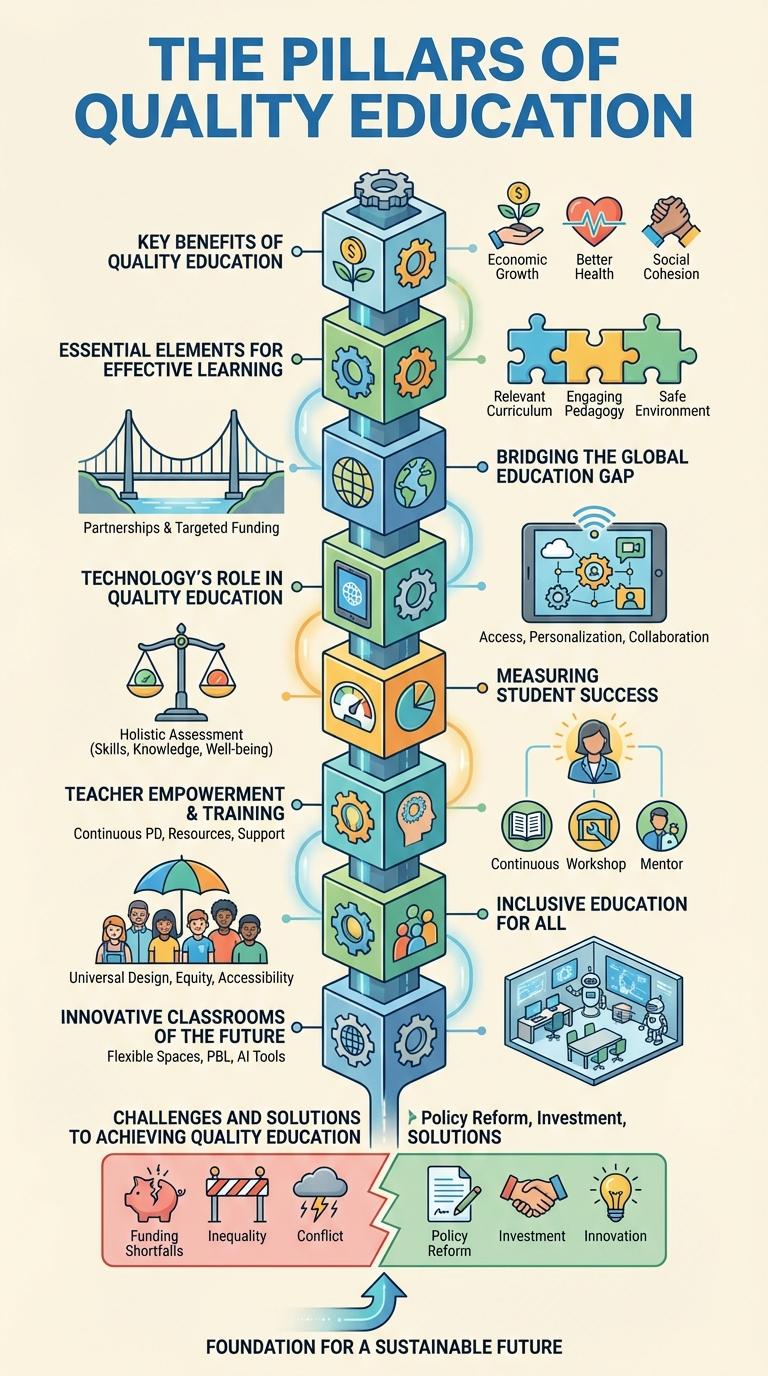
Quality education empowers individuals with essential skills and knowledge, fostering personal growth and societal progress. Infographics visually present key statistics and insights, making complex data about educational standards easy to understand. They highlight critical factors such as access, equity, and learning outcomes that shape effective education systems worldwide.
The Pillars of Quality Education
What are the essential pillars of quality education? Quality education rests on well-trained teachers, inclusive curriculum, accessible resources, effective assessment, and a supportive learning environment. These elements work together to ensure students receive meaningful and equitable learning experiences.
Key Benefits of Quality Education
Quality education equips individuals with essential skills and knowledge, fostering personal and professional growth. It promotes critical thinking, creativity, and problem-solving abilities, enabling lifelong learning and adaptability. Access to quality education contributes to social equity, economic development, and improved health outcomes worldwide.
Essential Elements for Effective Learning
Quality education equips learners with knowledge, skills, and values essential for personal and societal growth. Effective learning environments foster engagement, critical thinking, and lifelong curiosity.
- Qualified Educators - Skilled teachers employ diverse methods to address varied learning needs.
- Inclusive Curriculum - Content that reflects diverse cultures and perspectives encourages equity and understanding.
- Interactive Resources - Multimedia tools and hands-on activities enhance comprehension and retention.
- Supportive Learning Environment - Safe, accessible spaces promote focus and collaboration.
- Continuous Assessment - Regular feedback guides improvement and measures progress effectively.
Implementing these elements ensures a comprehensive approach to successful education outcomes.
Bridging the Global Education Gap
Quality education is essential for bridging the global education gap and promoting equal opportunities worldwide. Access to inclusive and equitable education improves literacy rates, economic growth, and social development. Innovative strategies and international collaboration are key to ensuring education reaches marginalized communities.
Technology's Role in Quality Education
Technology has revolutionized the landscape of quality education by enabling personalized learning experiences and expanding access to educational resources globally. Interactive tools and digital platforms foster student engagement and facilitate real-time feedback.
Educational technology supports diverse learning styles and bridges gaps caused by geographical and socio-economic barriers. Integrating technology in classrooms enhances collaboration, critical thinking, and digital literacy, essential skills for the 21st century.
Measuring Student Success
Measuring student success is a vital aspect of quality education that ensures students achieve learning outcomes effectively. It involves assessing various indicators to understand how well students grasp knowledge and develop essential skills.
Standardized tests, formative assessments, and project-based evaluations provide quantitative and qualitative data on student performance. Attendance rates and participation levels also offer insights into student engagement. These measurements help educators tailor instruction and improve educational strategies for better student growth.
Teacher Empowerment & Training
Teacher empowerment and training are essential components of quality education, directly impacting student achievement and overall school effectiveness. Investing in continuous professional development equips educators with innovative teaching strategies and up-to-date knowledge.
- Ongoing Professional Development - Enables teachers to stay current with educational best practices and technological advancements.
- Leadership Opportunities - Empowers educators to take active roles in school decision-making and curriculum design.
- Supportive Work Environment - Fosters teacher motivation and retention by providing resources, mentorship, and recognition.
Inclusive Education for All
| Key Aspect | Details |
|---|---|
| Definition | Inclusive Education ensures all learners, regardless of disabilities or background, receive equitable learning opportunities. |
| Core Principle | Removing barriers in physical, curricular, and social environments to support diverse learning needs. |
| Benefits | Improves academic outcomes, fosters social integration, and enhances empathy among students. |
| Key Strategies | Use of differentiated instruction, accessible materials, teacher training, and supportive policies. |
| Global Impact | Supports Sustainable Development Goal 4: Quality Education for All by promoting lifelong learning opportunities without discrimination. |
Innovative Classrooms of the Future
Innovative classrooms of the future integrate advanced technology to create immersive and personalized learning experiences. Smart boards, augmented reality, and AI-driven platforms enhance student engagement and foster critical thinking.
Flexible classroom layouts support collaborative projects and adaptive teaching methods. Data analytics monitor student progress, enabling educators to tailor lessons for improved educational outcomes.