
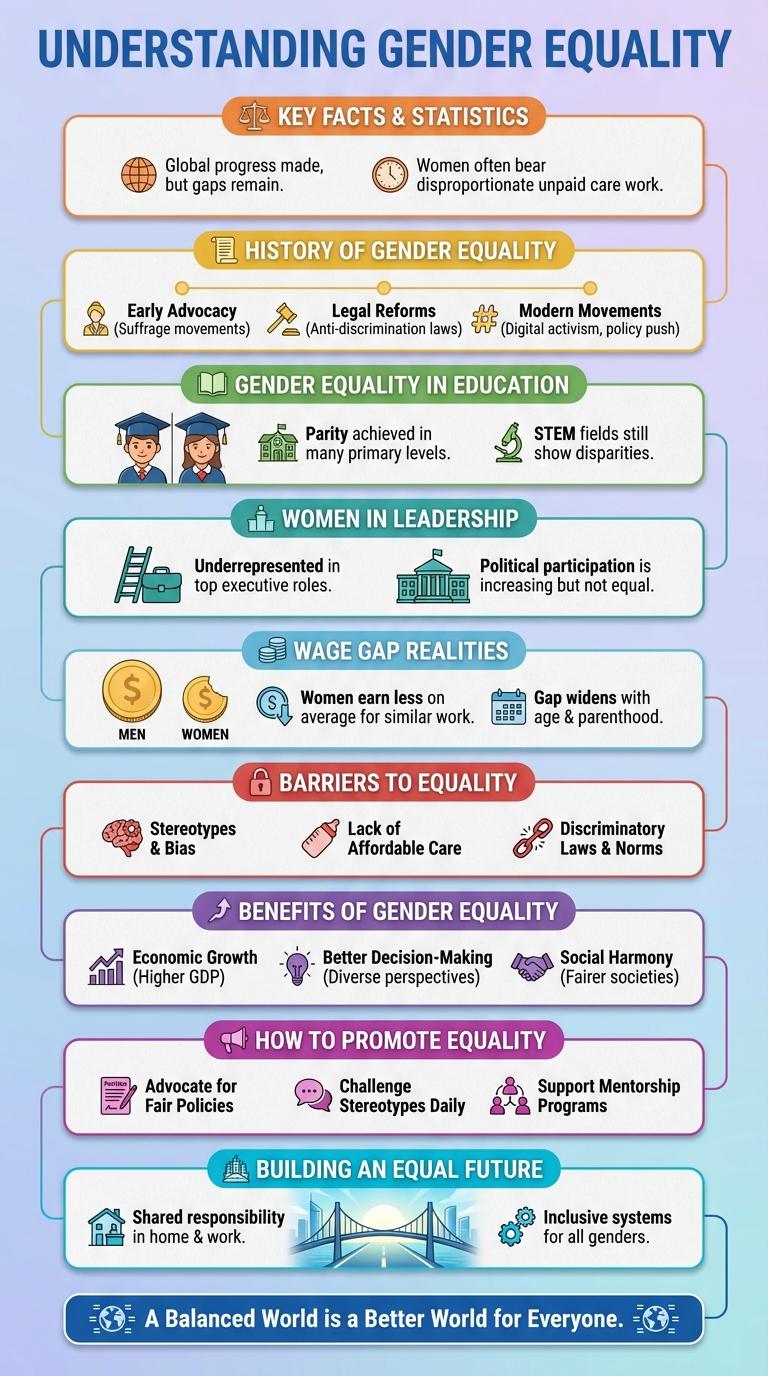
This infographic highlights critical facts and statistics about gender equality, emphasizing the ongoing challenges and progress in various sectors such as education, employment, and political representation. It visually demonstrates disparities in income, leadership roles, and access to opportunities, aiming to raise awareness and inspire action. By presenting data-driven insights, the infographic supports efforts to promote fairness and inclusivity across all genders.
Understanding Gender Equality
| Aspect | Key Information |
|---|---|
| Definition | Gender equality means equal rights, responsibilities, and opportunities for all genders. |
| Goal | Eliminate discrimination and bias based on gender in social, economic, and political spheres. |
| Importance | Fosters inclusive societies, boosts economic growth, and improves overall well-being. |
| Key Areas | Education, workplace equality, political participation, and health access. |
| Challenges | Gender stereotypes, unequal pay, gender-based violence, and limited representation. |
Key Facts & Statistics
Gender equality remains a critical issue worldwide, impacting economic growth and social development. Understanding key facts and statistics helps highlight ongoing challenges and progress.
- Women earn 23% less than men globally - Wage disparities persist across industries and regions, limiting financial independence for women.
- Only 28% of managerial positions are held by women - Leadership roles remain predominantly occupied by men, reflecting gender imbalances in corporate environments.
- Girls are 1.5 times more likely to be out of school than boys - Educational access continues to be uneven, especially in developing countries, affecting future opportunities.
Improving gender equality requires coordinated efforts across governments, businesses, and communities to create inclusive policies and practices.
History of Gender Equality
The history of gender equality dates back to early women's suffrage movements in the 19th century, aiming to secure voting rights for women. Key milestones include the 19th Amendment in the United States (1920) and the Universal Declaration of Human Rights (1948), promoting equal rights globally. Progress continues through ongoing legislative reforms and social activism addressing wage gaps and gender-based discrimination worldwide.
Gender Equality in Education
Gender equality in education ensures that all individuals have equal access to learning opportunities, regardless of gender. This equal access promotes social and economic development on a global scale.
Girls and boys face different barriers to education, including cultural norms and financial constraints. Closing the gender gap in education improves literacy rates, life expectancy, and economic growth. Investing in gender-equal education creates empowered communities and fosters innovation.
Women in Leadership
Women in leadership roles remain underrepresented despite proven benefits of diverse leadership teams. Increasing the presence of women in top positions fosters innovation and improves organizational performance.
- Global Representation - Women hold approximately 28% of senior management roles worldwide, highlighting a persistent gender gap in leadership.
- Corporate Performance - Companies with higher female leadership outperform their peers by 21% in profitability, showing a clear advantage of gender-diverse leadership teams.
- Barriers to Advancement - Gender stereotypes and limited access to mentorship restrict women's progression to executive roles, contributing to slower career growth compared to men.
Wage Gap Realities
Gender wage gaps persist worldwide, with women earning approximately 84% of what men earn on average. This disparity is influenced by factors such as occupational segregation, discrimination, and unequal access to career advancement. Closing the wage gap could significantly boost economic growth and promote workplace equality.
Barriers to Equality
Barriers to gender equality persist in various forms globally. These obstacles hinder equal opportunities and fair treatment for all genders in education, employment, and leadership roles.
Social norms and stereotypes reinforce restrictive gender roles, limiting personal and professional growth. Legal and institutional biases further exacerbate these challenges, preventing comprehensive gender equality.
Benefits of Gender Equality
Gender equality fosters inclusive growth and social harmony across communities. Promoting equal opportunities benefits economies, workplaces, and individual well-being worldwide.
- Economic Growth - Equal participation of all genders boosts GDP and innovation in diverse industries.
- Improved Workplace Performance - Gender-diverse teams demonstrate higher creativity, productivity, and decision-making quality.
- Enhanced Social Equity - Gender equality reduces poverty and discrimination, creating fairer access to education and healthcare.
How to Promote Equality
How can individuals contribute to promoting gender equality? Individuals can challenge stereotypes and support inclusive environments. Small actions like respectful communication and equal opportunity advocacy make a significant impact.
What role do workplaces play in gender equality? Workplaces can implement policies ensuring equal pay and diversity hiring practices. Providing training on unconscious bias fosters a more equitable culture.
How important is education in achieving gender equality? Education raises awareness of gender issues from an early age. Schools and institutions can promote respect and equal participation for all genders.
Why should media representation matter for gender equality? Balanced media representation shapes public perceptions and breaks harmful stereotypes. Encouraging diverse voices helps normalize equality across genders.
How can governments support gender equality effectively? Governments can enact laws protecting against discrimination and gender-based violence. Funding programs that empower marginalized groups strengthens social equality.