
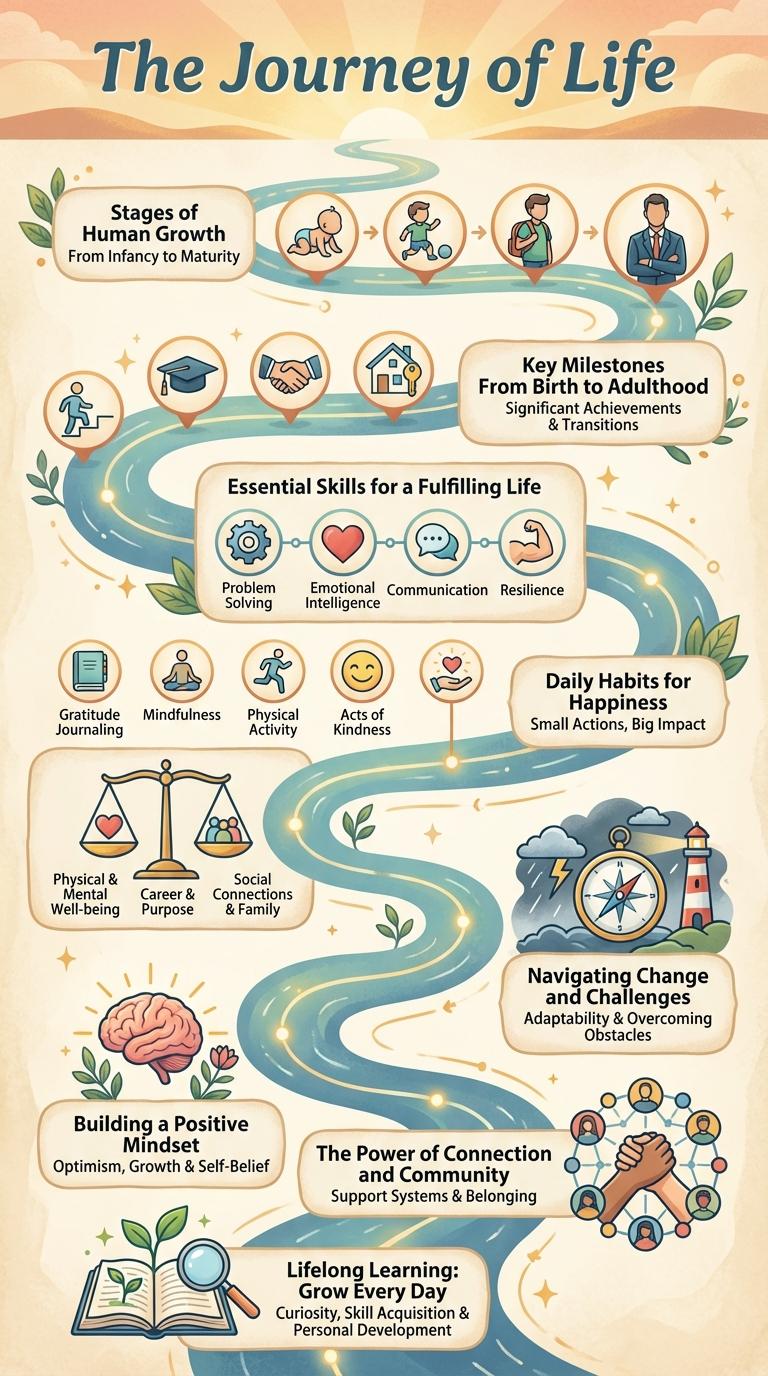
Life is a complex journey shaped by diverse experiences, growth, and challenges. This infographic visually captures the essential stages and key milestones that define human existence. Explore the dynamic patterns and insightful data illustrating the richness of life's unfolding story.
The Journey of Life
| Stage | Description |
|---|---|
| Birth | The beginning of human existence, marking entry into the world and initial development. |
| Childhood | Period of rapid growth, learning, and exploration forming the foundation for future skills and personality. |
| Adolescence | Transition phase involving biological, emotional, and social changes shaping identity and independence. |
| Adulthood | Stage focused on career development, relationships, and personal achievements. |
| Old Age | Later life phase emphasizing reflection, wisdom, and often, mentoring the next generation. |
Stages of Human Growth
The stages of human growth represent the continuous process from infancy to adulthood. Each stage is marked by significant physical, cognitive, and emotional development.
Infancy includes rapid brain growth and basic motor skills development. Childhood focuses on learning, socialization, and gradual independence.
Key Milestones From Birth to Adulthood
Life unfolds through a series of significant milestones from birth to adulthood. These stages shape growth, learning, and development in profound ways.
- Birth - Marks the beginning of physical and cognitive growth, establishing foundational health and sensory experiences.
- Early Childhood - Critical for language acquisition, motor skills development, and forming emotional attachments.
- Adolescence - Characterized by puberty, identity formation, and increased cognitive abilities.
- Graduation - Represents academic achievement and transition into adult responsibilities.
- Adulthood - Involves career development, establishing independence, and emotional maturity.
Essential Skills for a Fulfilling Life
Life requires a combination of skills that help individuals navigate challenges and achieve personal growth. Mastering essential skills enhances emotional well-being, relationships, and success.
- Emotional Intelligence - The ability to recognize, understand, and manage emotions improves communication and empathy.
- Critical Thinking - Analyzing information objectively supports better decision-making and problem-solving.
- Adaptability - Flexibility in changing circumstances promotes resilience and continuous learning.
Daily Habits for Happiness
Daily habits shape our overall happiness and well-being. Simple routines like gratitude journaling, consistent exercise, and mindful meditation boost mood and reduce stress. Incorporating these practices into everyday life promotes long-term emotional resilience and joy.
Life Balance: Health, Work, and Relationships
Achieving life balance involves maintaining harmony between health, work, and relationships. Focusing on these core areas promotes overall well-being and long-term happiness.
- Health Prioritization - Regular exercise, balanced nutrition, and sufficient sleep support physical and mental resilience.
- Work Efficiency - Managing time effectively and setting boundaries reduces stress and increases productivity.
- Meaningful Relationships - Investing time in social connections fosters emotional stability and support networks.
Balanced integration of health, work, and relationships creates a fulfilling and sustainable lifestyle.
Navigating Change and Challenges
Life is a continuous journey marked by change and challenges that shape personal growth and resilience. Navigating these transitions requires adaptability, a positive mindset, and effective problem-solving skills. Embracing change as an opportunity fosters strength and paves the way for success and fulfillment.
Building a Positive Mindset
Building a positive mindset transforms challenges into opportunities for growth. It fosters resilience and enhances overall well-being.
Positive thinking rewires the brain to focus on solutions rather than problems. Practicing gratitude daily increases happiness and reduces stress. Surrounding yourself with supportive people reinforces optimistic attitudes and strengthens mental health.
The Power of Connection and Community
How does connection influence our well-being? Human beings thrive when they feel a sense of belonging and community. Strong social bonds reduce stress and promote mental health.
What benefits arise from being part of a community? Communities provide support, shared resources, and opportunities for growth. Together, people create resilience and foster innovation.
Why is the power of connection essential for longevity? Studies show that individuals with strong social ties tend to live longer. Positive relationships enhance emotional fulfillment and physical health.
How can technology enhance community connections? Digital tools enable people to stay connected across distances and cultures. Online platforms create new avenues for collaboration and friendship.
| Key Aspect | Impact |
|---|---|
| Emotional Support | Reduces anxiety and depression |
| Shared Experiences | Strengthens sense of identity |
| Collaborative Growth | Encourages creativity and learning |
| Health Benefits | Improves immune system response |
| Longevity | Correlates with increased lifespan |