
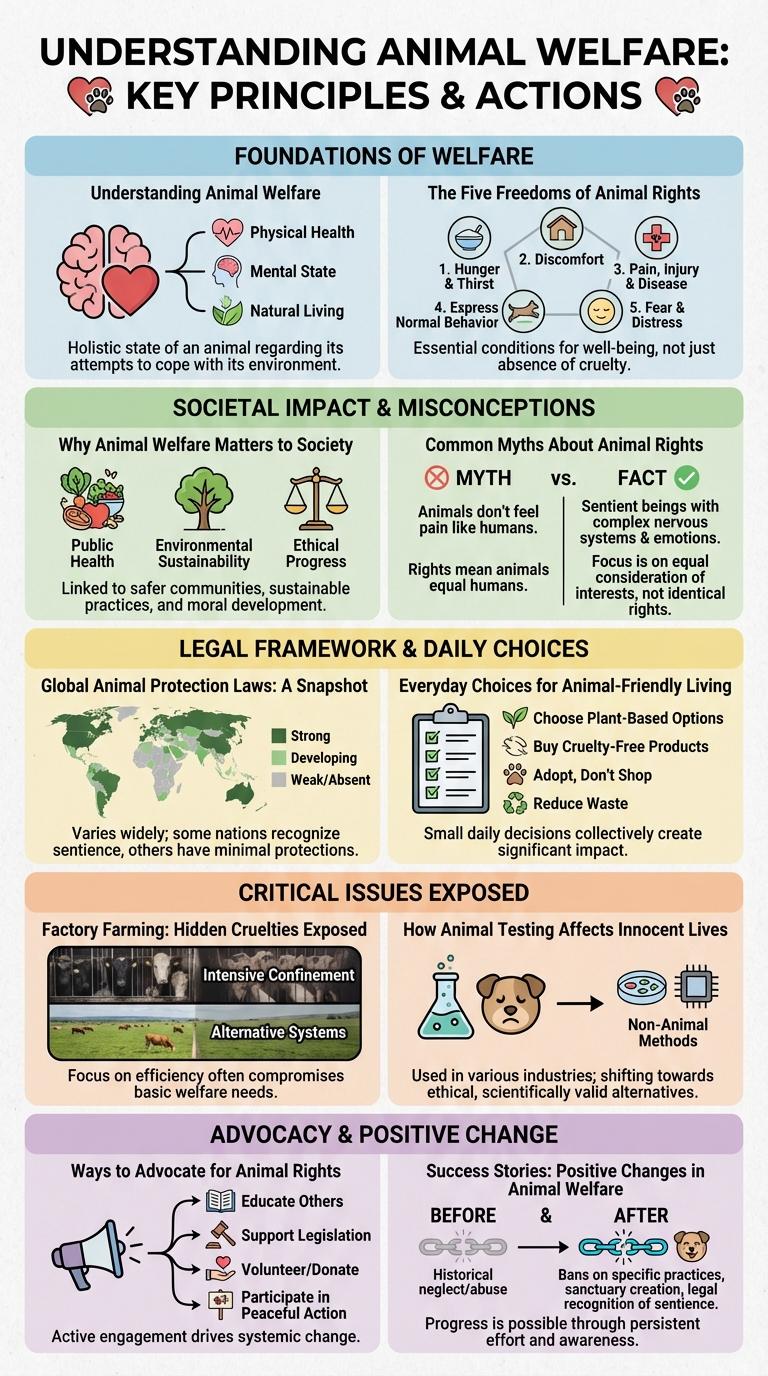
Animal welfare and rights are essential topics influencing how societies treat living beings with dignity and compassion. Understanding the distinctions and shared goals between welfare and rights helps promote ethical treatment and legal protections for animals. This infographic visually presents key facts and statistics to raise awareness and encourage responsible action toward animal well-being.
Understanding Animal Welfare: Key Principles
Animal welfare focuses on ensuring animals experience good health, proper nutrition, and a safe environment. Key principles include providing adequate shelter, preventing suffering, and enabling natural behaviors. Understanding these concepts promotes ethical treatment and improves the quality of life for all animals.
The Five Freedoms of Animal Rights
What are the core principles of animal welfare known as the Five Freedoms? The Five Freedoms provide a framework to ensure the well-being and humane treatment of animals. These freedoms guide policies and practices in animal care worldwide.
How does the freedom from hunger and thirst support animal health? Ensuring animals have access to fresh water and a nutritious diet prevents malnutrition and dehydration. This freedom promotes physical health and vitality in all species.
Why is freedom from discomfort essential in animal care? Providing a suitable environment with shelter and comfortable resting areas helps reduce stress and prevent injury. Comfort supports both physical and mental health for animals.
What is the importance of freedom from pain, injury, or disease? Prompt prevention and treatment of illness or injury are critical to animal welfare. This freedom ensures animals live without unnecessary suffering.
How does freedom to express normal behavior benefit animals? Allowing animals to engage in natural behaviors supports their psychological health. Environments that enable natural movement and social interactions improve quality of life.
Why must animals be free from fear and distress? Minimizing fear and stress protects animals from psychological harm and chronic health issues. A calm and secure environment enhances overall well-being.
Why Animal Welfare Matters to Society
Animal welfare is essential for maintaining ethical standards in society by ensuring the humane treatment of all living beings. Respecting animal rights fosters compassion and empathy within communities, promoting social harmony.
Protecting animals from cruelty and neglect contributes to healthier ecosystems and biodiversity, which are vital for human well-being. Laws and regulations on animal welfare encourage responsible behavior and accountability among individuals and organizations. Raising awareness about animal rights strengthens the moral foundation of society and supports sustainable development.
Common Myths About Animal Rights
Animal welfare and rights are critical topics often misunderstood by the general public. Myths surrounding these issues can hinder progress toward better treatment of animals.
- Animal rights mean no use of animals whatsoever - Many believe animal rights demand the total elimination of all animal use, but it primarily promotes ethical treatment and protection from cruelty.
- Only pets deserve animal rights - Animal rights extend to all creatures, including farm, wild, and research animals, not just domestic pets.
- Animal welfare is less important than human needs - Ensuring animal welfare is compatible with human progress and does not undermine societal needs.
Global Animal Protection Laws: A Snapshot
Global animal protection laws vary widely, reflecting diverse cultural values and legal frameworks. Understanding these laws highlights the progress and gaps in ensuring animal welfare worldwide.
- Universal Declaration on Animal Welfare (UDAW) - An international initiative promoting recognition of animal sentience and humane treatment across nations.
- European Union Animal Welfare Directive - Establishes minimum standards for the protection of farm animals within EU member states.
- United States Animal Welfare Act - The primary federal legislation regulating the treatment of animals in research, exhibition, transport, and by dealers.
Everyday Choices for Animal-Friendly Living
Everyday choices impact animal welfare and rights significantly, from food selections to product usage. Opting for cruelty-free and vegan products supports ethical treatment and reduces animal suffering. Simple habits like adopting pets, avoiding animal-tested cosmetics, and choosing sustainable food sources promote compassionate living.
Factory Farming: Hidden Cruelties Exposed
| Factory Farming Aspect | Hidden Cruelties & Impact |
|---|---|
| Animal Confinement | Animals are often kept in cramped cages or crowded enclosures, preventing natural behaviors and causing physical and psychological distress. |
| Genetic Manipulation | Selective breeding for rapid growth or high yield results in health problems such as deformities, organ failure, and chronic pain. |
| Inhumane Slaughter Practices | Procedures frequently cause prolonged suffering due to inadequate stunning or rushed slaughter environments. |
| Environmental Degradation | Factory farms generate high levels of waste, contaminating water and land, which negatively affects both ecosystem and animal health. |
| Animal Rights Denial | The systemic prioritization of profit over welfare leads to neglect of animal sentience, causing ethical concerns and increasing calls for legal reforms. |
How Animal Testing Affects Innocent Lives
Animal testing subjects millions of innocent creatures to pain, suffering, and often death each year. These tests, aimed at product safety and scientific research, frequently disregard the animals' wellbeing and natural rights.
Alternatives such as in vitro methods and computer modeling offer humane solutions without compromising scientific progress. Promoting animal welfare and rights encourages ethical choices that protect vulnerable lives from unnecessary harm.
Ways to Advocate for Animal Rights
Advocating for animal rights is essential to promoting ethical treatment and preventing cruelty. Effective actions empower individuals to create meaningful change for animals worldwide.
- Educate Yourself and Others - Learn about animal welfare issues and share accurate information to raise awareness.
- Support Animal-Friendly Legislation - Advocate for laws that protect animal rights and improve living conditions.
- Adopt and Volunteer - Choose adoption over buying pets and volunteer at shelters to directly aid animals in need.
- Reduce Animal Product Consumption - Choose plant-based options to decrease demand for industries that exploit animals.
- Use Social Media Platforms - Amplify animal rights campaigns by sharing content and engaging with advocacy groups online.
Consistent advocacy efforts contribute significantly to creating a more compassionate society for all animals.