
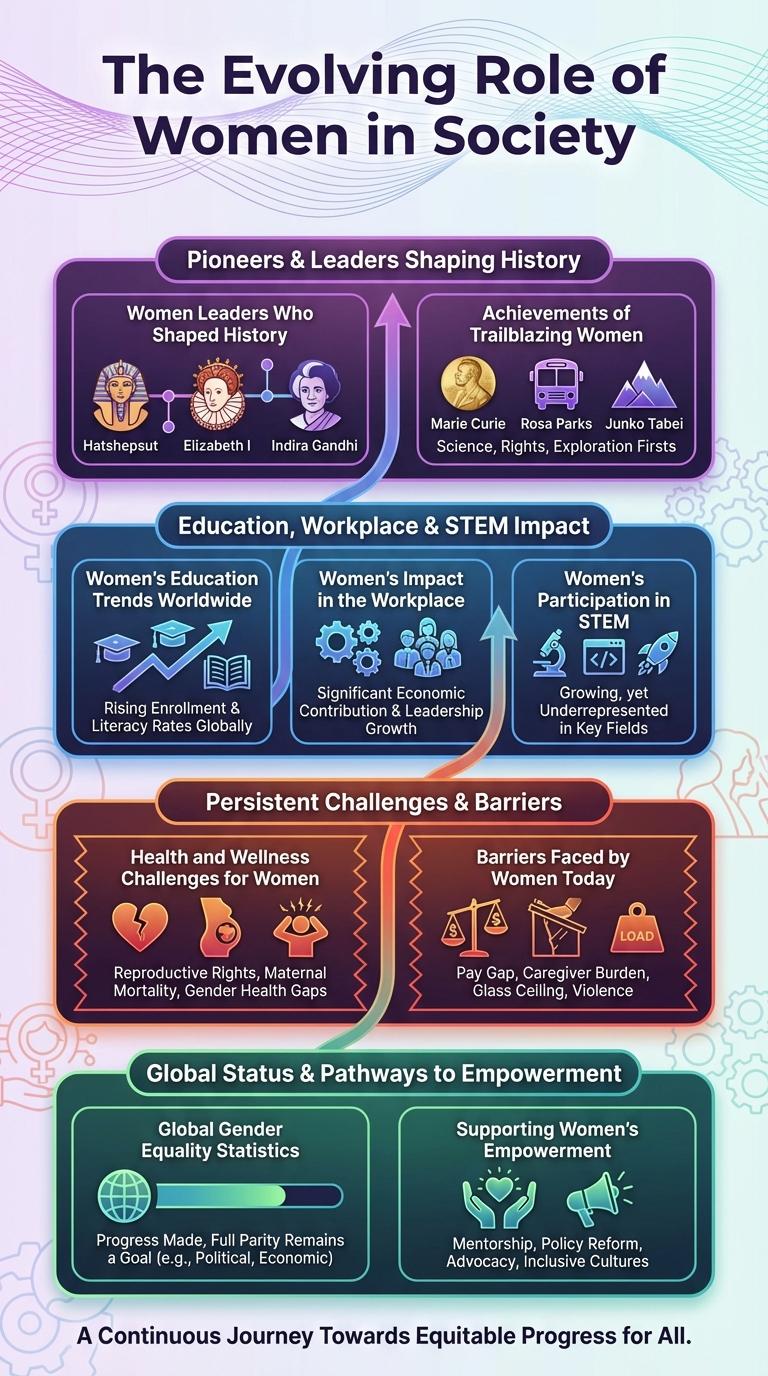
Infographics about women visually highlight key statistics and achievements across various fields such as education, workforce participation, and leadership roles. These visuals effectively communicate trends in women's empowerment and gender equality progress worldwide. By presenting data in a clear and engaging manner, infographics raise awareness and inspire action towards closing gender gaps.
The Evolving Role of Women in Society
The evolving role of women in society has transformed from traditional domestic responsibilities to diverse leadership positions across industries. Increased access to education and career opportunities has empowered women to contribute significantly to economic growth and social development. This shift challenges gender stereotypes and promotes equality, fostering inclusive communities worldwide.
Women's Impact in the Workplace
Women play a crucial role in shaping modern workplaces through leadership, innovation, and diversity. Their contributions significantly drive company growth and foster inclusive work environments.
- Leadership Presence - Women hold 30% of senior management roles globally, influencing key business decisions.
- Innovation Drivers - Companies with higher female representation in leadership report 15% greater innovation revenue.
- Diversity Advocates - Workplaces with gender-diverse teams experience 20% higher employee satisfaction and retention.
Achievements of Trailblazing Women
Trailblazing women have made significant contributions across various fields including science, politics, and the arts. Their achievements continue to inspire generations and break barriers worldwide.
Marie Curie was the first woman to win a Nobel Prize, pioneering research in radioactivity. In politics, figures like Kamala Harris represent milestones as the first female Vice President of the United States.
Global Gender Equality Statistics
Global gender equality remains a significant challenge, with women earning approximately 77% of what men earn worldwide. Women represent nearly 39% of the global workforce but hold only 28% of managerial positions. Education gaps persist, as 130 million girls between the ages of 6 and 17 are out of school globally, impacting future opportunities.
Women's Education Trends Worldwide
Global trends highlight significant progress in women's education over the past decades. However, disparities persist in access and completion rates across different regions.
- Increased Enrollment Rates - The worldwide female enrollment in primary education rose from 58% in 1990 to over 90% in 2020, narrowing the gender gap.
- Higher Secondary Education Participation - More women are completing secondary education, with global completion rates reaching approximately 77% as of recent data.
- STEM Field Representation - Women's participation in STEM degrees increased to nearly 30% globally, though regional variations remain significant.
Health and Wellness Challenges for Women
Women face unique health and wellness challenges that impact their overall quality of life. Issues such as hormonal changes, reproductive health, and higher risk of certain diseases require specialized care and awareness.
Common challenges include managing menstrual health, pregnancy-related conditions, and menopause symptoms. Mental health concerns like anxiety and depression also disproportionately affect women, underscoring the need for targeted support.
Women Leaders Who Shaped History
| Woman Leader | Historical Impact |
|---|---|
| Cleopatra VII | Last active ruler of the Ptolemaic Kingdom of Egypt, known for political acumen and alliances with Roman rulers Julius Caesar and Mark Antony. |
| Queen Elizabeth I | Reigned over England and Ireland (1558-1603), fostered the English Renaissance, and established Protestantism as the national faith. |
| Joan of Arc | French heroine and military leader who led forces during the Hundred Years' War, significantly boosting French morale and paving way for victory. |
| Indira Gandhi | First and only female Prime Minister of India, implemented agricultural reforms and played a key role in the 1971 India-Pakistan war. |
| Rosa Parks | Civil rights activist whose refusal to give up her bus seat sparked the Montgomery Bus Boycott, advancing the fight against racial segregation in the US. |
Women's Participation in STEM
Women are significantly underrepresented in STEM (Science, Technology, Engineering, and Mathematics) fields globally. Increasing women's participation in STEM is crucial for innovation and economic growth.
- Representation Gap - Women make up only about 28% of the workforce in STEM industries worldwide.
- Education Enrollment - Female students account for approximately 35% of STEM-related university enrollments.
- Career Advancement - Women in STEM careers face slower promotion rates compared to their male counterparts.
Efforts to support women in STEM include targeted scholarships, mentorship programs, and inclusive workplace policies.
Barriers Faced by Women Today
Women around the world continue to face significant barriers in various aspects of life. These challenges impact their social, economic, and political opportunities.
Workplace discrimination remains a major obstacle, with women earning less than men for similar roles and facing limited advancement. Access to quality education is hindered by cultural and economic factors in many regions. Gender-based violence and societal norms further restrict women's freedom and safety globally.