
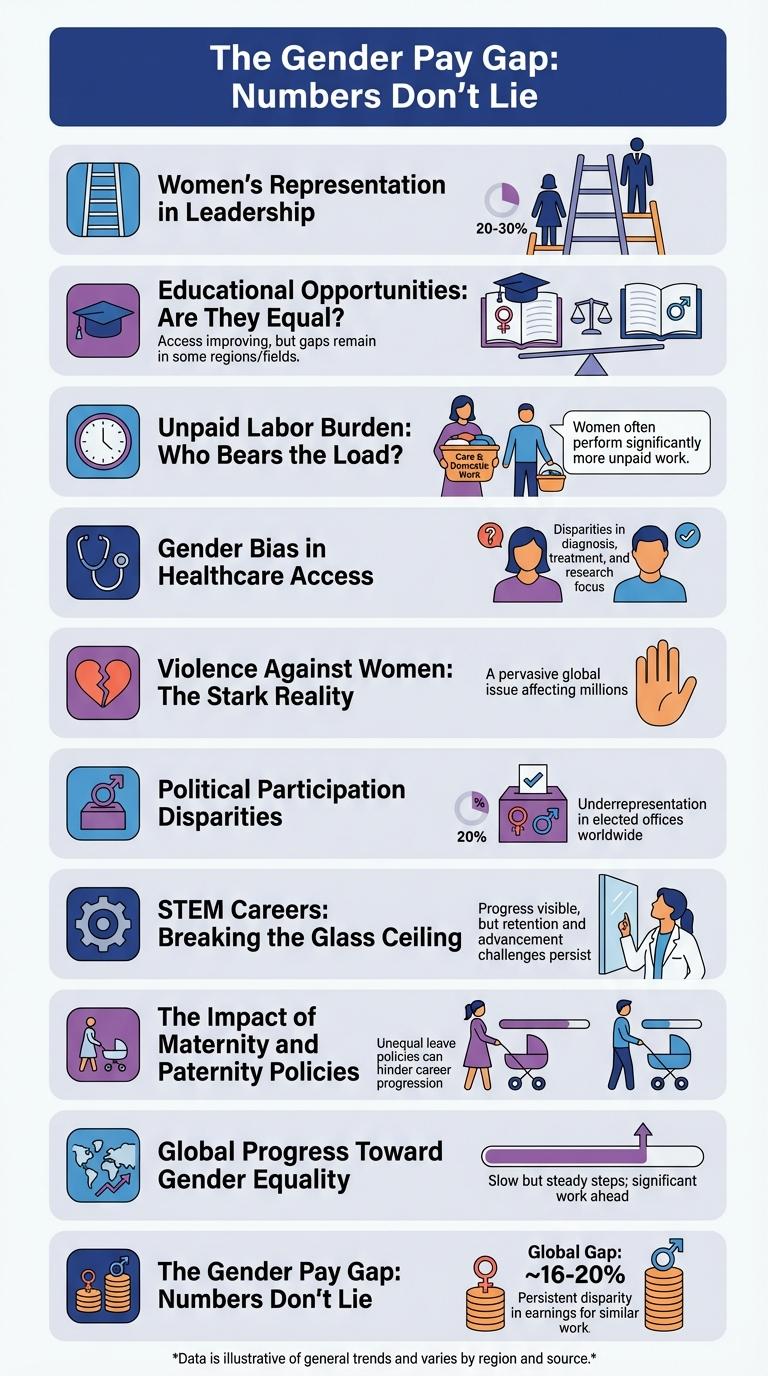
Gender inequality persists globally, affecting access to education, employment, and leadership opportunities for women and marginalized groups. This infographic highlights key statistics and trends that reveal disparities in income, representation, and social status. Understanding these data points is essential to driving policy changes and promoting equal rights.
The Gender Pay Gap: Numbers Don't Lie
| Statistic | Details |
|---|---|
| Global Gender Pay Gap | Women earn 16% less than men on average worldwide |
| Hourly Wage Gap | Women's median hourly earnings are 82% of men's in the U.S. |
| Impact by Industry | Finance and tech show pay gaps exceeding 25% |
| Advancement Barriers | Women hold only 29% of senior management roles globally |
| Long-Term Effect | Lifetime earnings for women are approximately $1.5 million less than men |
Women's Representation in Leadership
Women's representation in leadership positions remains significantly lower than men's across various industries globally. This disparity highlights the ongoing challenges women face in advancing to executive roles.
In boardrooms worldwide, women hold approximately 28% of leadership roles, with notable variation between sectors. Increasing this percentage is crucial for promoting diversity, equity, and improved organizational performance.
Educational Opportunities: Are They Equal?
Gender inequality remains a significant barrier to equal educational opportunities worldwide. Girls and boys face different challenges in accessing quality education, influenced by cultural, economic, and social factors.
In many regions, enrollment rates for girls lag behind boys, especially at secondary and higher education levels. Limited access to resources, early marriage, and gender-based violence disproportionately affect girls' educational attainment.
Unpaid Labor Burden: Who Bears the Load?
Gender inequality significantly affects the distribution of unpaid labor, with women shouldering the majority of household and caregiving tasks globally. This imbalance limits women's economic opportunities and perpetuates systemic disparities.
Women perform approximately 75% of the world's unpaid care work, amounting to an average of 4.1 hours per day compared to men's 1.7 hours. This unpaid labor includes childcare, eldercare, cooking, and cleaning, tasks that are often undervalued in economic measurements. Addressing this disparity is crucial for achieving gender equality and empowering women economically and socially.
Gender Bias in Healthcare Access
Gender bias in healthcare access leads to significant disparities in diagnosis, treatment, and overall health outcomes between men and women. Women often receive less pain management and experience longer wait times for critical care compared to men. Addressing these biases is essential to ensure equitable healthcare services for all genders.
Violence Against Women: The Stark Reality
Violence against women remains one of the most pervasive human rights violations globally. It affects women of all ages, backgrounds, and cultures, severely impacting their physical and mental well-being.
- 1 in 3 Women Experience Violence - Approximately 35% of women worldwide have faced either physical or sexual intimate partner violence or non-partner sexual violence.
- Femicide Rates are Alarmingly High - Over 87,000 women were intentionally killed in 2017, with more than half killed by intimate partners or family members.
- Underreporting is a Major Issue - Many cases of violence go unreported due to stigma, fear, and lack of support systems.
Efforts to combat violence against women require comprehensive legal reforms, public awareness, and accessible support services to protect victims and prevent abuse.
Political Participation Disparities
Gender inequality in political participation remains a significant global issue, with women underrepresented in political offices worldwide. This disparity impacts policy decisions and limits diverse perspectives in governance.
- Women hold less than 25% of parliamentary seats - Globally, women occupy fewer than one-quarter of all national parliamentary seats.
- Fewer women serve as heads of state or government - Only a small percentage of countries currently have women leaders in the highest executive roles.
- Barriers to political participation persist - Cultural norms, discrimination, and limited access to resources restrict women's involvement in politics.
STEM Careers: Breaking the Glass Ceiling
Gender inequality remains a significant barrier for women pursuing careers in STEM fields. Efforts to break the glass ceiling aim to create equal opportunities and representation for women in science, technology, engineering, and mathematics.
- Women Represent Only 28% of STEM Workforce - Despite growth, women make up less than one-third of the STEM labor force globally.
- Gender Pay Gap Persists in STEM Careers - Women in STEM earn approximately 18% less than their male counterparts on average.
- Leadership Roles Held Mostly by Men - Women occupy fewer than 20% of executive and senior positions in STEM industries.
The Impact of Maternity and Paternity Policies
Maternity and paternity policies significantly influence gender inequality in the workplace by shaping parental leave availability and workplace flexibility. Countries with comprehensive parental leave and equal paternity benefits show increased female workforce participation and reduced gender pay gaps. Supportive policies encourage shared caregiving responsibilities, promoting gender equality both at home and in professional environments.