
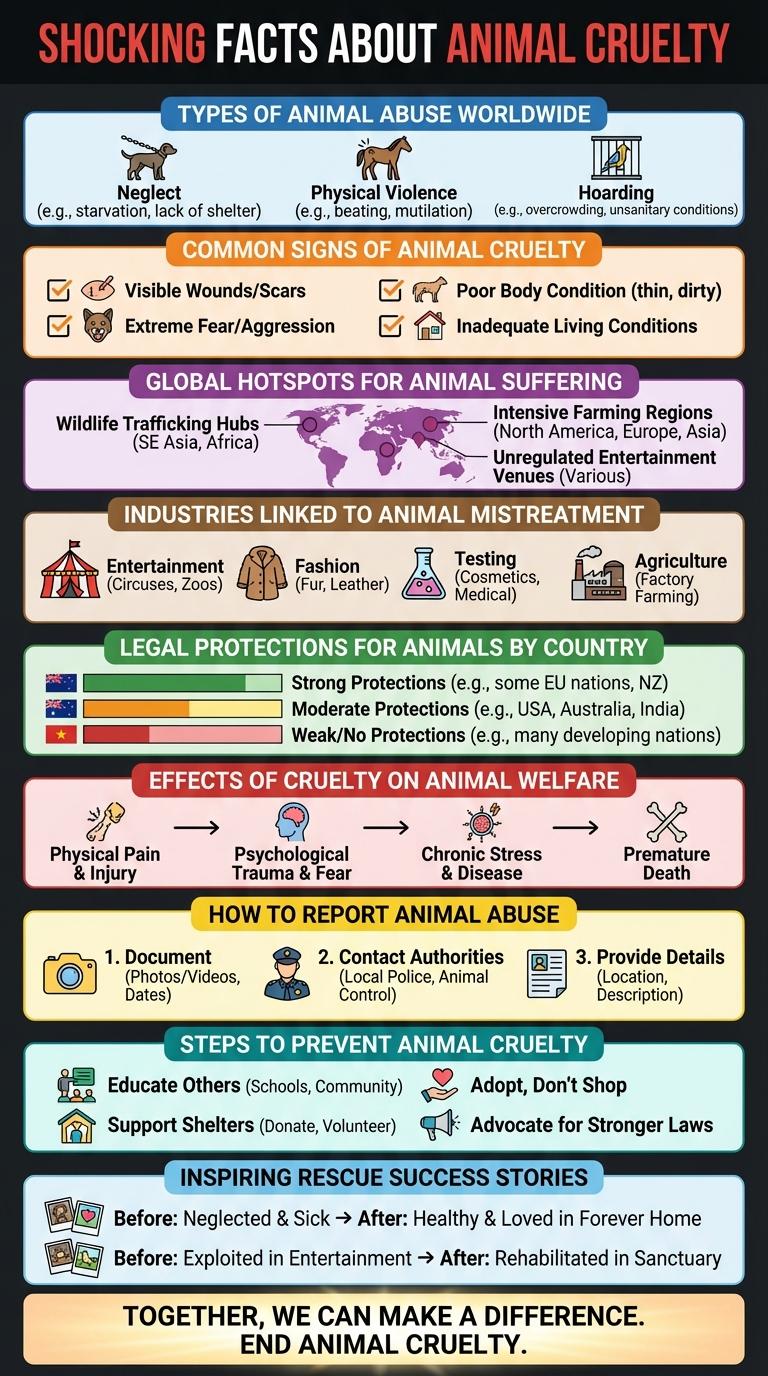
Animal cruelty inflicts severe harm on animals through neglect, abuse, and exploitation, impacting their health and well-being. Understanding the various forms of cruelty, from physical violence to psychological torment, is essential for raising awareness and promoting animal rights. This infographic highlights key statistics and facts to illuminate the urgent need for compassion and stricter animal protection laws.
Shocking Facts About Animal Cruelty
Animal cruelty affects millions of animals worldwide every year, causing unnecessary suffering and death. Awareness of shocking facts about animal cruelty can drive stronger prevention and protection efforts.
- Over 70 billion animals - are raised and killed annually for food, often in inhumane factory farming conditions.
- Animal testing impacts 115 million - animals yearly, many subjected to painful procedures without adequate pain relief.
- Neglect and abuse cases - lead to long-term physical and psychological harm in domestic and wild animals globally.
Recognizing these facts highlights the urgent need for stricter animal welfare laws and compassionate treatment.
Types of Animal Abuse Worldwide
Animal cruelty encompasses various forms of abuse inflicted on animals across the globe. Recognizing the types of abuse helps in raising awareness and promoting animal welfare.
Common types of animal abuse include physical violence, neglect, and exploitation. These abuses occur in homes, farms, entertainment, and illegal trafficking.
Common Signs of Animal Cruelty
Animal cruelty often goes unnoticed, yet recognizing the common signs can help in early intervention. Identifying these indicators is crucial for protecting vulnerable animals from harm.
- Physical Injuries - Visible wounds, bruises, or untreated injuries may indicate abuse or neglect.
- Malnourishment - Animals showing signs of extreme weight loss or poor coat condition often suffer from inadequate care.
- Behavioral Changes - Excessive fear, aggression, or withdrawal can signal that an animal has been mistreated.
- Poor Living Conditions - Unsanitary environments or lack of shelter suggest neglect and potential cruelty.
- Lack of Veterinary Care - Absence of medical treatment for obvious health issues is a common cruelty sign.
Global Hotspots for Animal Suffering
Global hotspots for animal suffering include regions with intensive factory farming, wildlife trafficking, and habitat destruction. Countries in Southeast Asia, parts of Africa, and Latin America experience high levels of animal cruelty due to illegal hunting and deforestation. Awareness and stricter enforcement of animal protection laws are crucial to reduce suffering in these vulnerable areas.
Industries Linked to Animal Mistreatment
Animal cruelty is a critical issue linked to several major industries worldwide. These industries often prioritize profit over the welfare of animals, leading to widespread mistreatment.
The meat and dairy industry subjects billions of animals to inhumane conditions annually. Cosmetic companies also test products on animals, causing unnecessary suffering and harm.
Legal Protections for Animals by Country
Animal cruelty laws vary significantly across countries, reflecting diverse cultural and legal approaches to animal welfare. Understanding legal protections helps identify regions with stronger enforcement and areas needing improvement.
- United States - The Animal Welfare Act sets federal standards for treatment, but enforcement and protections vary by state.
- United Kingdom - The Animal Welfare Act 2006 provides robust protections, making cruelty offenses punishable by fines and imprisonment.
- Germany - Germany enforces strict anti-cruelty laws, including a constitutional right to animal protection.
- India - The Prevention of Cruelty to Animals Act, 1960, prohibits cruelty and mandates proper care for animals nationwide.
- Australia - Animal welfare legislation is state-governed, with varying degrees of legal protection against cruelty across regions.
Effects of Cruelty on Animal Welfare
Animal cruelty severely impacts the physical and psychological well-being of animals. Injuries, malnutrition, and stress are common consequences that diminish their quality of life.
Prolonged mistreatment leads to chronic health problems and hampers natural behaviors, causing emotional distress. Animals subjected to neglect or abuse often develop anxiety, depression, and fear responses. These effects reduce their chances of survival and rehabilitation.
How to Report Animal Abuse
How can you report animal abuse effectively? Contact your local animal control or humane society to provide detailed information about the incident. Include descriptions, locations, and any evidence such as photos or videos for a stronger case.
Steps to Prevent Animal Cruelty
Animal cruelty remains a critical issue worldwide, causing suffering and distress to countless animals. Understanding the key steps to prevent animal cruelty empowers communities to take effective action. Promoting awareness, enforcing laws, and encouraging responsible pet ownership are essential measures to protect animal welfare.