
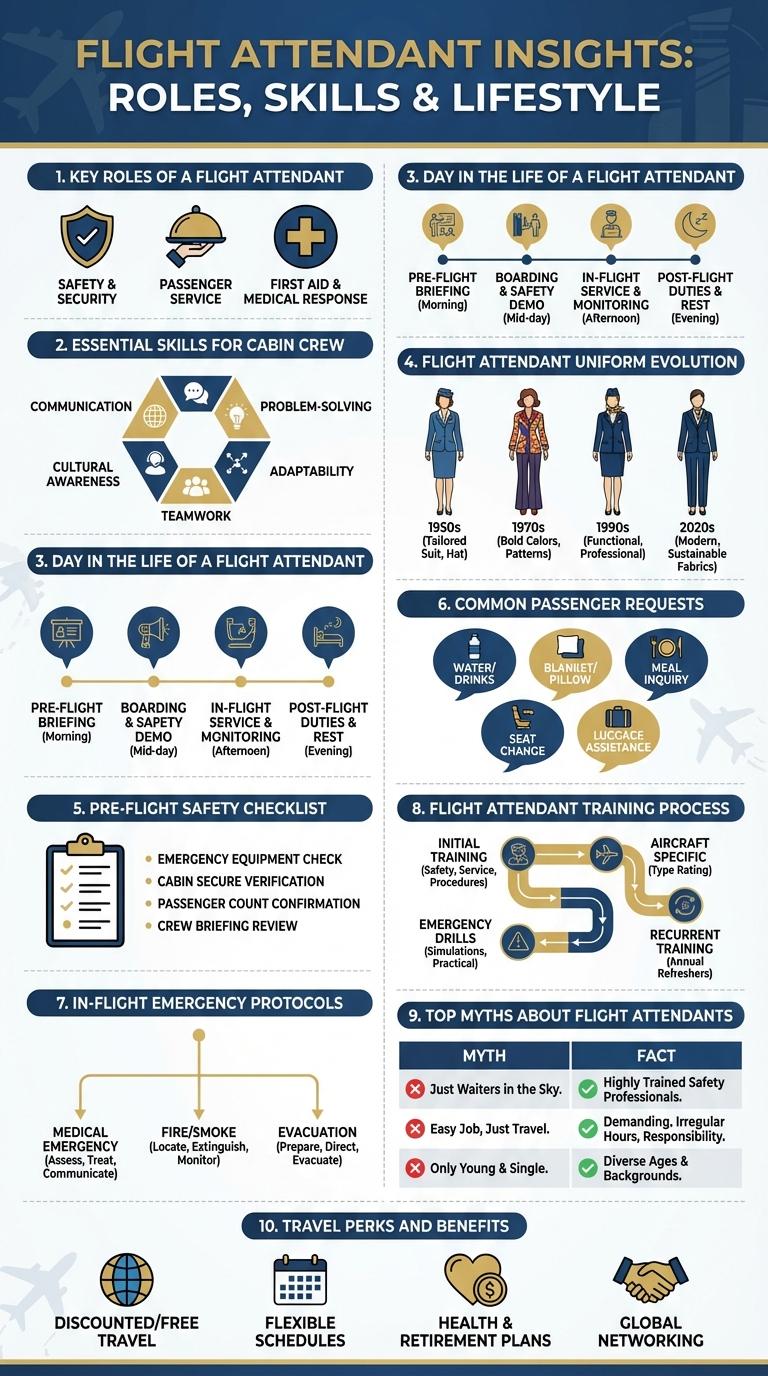
Flight attendants play a crucial role in ensuring passenger safety and comfort during flights. Their responsibilities include conducting safety demonstrations, serving meals, and managing emergency situations efficiently. This infographic highlights key aspects of their job, training requirements, and essential skills needed in the aviation industry.
Key Roles of a Flight Attendant
Flight attendants play a crucial role in ensuring passenger safety and comfort during flights. They perform safety demonstrations, manage emergencies, and provide assistance to passengers as needed.
Their responsibilities include serving meals and beverages, addressing passenger inquiries, and maintaining cabin cleanliness. Flight attendants also conduct pre-flight checks and coordinate with the flight crew to handle any in-flight issues efficiently.
Essential Skills for Cabin Crew
Flight attendants must possess excellent communication skills to ensure clear and effective interaction with passengers and crew. Strong problem-solving abilities are essential for managing in-flight emergencies and maintaining passenger safety. Additionally, adaptability and teamwork are crucial for handling diverse situations and working harmoniously within the cabin crew.
Day in the Life of a Flight Attendant
| Time | Activity |
|---|---|
| 4:00 AM - 6:00 AM | Pre-flight briefing and uniform preparation |
| 6:00 AM - 8:00 AM | Passenger boarding and safety demonstration |
| 8:00 AM - 12:00 PM | In-flight service including meals, drinks, and passenger care |
| 12:00 PM - 1:00 PM | Rest period and preparation for landing |
| 1:00 PM - 2:00 PM | Landing, passenger disembarkation, and post-flight checks |
Flight Attendant Uniform Evolution
Flight attendant uniforms have evolved significantly since commercial aviation began, reflecting changes in fashion, functionality, and airline branding. These changes highlight the industry's adaptation to modern needs and cultural trends.
- 1930s Classic Elegance - Early uniforms featured tailored suits and hats inspired by military and naval attire, emphasizing sophistication and professionalism.
- 1960s Bold and Colorful - Introduction of vibrant colors, short skirts, and stylish accessories aligned with the era's fashion revolutions and airline marketing strategies.
- Modern Practicality - Current uniforms focus on comfort, gender inclusivity, and corporate identity, using breathable fabrics and adaptable designs.
The evolution of flight attendant uniforms mirrors both technological advancements in aviation and shifting cultural values over nearly a century.
Pre-Flight Safety Checklist
What are the key steps in a flight attendant's pre-flight safety checklist?
Flight attendants ensure all emergency equipment is present and functional before boarding. They verify safety cards, check oxygen masks, and confirm communication devices operate correctly.
How do flight attendants prepare the cabin for takeoff?
They inspect seat belts, tray tables, and seat backs for proper positioning. Cabin lighting and overhead bins are checked to guarantee passenger safety.
What role does a flight attendant play in emergency equipment inspection?
Flight attendants confirm fire extinguishers, life vests, and first aid kits are accessible and in working order. This preparation is crucial for efficient emergency responses.
How is communication equipment managed during pre-flight checks?
They test interphone systems and ensure their headsets are functioning properly. Clear communication is vital for coordinating safety procedures during flights.
Why is the pre-flight safety checklist essential for flight attendants?
This checklist minimizes risks and enhances passenger safety throughout the journey. It ensures all safety protocols comply with aviation regulations.
Common Passenger Requests
Flight attendants play a crucial role in ensuring passenger comfort and safety throughout the journey. They are trained to handle a variety of requests efficiently.
Common passenger requests include assistance with luggage storage, dietary needs, and seat adjustments. Flight attendants also frequently address requests for blankets, pillows, and refreshments. Their ability to respond quickly enhances the overall travel experience.
In-Flight Emergency Protocols
Flight attendants play a crucial role in managing in-flight emergencies to ensure passenger safety. They undergo rigorous training to handle various emergency situations efficiently and calmly.
- Emergency Evacuation Procedures - Flight attendants direct passengers to exits and manage orderly evacuation during emergencies to prevent injuries.
- Medical Emergency Response - Trained to provide first aid and use onboard medical equipment to assist passengers experiencing health crises.
- Fire Safety Management - Equipped to identify and extinguish fires onboard using specialized equipment to protect the cabin and passengers.
Flight Attendant Training Process
The flight attendant training process is comprehensive, ensuring candidates are well-prepared for in-flight safety and customer service duties. Training typically spans 4 to 8 weeks and covers emergency procedures, first aid, and communication skills.
Instruction includes simulated safety drills, evacuation protocols, and handling medical emergencies to guarantee passenger safety. Graduates must pass written exams, physical tests, and practical assessments before receiving certification to work onboard.
Top Myths About Flight Attendants
Flight attendants play a crucial role in ensuring passenger safety and comfort during flights. Many misconceptions surround their profession, often overshadowing their expertise and responsibilities.
- Flight attendants only serve drinks - Their primary role is to ensure safety, including emergency procedures and passenger well-being.
- They have an easy job - Flight attendants manage complex tasks, long hours, and unpredictable situations during flights.
- Flight attendants must fit a specific appearance - Airlines prioritize skills and professionalism over appearance in hiring and training.