
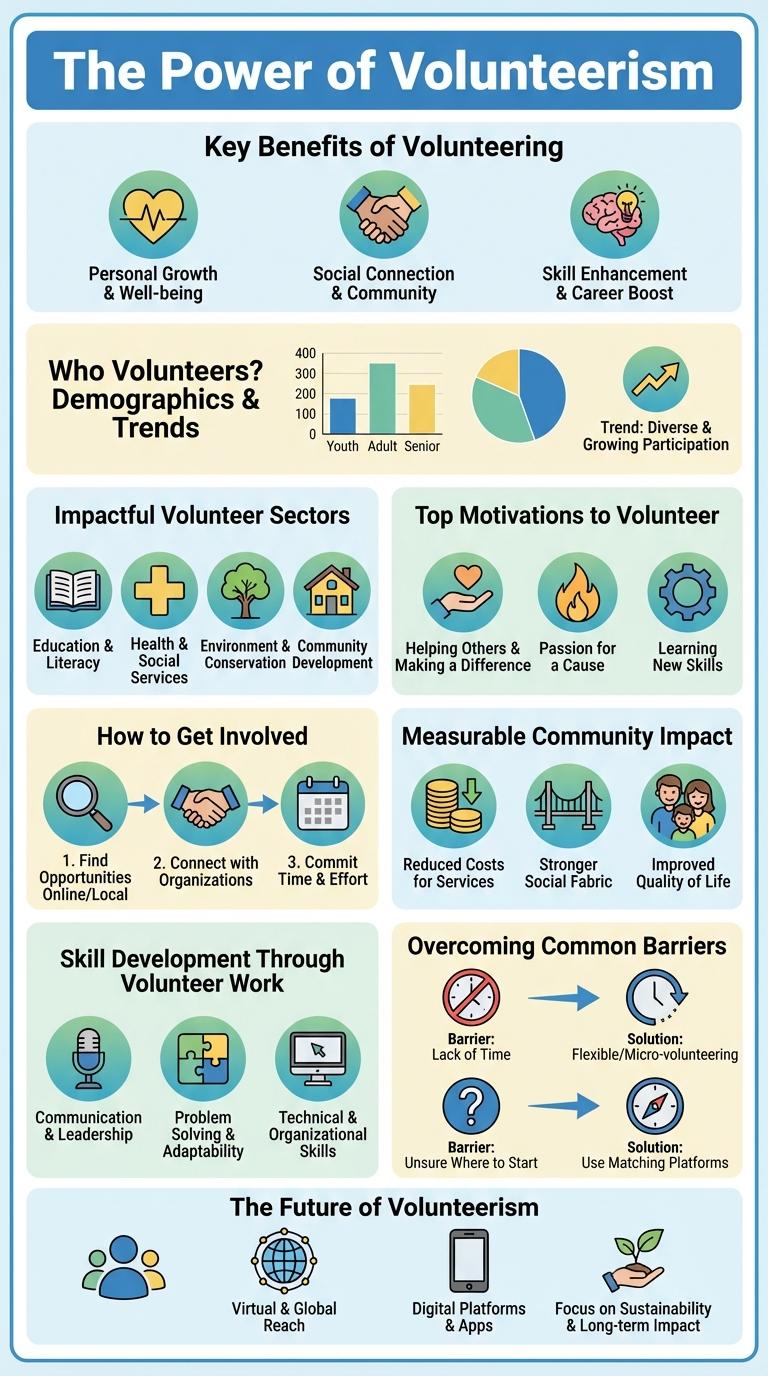
Volunteerism drives positive change by engaging individuals in community service and charitable activities. Infographics visually present key statistics, benefits, and inspiring stories that highlight the impact of volunteer efforts worldwide. These graphics make complex information accessible and motivate people to contribute their time and skills.
The Power of Volunteerism
Volunteerism drives positive change by empowering individuals to contribute their time and skills. It strengthens communities and fosters a culture of empathy and collaboration.
- Community Impact - Volunteers help address local needs, improving health, education, and social services.
- Personal Growth - Engaging in volunteer work enhances skills, builds confidence, and promotes mental well-being.
- Social Connection - Volunteerism creates networks and unites people from diverse backgrounds toward common goals.
Key Benefits of Volunteering
Volunteering fosters community connection by allowing individuals to contribute to causes they care about. It enhances personal growth through skill development, increased empathy, and expanded social networks. Volunteering also improves mental and physical health, reducing stress and promoting overall well-being.
Who Volunteers? Demographics & Trends
Volunteerism spans all age groups, but young adults aged 16-24 and seniors over 65 show the highest participation rates. Women volunteer more frequently than men, especially in community and social services. Urban residents engage in diverse volunteer activities, while rural volunteers often focus on local projects and agriculture-related causes.
Impactful Volunteer Sectors
Volunteerism drives change across various impactful sectors that support communities worldwide. Key sectors include education, healthcare, environmental conservation, social services, and disaster relief.
Education volunteers enhance learning opportunities and literacy rates globally. Healthcare volunteers provide essential services in clinics, promote public health, and support mental health initiatives.
Top Motivations to Volunteer
Volunteerism is driven by various personal and social motivations that inspire individuals to contribute their time and skills. Understanding these top motivations helps organizations engage and retain volunteers effectively.
- Desire to Make a Difference - Many volunteers are motivated by the impact they can have on their communities and the world.
- Personal Growth - Volunteering offers opportunities to develop new skills and gain valuable experiences.
- Social Connections - Building new relationships and feeling part of a community attracts many to volunteer work.
How to Get Involved
Volunteerism empowers individuals to make a positive impact in their communities. Getting involved is simple and rewarding, offering numerous opportunities to contribute time and skills.
Start by identifying causes that match your interests and values, such as education, environment, or healthcare. Search for local volunteer organizations or online platforms like VolunteerMatch and Idealist to find openings. Reach out directly to nonprofits or join community events to connect with like-minded volunteers and begin your journey of service.
Measurable Community Impact
Volunteerism drives significant positive changes in communities by addressing critical needs. Measuring the impact of volunteer efforts reveals valuable insights into social progress and resource optimization.
- Increased Educational Outcomes - Volunteer tutoring programs improve student performance and graduation rates in underserved areas.
- Enhanced Public Health - Health volunteers contribute to greater vaccination rates and improved preventive care awareness.
- Improved Environmental Sustainability - Community clean-up and tree-planting initiatives reduce pollution and promote green spaces.
Tracking volunteer activities and outcomes strengthens community development strategies and maximizes social benefits.
Skill Development Through Volunteer Work
Volunteerism offers valuable opportunities for skill development by engaging individuals in diverse tasks and real-world scenarios. Participants enhance communication, leadership, and problem-solving abilities through hands-on experiences.
Skill acquisition through volunteer work boosts employability and personal growth. Many volunteers gain industry-specific skills, networking connections, and a stronger resume, fostering long-term career advancement.
Overcoming Common Barriers
| Common Barriers | Effective Solutions |
|---|---|
| Lack of Time | Flexible volunteering hours and micro-volunteering opportunities |
| Transportation Challenges | Providing remote volunteer options and organizing carpooling systems |
| Limited Awareness | Targeted outreach campaigns and clear communication of benefits |
| Skill Mismatch | Training programs and matching volunteers with suitable roles |
| Fear of Commitment | Short-term projects and trial volunteering opportunities |