
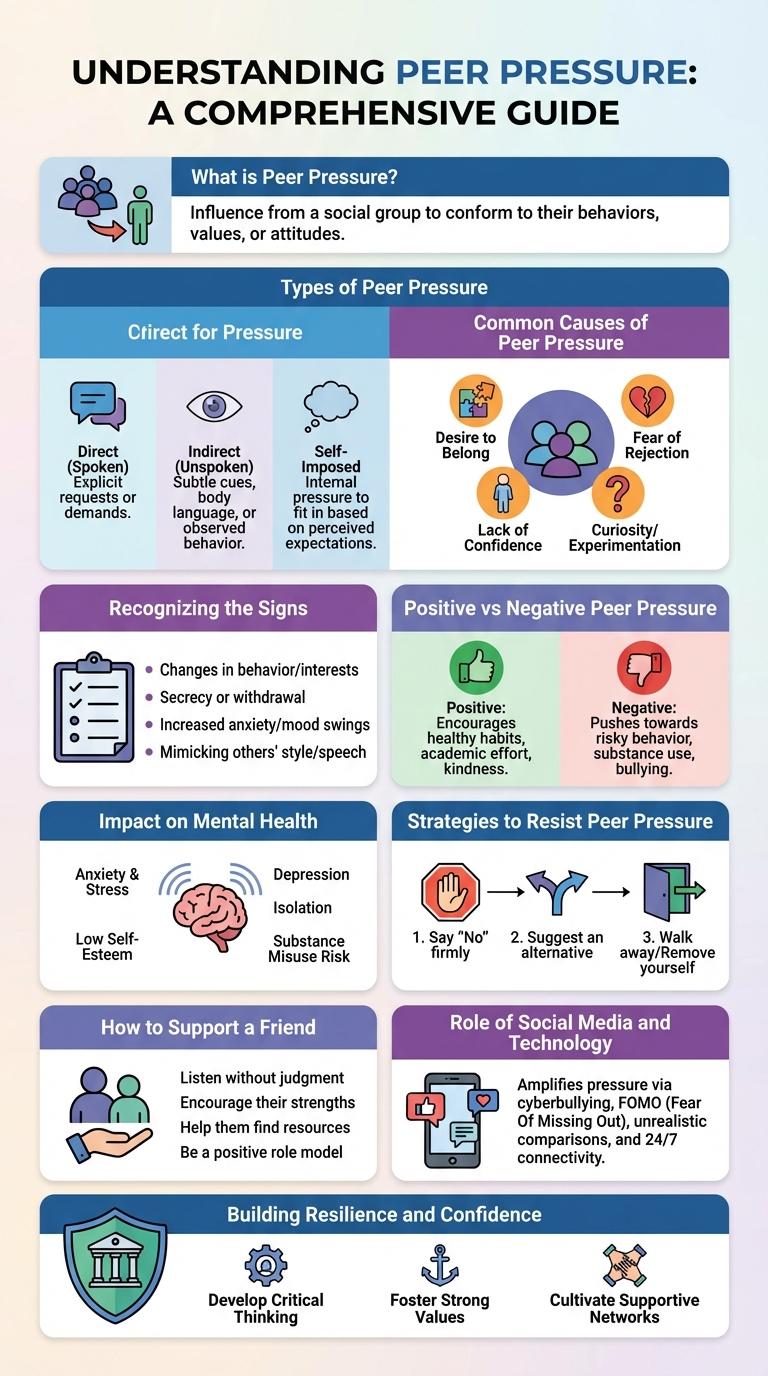
Peer pressure significantly influences individual behavior, shaping decisions and social interactions. Understanding the dynamics of peer pressure helps in recognizing its impact on confidence and choices. Infographics visually present these effects, making complex information easier to grasp and remember.
What is Peer Pressure?
Peer pressure occurs when individuals are influenced by their social group to adopt certain behaviors, values, or attitudes. It can significantly impact decision-making and self-expression.
- Definition - Peer pressure is the social influence exerted by peers encouraging conformity to group norms.
- Positive Peer Pressure - It can motivate individuals to make healthy choices and achieve goals.
- Negative Peer Pressure - It may lead to risky behaviors, such as substance abuse or unethical actions.
Types of Peer Pressure
Peer pressure influences individuals to conform to the behaviors, attitudes, or values of a peer group. Understanding the different types helps in recognizing and managing their impact effectively.
- Positive Peer Pressure - Encourages individuals to adopt beneficial habits or make constructive decisions.
- Negative Peer Pressure - Pushes individuals toward harmful behaviors or risky activities.
- Direct Peer Pressure - Involves explicit demands or encouragement to behave in a certain way.
- Indirect Peer Pressure - Occurs through subtle cues or the desire to fit in without overt persuasion.
- Neutral Peer Pressure - Influences choices that have neither positive nor negative consequences.
Common Causes of Peer Pressure
Peer pressure arises when individuals feel compelled to conform to the expectations or behaviors of their social group. Common causes include the desire for acceptance, fear of rejection, and the need to boost self-esteem.
Social identity plays a significant role in peer pressure as people seek belonging within their group. Media influence and the portrayal of ideal lifestyles can increase pressure to fit in. Adolescents are particularly vulnerable due to ongoing emotional and psychological development.
Recognizing the Signs
Peer pressure influences individuals to conform to group behaviors, often leading to choices against their better judgment. Recognizing the signs helps maintain personal integrity and make informed decisions.
Signs include sudden changes in behavior, such as adopting new habits or attitudes to fit in with peers. Increased secrecy and avoidance of previous interests signal potential peer influence.
Positive vs Negative Peer Pressure
| Positive Peer Pressure | Negative Peer Pressure |
|---|---|
| Encourages healthy habits like exercising and balanced eating | Pressures individuals to engage in risky behaviors such as substance abuse |
| Motivates academic achievement and skill development | Leads to skipping school, cheating, or neglecting responsibilities |
| Promotes positive social interactions and empathy | Encourages bullying, exclusion, or disrespecting others |
| Supports participation in community service and leadership roles | Drives involvement in illegal activities or vandalism |
| Builds self-confidence through constructive feedback | Undermines self-esteem through criticism and peer rejection |
Impact on Mental Health
How does peer pressure affect mental health? Peer pressure can lead to increased stress and anxiety as individuals struggle to conform. This often results in lowered self-esteem and feelings of isolation.
What are common emotional responses to peer pressure? People may experience fear of rejection, sadness, and confusion. These emotions can contribute to unhealthy coping mechanisms.
Can peer pressure cause long-term mental health issues? Persistent peer pressure increases the risk of depression and anxiety disorders. It can also exacerbate existing mental health conditions.
Who is most vulnerable to the mental health effects of peer pressure? Teenagers and young adults are particularly susceptible due to their developing identities. Social influence during these years significantly impacts emotional well-being.
What steps can reduce the negative impact of peer pressure on mental health? Building strong self-confidence and seeking supportive social networks are key. Access to mental health resources also helps individuals manage stress effectively.
Strategies to Resist Peer Pressure
Peer pressure often influences individuals to conform to group behaviors, sometimes leading to negative consequences. Effective strategies to resist peer pressure include developing strong self-confidence, learning to say no assertively, and choosing friends who respect personal boundaries. Building awareness of one's values and practicing refusal skills empower individuals to make independent decisions despite external influences.
How to Support a Friend
Supporting a friend facing peer pressure requires understanding and empathy. Effective support helps them make confident, independent choices.
- Listen Actively - Give your full attention and validate their feelings without judgment.
- Offer Encouragement - Reinforce their positive decisions and boost their self-esteem.
- Provide Alternatives - Suggest other ways to handle situations without yielding to pressure.
Being a reliable friend can empower someone to resist negative influences and stay true to themselves.
Role of Social Media and Technology
Social media platforms play a significant role in amplifying peer pressure among individuals, especially teenagers. Constant exposure to curated lifestyles and popular trends can lead to feelings of inadequacy and the urge to conform.
Technology enables instant communication, making it easier for peer influence to spread quickly and persistently. Online interactions often intensify pressure to fit in, as users seek validation through likes and comments.