
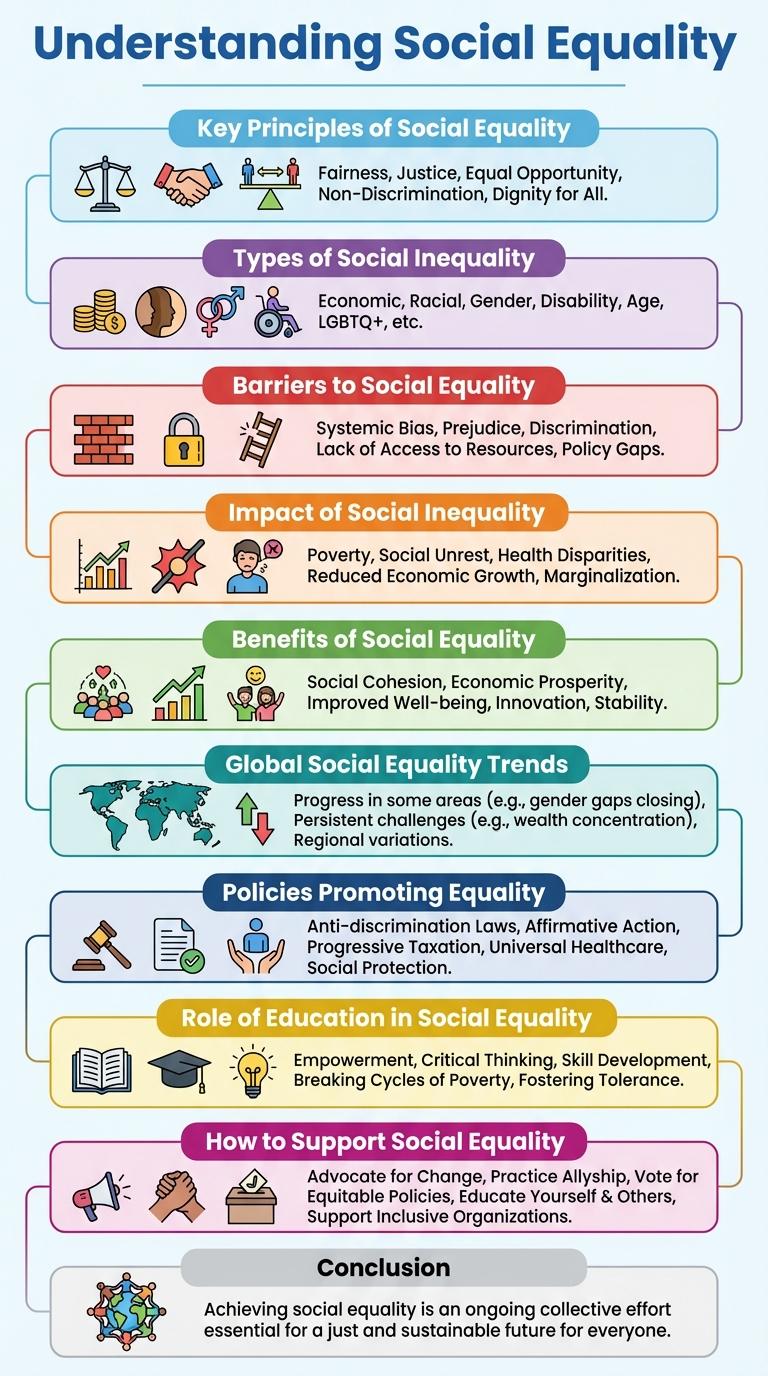
Social equality ensures that every individual has equal access to opportunities and rights regardless of their background. This infographic highlights key statistics and facts that illustrate current disparities and progress in achieving fairness across different social groups. By visualizing these insights, it emphasizes the importance of continued efforts toward an inclusive and equitable society.
Understanding Social Equality
Social equality ensures that all individuals have equal rights, opportunities, and access to resources regardless of their background. Understanding its core principles is essential for fostering inclusive and fair societies.
- Equal Rights - All people should have the same legal protections and freedoms under the law.
- Economic Equity - Access to opportunities and wealth should not depend on social or economic status.
- Inclusive Participation - Everyone deserves the chance to engage fully in social, political, and economic life.
Key Principles of Social Equality
Social equality ensures that all individuals have equal access to rights and opportunities regardless of their background. It aims to eliminate discrimination and create a fair society.
Key principles include equity, which involves providing resources based on individual needs, and inclusivity, ensuring everyone participates fully in social life.
Types of Social Inequality
Social equality ensures everyone has the same status and opportunities in society, regardless of background. Recognizing different types of social inequality helps address barriers to fairness and justice.
- Economic Inequality - Differences in income and wealth distribution affect access to resources and quality of life.
- Gender Inequality - Disparities in rights and opportunities based on gender limit personal and professional growth.
- Racial Inequality - Systemic discrimination restricts social mobility and equal treatment of racial groups.
Barriers to Social Equality
Barriers to social equality hinder equal access to resources, opportunities, and rights across different social groups. These obstacles often stem from systemic discrimination, economic disparities, and cultural biases.
Key barriers include unequal education, workplace discrimination, limited healthcare access, and social stigmas. Overcoming these challenges requires targeted policies and inclusive social programs to promote fairness and justice.
Impact of Social Inequality
Social inequality significantly affects access to education, healthcare, and employment opportunities, creating persistent disparities among different socio-economic groups. Unequal distribution of resources leads to higher poverty rates and reduced social mobility, limiting individuals' potential to improve their living conditions. Addressing social inequality is essential for fostering inclusive growth and ensuring equal opportunities for all members of society.
Benefits of Social Equality
| Benefit | Description |
|---|---|
| Economic Growth | Social equality promotes fair access to resources and opportunities, leading to increased productivity and innovation. |
| Improved Health | Equal access to healthcare and living conditions results in better physical and mental health outcomes for all communities. |
| Social Cohesion | Reducing disparities fosters a sense of belonging and trust within society, decreasing conflicts and social tensions. |
| Educational Access | Equal opportunities in education enhance skill development and prepare individuals for diverse job markets. |
| Justice and Fairness | Upholding social equality ensures that rights are respected and discrimination is minimized across all sectors. |
Global Social Equality Trends
Global social equality strives to reduce disparities in wealth, education, and access to basic services across diverse populations. Key indicators reveal progress in gender equality, economic opportunities, and social inclusion worldwide.
Recent trends highlight a gradual narrowing of income gaps in several regions, with increased policies promoting equal pay and anti-discrimination laws. Education enrollment rates for marginalized groups have risen, reflecting improved social mobility. However, challenges remain in addressing systemic inequalities in healthcare and political representation.
Policies Promoting Equality
What are key policies promoting social equality? Governments implement anti-discrimination laws to ensure equal treatment. Social welfare programs provide support to marginalized groups, reducing inequality.
How do education policies enhance social equality? Access to quality education is expanded through scholarships and inclusive curricula. Equal education opportunities empower disadvantaged communities.
What role do labor laws play in promoting equality? Minimum wage laws and workplace protections reduce income disparities. Equal pay legislation addresses gender and racial wage gaps.
How does healthcare policy contribute to equality? Universal healthcare systems offer affordable medical services for all citizens. Health equity initiatives target underserved populations.
What impact do housing policies have on social equality? Affordable housing programs prevent segregation and homelessness. Zoning reforms promote diverse, inclusive neighborhoods.
Role of Education in Social Equality
Education plays a crucial role in promoting social equality by providing equal opportunities for all individuals. Access to quality education helps bridge socio-economic gaps and empower marginalized communities.
- Equal Access - Ensures all children, regardless of background, receive the same educational opportunities.
- Skill Development - Equips individuals with the skills needed for economic advancement and social mobility.
- Awareness and Inclusion - Fosters understanding, tolerance, and social inclusion among diverse groups.
Investing in education is essential for building a fair and inclusive society where everyone can thrive.