
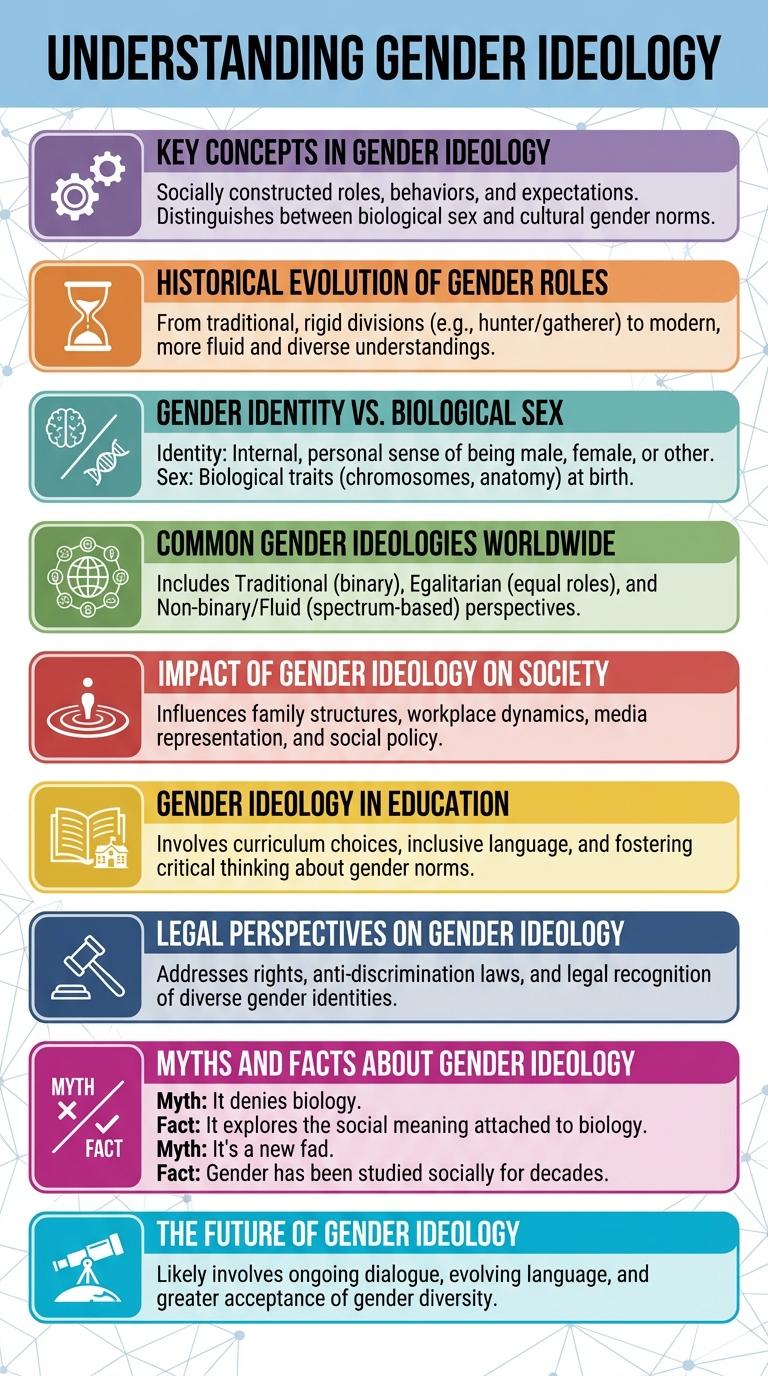
Gender ideology explores beliefs about gender identity and roles, shaping social, cultural, and political views worldwide. This infographic highlights key concepts, historical developments, and current debates surrounding gender theory and expression. Understanding these elements fosters informed discussions on equality and human rights.
Understanding Gender Ideology
Gender ideology encompasses a range of beliefs and concepts about gender identity, roles, and expression. It challenges traditional binary views of male and female, advocating for more inclusive understandings.
Understanding gender ideology involves recognizing the distinction between biological sex and gender as a social construct. It emphasizes the importance of personal identity, allowing individuals to define their gender beyond physical characteristics. This perspective supports policies and practices that promote equality and respect for diverse gender experiences.
Key Concepts in Gender Ideology
Gender ideology encompasses a set of beliefs and ideas about the roles, behaviors, and identities associated with gender. It challenges traditional binaries by promoting the understanding of gender as a spectrum influenced by social, cultural, and psychological factors.
Key concepts include gender identity, which refers to an individual's deeply felt internal experience of gender. Another vital concept is gender expression, the way people externally communicate their gender through clothing, behavior, and appearance.
Historical Evolution of Gender Roles
Gender roles have evolved significantly throughout history, shaped by cultural, social, and economic changes. Early societies often defined roles based on biological differences, while contemporary views emphasize fluidity and personal identity.
The 20th century marked pivotal shifts with movements advocating gender equality and challenging traditional norms. These changes laid the groundwork for today's diverse understanding of gender beyond the binary.
Gender Identity vs. Biological Sex
Gender identity refers to a person's internal sense of their gender, which may or may not align with their biological sex. Biological sex is determined by physical characteristics such as chromosomes, hormone levels, and reproductive anatomy. Understanding the distinction between gender identity and biological sex helps promote respectful conversations and inclusivity.
Common Gender Ideologies Worldwide
What are common gender ideologies worldwide? Gender ideologies define societal expectations for gender roles and identities. These beliefs vary across cultures but often influence social behavior and policies.
How do traditional gender roles manifest globally? Many societies promote binary roles where men are seen as providers and women as caregivers. These roles shape employment, family dynamics, and legal rights.
What impact does gender egalitarianism have worldwide? This ideology supports equal rights and responsibilities for all genders. Countries embracing it often show higher gender parity in education and workforce participation.
How does gender fluidity challenge conventional ideologies? Gender fluidity rejects fixed categories and embraces a spectrum of identities. It encourages inclusivity and recognition of diverse gender expressions.
What role does patriarchy play in shaping gender ideologies? Patriarchy prioritizes male authority and power within social structures. It influences laws, cultural norms, and access to resources, often limiting gender equality.
Impact of Gender Ideology on Society
Gender ideology profoundly influences societal norms and individual identities, shaping cultural, legal, and educational frameworks. Its impact extends to policy-making, human rights discourse, and social acceptance of diverse gender expressions.
- Redefinition of Gender Roles - Traditional gender roles become more fluid, challenging stereotypical expectations in family, workplace, and education.
- Legal and Policy Reforms - Laws increasingly protect gender identity rights, leading to new anti-discrimination policies and changes in official documentation.
- Social Acceptance and Inclusion - Awareness and acceptance of non-binary and transgender individuals grow, reducing stigma and fostering inclusivity across communities.
Gender Ideology in Education
Gender Ideology in education explores how concepts of gender identity influence teaching practices and curriculum design. It shapes students' understanding of gender roles and inclusivity within the learning environment.
This approach often includes discussions on gender diversity, equality, and respect for all identities.
- Curriculum Integration - Schools incorporate gender studies to promote awareness and acceptance among students.
- Policy Implementation - Educational institutions establish guidelines for supporting gender-diverse students, including pronoun use and anti-discrimination measures.
- Teacher Training - Educators receive training to address gender biases and foster inclusive classrooms.
Legal Perspectives on Gender Ideology
Legal perspectives on gender ideology vary significantly across countries, reflecting diverse cultural and political contexts. Some jurisdictions have enacted laws to protect gender identity and expression, ensuring rights to gender recognition and prohibiting discrimination. Other regions maintain restrictive policies that limit gender self-identification and access to gender-affirming healthcare.
Myths and Facts About Gender Ideology
Gender ideology is often misunderstood, leading to widespread myths that obscure its true purpose. Clarifying these misconceptions helps foster informed and respectful discussions.
- Myth: Gender ideology denies biological sex - It recognizes biological sex but emphasizes the distinction between sex and gender as social constructs.
- Myth: Gender ideology promotes confusion in children - It supports age-appropriate education to foster respect and understanding of diverse gender identities.
- Fact: Gender ideology advocates for human rights - It aims to promote equality, respect, and protection for all genders under the law.
- Fact: Gender identity is a personal experience - It acknowledges that individuals understand and express their gender uniquely, beyond binary definitions.
- Myth: Gender ideology threatens traditional family values - It encourages the inclusion of diverse family structures without undermining existing ones.
Understanding facts over myths about gender ideology promotes empathy, equality, and social harmony.