
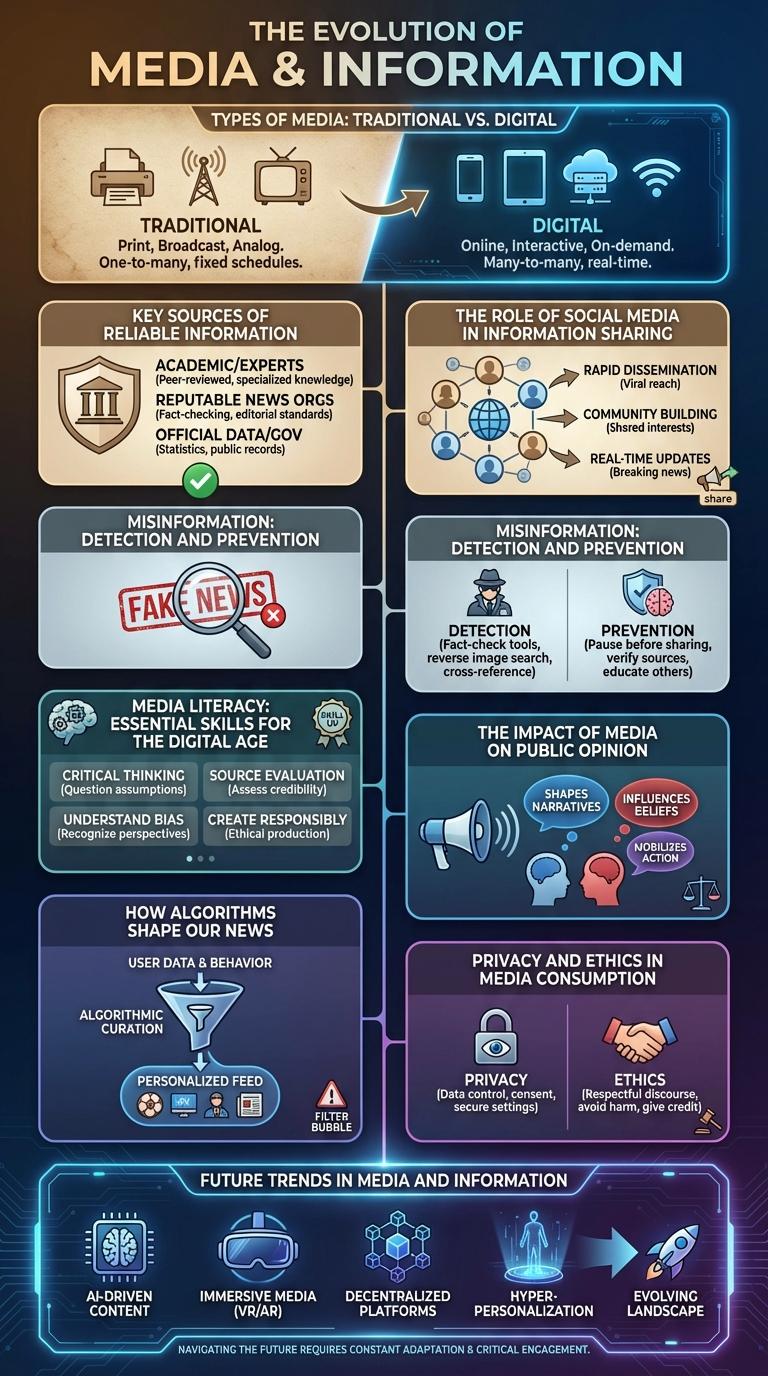
Media and information shape how individuals perceive the world by delivering news, entertainment, and education across various platforms. Understanding the flow of media content and the accuracy of information is essential in navigating the digital landscape. Infographics provide a clear and concise way to visualize complex data, enhancing comprehension and critical thinking about media consumption.
The Evolution of Media and Information
The evolution of media and information spans from ancient cave paintings to today's digital platforms. Early communication relied on oral storytelling and manual scripts, laying the foundation for modern media.
Printing technology in the 15th century revolutionized information dissemination, enabling mass communication. The 20th century introduced radio, television, and ultimately the internet, transforming how people access and share knowledge.
Types of Media: Traditional vs. Digital
What are the key differences between traditional and digital media? Traditional media includes newspapers, television, and radio, offering one-way communication to a broad audience. Digital media encompasses social networks, websites, and streaming platforms, enabling interactive and real-time content sharing.
Key Sources of Reliable Information
Reliable information primarily comes from well-established news organizations, academic institutions, and government agencies. These sources ensure accuracy, credibility, and timely updates through rigorous verification processes. Accessing information from these key sources helps prevent misinformation and supports informed decision-making.
The Role of Social Media in Information Sharing
Social media platforms serve as powerful tools for rapid information dissemination, enabling users to share news, updates, and content instantly across the globe. These platforms enhance connectivity, allowing diverse communities to access and exchange information in real time. However, the spread of misinformation remains a critical challenge, requiring users to critically evaluate sources and verify facts.
Misinformation: Detection and Prevention
Misinformation spreads rapidly across media platforms, impacting public perception and decision-making. Effective detection and prevention strategies are crucial to maintain information integrity.
- Fact-Checking Tools - Utilize automated and manual fact-checking to verify content accuracy in real-time.
- Media Literacy Education - Teach critical evaluation skills to help audiences discern credible sources from false information.
- Content Moderation - Implement algorithmic and human review systems to identify and remove misleading content promptly.
Combining technological solutions with public awareness enhances the ability to detect and prevent misinformation effectively.
Media Literacy: Essential Skills for the Digital Age
Media literacy is a crucial skill for navigating the complex digital landscape. It empowers individuals to critically evaluate information and make informed decisions online.
- Critical Thinking - Ability to analyze and assess media messages for credibility and bias.
- Source Evaluation - Skills to identify reliable and trustworthy information sources.
- Digital Communication - Effective use of digital tools to create and share information responsibly.
The Impact of Media on Public Opinion
Media plays a crucial role in shaping public opinion by framing news and highlighting specific issues. It influences perceptions through selective reporting and agenda-setting, affecting how people understand social and political topics.
Social media platforms amplify this impact by enabling rapid information sharing and user interaction. This dynamic environment can both inform and mislead the public, emphasizing the need for media literacy and critical thinking skills.
How Algorithms Shape Our News
Algorithms curate and filter news content, influencing the information users see daily. These processes impact public opinion and the diversity of perspectives available online.
Understanding how algorithms operate is essential to critically engage with digital news sources.
- Personalization - Algorithms tailor news feeds based on individual behaviors and preferences, creating unique content for each user.
- Filter Bubbles - Automated filtering can isolate users in echo chambers by repeatedly showing similar viewpoints and excluding diverse opinions.
- Engagement Optimization - News platforms prioritize content that generates high user interaction, often emphasizing sensational or emotionally charged stories.
Privacy and Ethics in Media Consumption
Media consumption shapes public opinion and influences personal privacy. Understanding privacy and ethics in media is essential for responsible engagement.
Privacy concerns arise when personal data is collected without consent during media usage. Ethical media consumption requires awareness of how content is created and shared. Protecting user data and respecting intellectual property promote trust and transparency in media platforms.