
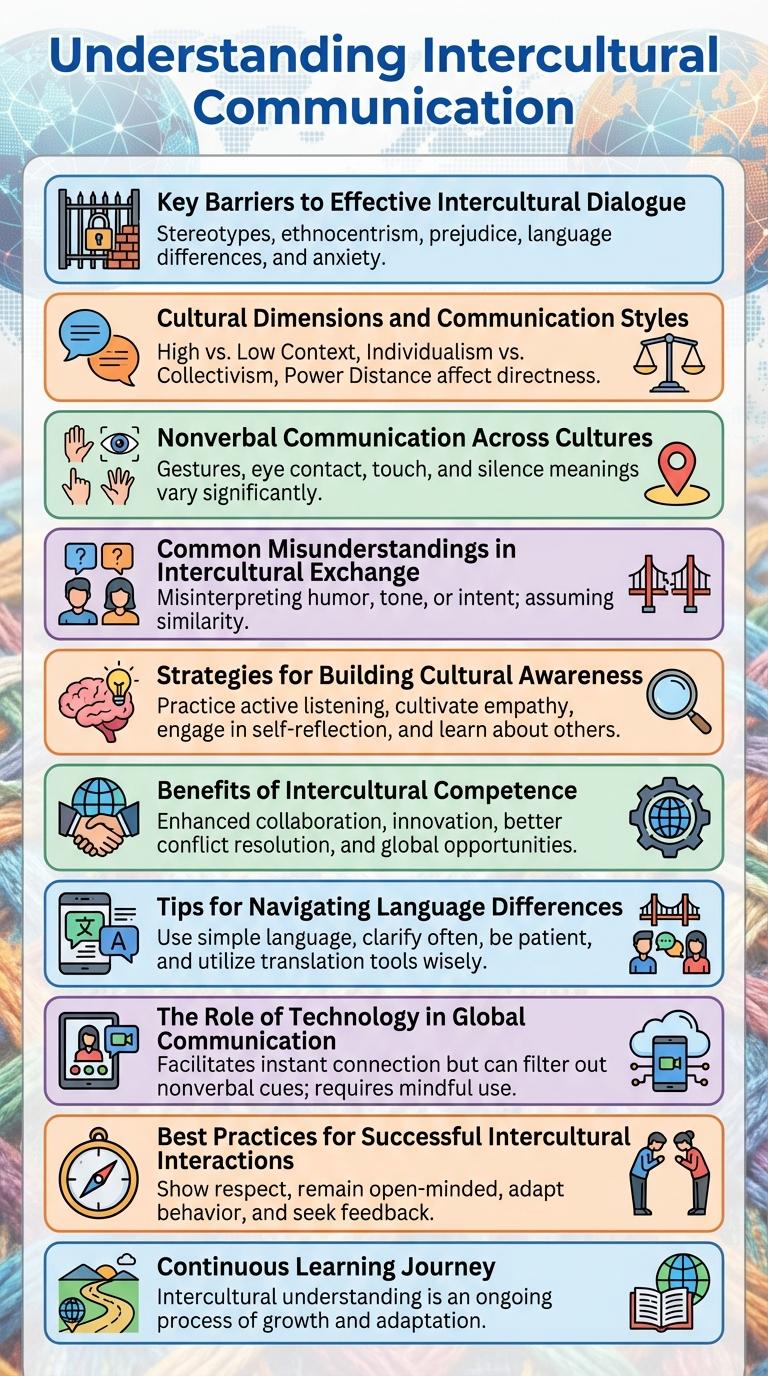
Effective intercultural communication bridges language and cultural gaps, fostering understanding and collaboration in diverse settings. This infographic highlights key strategies, common barriers, and essential skills to enhance interactions across cultures. Mastering these elements promotes mutual respect and successful global connections.
Understanding Intercultural Communication
What is intercultural communication? Intercultural communication is the exchange of information between individuals from different cultural backgrounds, emphasizing understanding and respect. It involves recognizing cultural differences in language, values, and behaviors to enhance effective interaction.
Why is understanding intercultural communication important? Understanding intercultural communication fosters empathy and reduces conflicts in diverse environments. It supports global collaboration and enriches personal and professional relationships across cultures.
How do cultural differences impact communication? Cultural differences influence verbal and nonverbal communication styles, such as gestures, tone, and context. Misinterpretations can occur without awareness of these cultural nuances, leading to misunderstandings.
What skills improve intercultural communication? Active listening, open-mindedness, and cultural awareness are key skills for successful intercultural communication. Developing these skills helps individuals navigate cultural complexities and communicate more effectively.
How can one develop intercultural communication competence? Exposure to diverse cultures through travel, education, and social interaction enhances intercultural competence. Continuous learning and adaptability are essential to understanding and bridging cultural gaps.
Key Barriers to Effective Intercultural Dialogue
| Key Barrier | Description |
|---|---|
| Language Differences | Variations in vocabulary, idioms, and accents complicate clear understanding. |
| Nonverbal Misinterpretation | Distinct cultural gestures and body language lead to misunderstandings. |
| Ethnocentrism | Belief in cultural superiority hinders openness and respect. |
| Stereotyping | Preconceived notions obscure authentic communication and create bias. |
| Contextual Differences | High-context versus low-context communication styles affect clarity and intent. |
Cultural Dimensions and Communication Styles
Intercultural communication hinges on understanding diverse cultural dimensions that influence behavior and interaction. Key dimensions such as Individualism vs. Collectivism and Power Distance shape how people express themselves and interpret messages.
Communication styles vary significantly, with high-context cultures relying on implicit messages and low-context cultures preferring direct, explicit communication. Recognizing these differences improves clarity, reduces misunderstandings, and fosters effective cross-cultural relationships.
Nonverbal Communication Across Cultures
Nonverbal communication varies significantly across cultures, influencing how gestures, facial expressions, and body language are interpreted in different societies. For example, eye contact is considered respectful in Western cultures but can be seen as confrontational in some Asian cultures. Understanding these cultural differences enhances effective communication and reduces the risk of misunderstandings.
Common Misunderstandings in Intercultural Exchange
Intercultural communication involves the exchange of information between individuals from different cultural backgrounds. Common misunderstandings often arise due to differences in language, nonverbal cues, and social norms.
Misinterpretations of gestures or facial expressions can lead to confusion or offense. Language barriers may cause messages to be misunderstood or lost in translation. Awareness and sensitivity to cultural differences improve communication effectiveness and reduce conflicts in diverse settings.
Strategies for Building Cultural Awareness
Intercultural communication thrives on understanding and respecting diverse cultural perspectives. Strategies for building cultural awareness include active listening, open-mindedness, and continuous learning about different cultural norms and values. Employing these techniques fosters effective communication and strengthens global relationships.
Benefits of Intercultural Competence
Intercultural competence enhances effective communication across diverse cultural contexts, fostering mutual understanding and collaboration. Developing this skill set leads to numerous personal and professional benefits in an increasingly globalized world.
- Improved Communication - Enables clear interaction by recognizing and respecting cultural differences in verbal and nonverbal cues.
- Enhanced Teamwork - Facilitates cooperation and reduces conflicts within multicultural groups, boosting overall productivity.
- Increased Adaptability - Strengthens the ability to navigate diverse cultural environments and respond sensitively to various social norms.
- Broader Perspectives - Encourages openness and understanding by exposing individuals to different worldviews and practices.
- Career Advancement - Provides competitive advantage in global job markets where cultural awareness is highly valued.
Tips for Navigating Language Differences
Effective intercultural communication requires mastering language differences to foster understanding and collaboration. Overcoming language barriers enhances mutual respect and reduces miscommunication in diverse environments.
- Use Simple Language - Employ clear and straightforward words to avoid confusion and ensure messages are understood by all participants.
- Practice Active Listening - Pay close attention to verbal and non-verbal cues to accurately interpret the speaker's intent and meaning.
- Confirm Understanding - Paraphrase or ask clarifying questions to verify that communication is correctly received and interpreted.
The Role of Technology in Global Communication
Technology transforms intercultural communication by enabling real-time, global interactions that transcend geographical barriers. Digital platforms foster diverse cultural exchanges, enhancing understanding and collaboration worldwide.
- Instant Connectivity - Technology allows people from different cultures to communicate instantly through video calls, messaging apps, and social media.
- Language Translation Tools - Automated translators facilitate clearer communication by breaking down language barriers in diverse cultural contexts.
- Access to Cultural Content - Online media and resources expose users to various cultural practices, promoting empathy and awareness.
Innovations in communication technology continue to shape the effectiveness and inclusivity of intercultural interactions globally.