
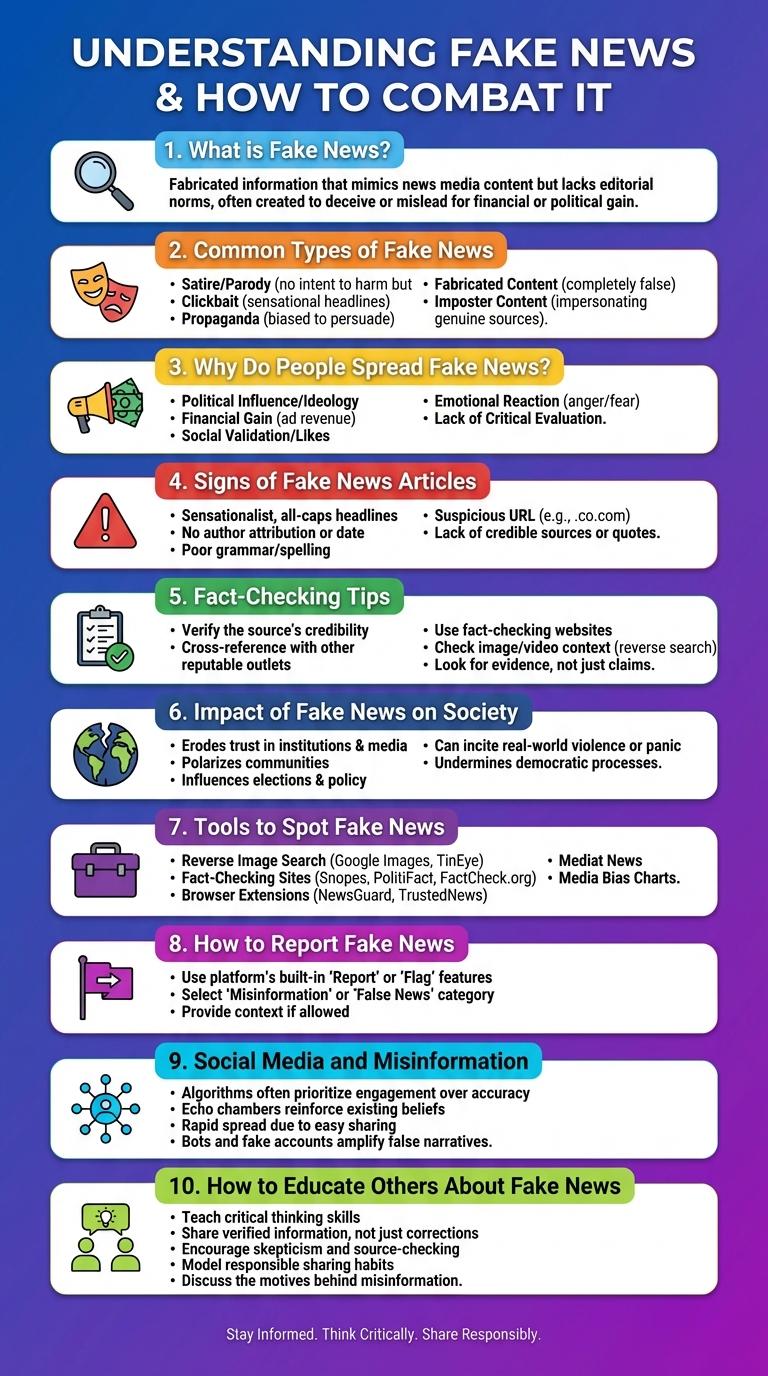
Fake news spreads misinformation that can mislead and harm communities by distorting the truth. Understanding how to identify and avoid these false stories is crucial in promoting accurate and reliable information. This infographic highlights key tips and signs to help readers recognize fake news in Tagalog.
What is Fake News?
Fake news ay maling impormasyon na sinadyang ipinapalaganap upang lituhin o linlangin ang madla. Kadalasang ito ay may layuning maghasik ng takot, galit, o maling paniniwala sa publiko. Mahalaga ang pagsusuri sa mga pinagkukunan ng balita upang maiwasan ang pagkakahawa ng pekeng balita.
Common Types of Fake News
Fake news spreads misinformation that can mislead and manipulate public opinion. Recognizing common types helps individuals critically evaluate the content they encounter.
- False Headlines - Sensational or misleading titles designed to grab attention but distort the actual content.
- Misleading Images - Photos or videos altered or taken out of context to support false claims.
- Fabricated Stories - Completely made-up news articles created to deceive readers for political or financial gain.
Why Do People Spread Fake News?
Why do people spread fake news in the Philippines? Some share false information to gain attention or influence public opinion. Others may do it out of ignorance or to support their personal beliefs.
Signs of Fake News Articles
Fake news articles often contain sensational headlines designed to provoke strong emotions and encourage sharing without fact-checking. These headlines may use exaggerated language or misleading claims to attract attention.
Another sign is the lack of credible sources or citations within the article, making it hard to verify the information presented. Poor grammar, spelling mistakes, and inconsistent details also indicate that the news may not be genuine.
Fact-Checking Tips
Fake news spreads misinformation that can mislead people and cause harm. Learning how to verify information helps protect you from being deceived.
Check the source of the news to see if it is credible and well-known. Look for multiple reliable reports to confirm the story's accuracy. Always be cautious of sensational headlines that may exaggerate or twist facts.
Impact of Fake News on Society
Fake news significantly affects Philippine society by spreading misinformation and creating confusion. Its impact undermines trust in media and affects social harmony.
Understanding the consequences of fake news is essential for building a more informed and united community.
- Pagkawala ng tiwala sa media - Nagdudulot ito ng pagdududa sa lehitimong balita at impormasyon.
- Pagkakaroon ng maling paniniwala - Nakakapagdulot ng maling desisyon ang mga pekeng balita sa mga tao.
- Pagkakawatak-watak ng lipunan - Pinalalala nito ang alitan at dibisyon sa mga komunidad.
Tools to Spot Fake News
Ang pekeng balita ay isang malaking isyu na nakakaapekto sa tamang impormasyon sa ating lipunan. Mahalaga ang paggamit ng tamang mga kasangkapan upang mabilis itong matukoy at maiwasan ang maling akala.
Ang mga tool tulad ng fact-checking websites at browser extensions ay nakakatulong sa pagsusuri ng kredibilidad ng mga impormasyon. Mahalaga ring tingnan ang mga pinagmulan ng balita at suriin ang mga ebidensya bago maniwala o mag-share ng balita.
How to Report Fake News
Ang pekeng balita ay isang seryosong isyu na nagdudulot ng maling impormasyon sa publiko. Mahalaga ang tamang pag-uulat upang mapanatili ang katotohanan at maiwasan ang pagkalat ng kasinungalingan.
- Alamin ang pinagmulan ng balita - Siguraduhing ang impormasyon ay nagmula sa mapagkakatiwalaang mga website o awtoridad.
- Gamitin ang opisyal na platform sa pag-report - Maraming social media sites at websites ang may sariling sistema para mag-report ng pekeng balita.
- Ibigay ang malinaw na ebidensya - Magbigay ng screenshot, link, at iba pang detalye upang madali ang pagsisiyasat.
Ang maingat na pag-report ng pekeng balita ay nakakatulong sa pagprotekta sa komunidad laban sa maling impormasyon.
Social Media and Misinformation
| Paksa | Impormasyon |
|---|---|
| Social Media Platforms | Facebook, Twitter, TikTok, at YouTube ang pangunahing pinanggagalingan ng pekeng balita sa Pilipinas. |
| Pagkalat ng Misinformation | Mabilis ang pagpapasa ng maling impormasyon dahil sa madaming gumagamit at mabilisang pag-share ng posts. |
| Epekto sa Lipunan | Nagdudulot ng kalituhan, takot, at maling pag-unawa sa mga isyu pampubliko at pulitikal. |
| Paano Makaiwas | Mag-verify sa mga lehitimong sources bago mag-share; gamitin ang fact-checking websites tulad ng Vera Files at Rappler Fact Check. |
| Responsibilidad ng User | Maging mapanuri sa mga nakikita sa social media, iwasan ang pag-share ng walang patunay na impormasyon. |