
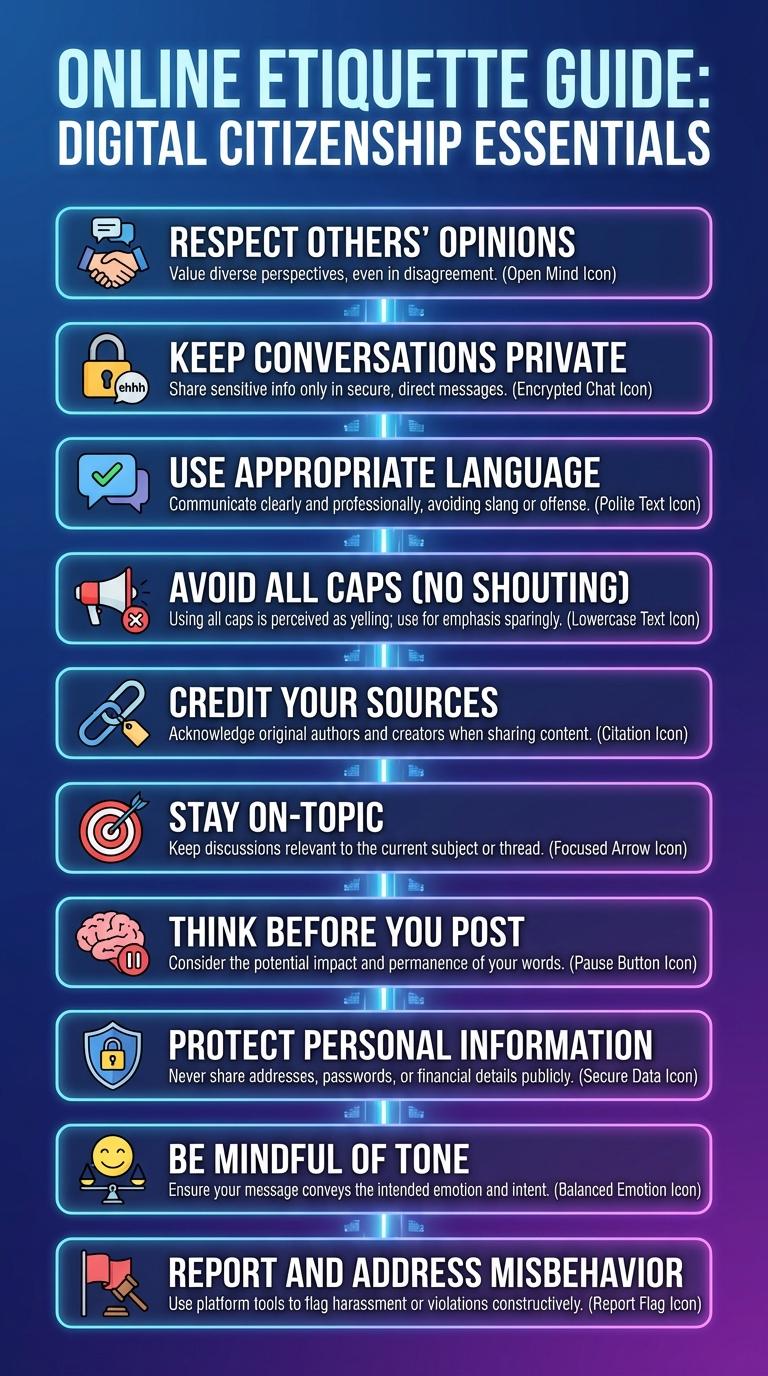
Core rules of netiquette guide respectful and effective online communication, ensuring positive interactions across digital platforms. Understanding these principles helps maintain clarity, prevent misunderstandings, and foster a welcoming virtual environment. Following netiquette empowers users to engage thoughtfully and professionally in diverse online communities.
Respect Others' Opinions
Respecting others' opinions is a fundamental netiquette rule that fosters positive online interactions. It encourages active listening and constructive dialogue even when viewpoints differ. This principle helps create a welcoming digital environment where diverse perspectives are valued and understood.
Keep Conversations Private
Respecting privacy is essential in online communication to foster trust and maintain positive relationships. Keeping conversations private prevents misunderstandings and protects sensitive information.
- Respect Confidentiality - Share private messages only with consent to honor others' trust and avoid breaches of confidence.
- Avoid Public Sharing - Do not post or forward private conversations in public forums without explicit permission.
- Use Secure Channels - Choose encrypted or trusted platforms to ensure conversations remain confidential and protected from unauthorized access.
Use Appropriate Language
| Rule | Explanation |
|---|---|
| Use Clear and Respectful Language | Choose words that are polite and respectful to maintain a positive online environment. |
| Avoid Slang and Jargon | Use universally understood terms to ensure your message is clear to all readers. |
| Check Spelling and Grammar | Proper spelling and grammar increase credibility and avoid misunderstandings. |
| Refrain from Using Offensive Language | Do not use profanity, insults, or discriminatory terms in any online communication. |
| Adapt Tone to Audience | Match your language style to the context and audience for appropriate communication. |
Avoid ALL CAPS (No Shouting)
Why should you avoid using ALL CAPS in online communication? Writing in ALL CAPS is perceived as shouting and can come across as aggressive or rude. Maintaining calm and respectful tone helps foster positive interactions and clear understanding.
Credit Your Sources
Crediting your sources is a fundamental rule of netiquette that upholds intellectual property rights and encourages trustworthiness in online communication. Proper attribution respects the original creators and helps avoid plagiarism across digital platforms.
- Always cite your sources - Clearly indicate where information, images, or ideas originate to honor original authorship.
- Use reliable references - Share information from credible and verified sources to maintain accuracy and reliability.
- Include direct links when possible - Provide URLs to the original content to offer easy access for verification and further reading.
Stay On-Topic
Staying on-topic ensures clear and effective online communication by keeping discussions relevant and focused. It helps prevent misunderstandings and maintains a respectful environment for all participants. Adhering to this rule promotes productive conversations and a positive digital community.
Think Before You Post
Think Before You Post is a fundamental rule of netiquette that encourages users to consider the impact of their online messages. Reflect on how your words may be perceived by others before sharing any content.
Posting thoughtfully helps maintain respectful and positive online environments. Avoid impulsive or emotionally charged posts to prevent misunderstandings and conflicts.
Protect Personal Information
Protecting personal information online is essential to maintaining your privacy and security. Avoid sharing sensitive details such as your home address, phone number, and financial information on public platforms.
Use strong, unique passwords and enable two-factor authentication to safeguard your accounts. Be cautious when clicking links or downloading attachments from unknown sources to prevent data breaches.
Be Mindful of Tone
Maintaining a respectful tone in online communication is essential for positive interactions. Be mindful that written words can easily be misinterpreted without vocal cues or body language.
Choose words carefully to avoid sounding rude or aggressive. Use polite expressions and consider how your message might make others feel. Emoticons or emojis can help convey friendliness and clarify tone.