
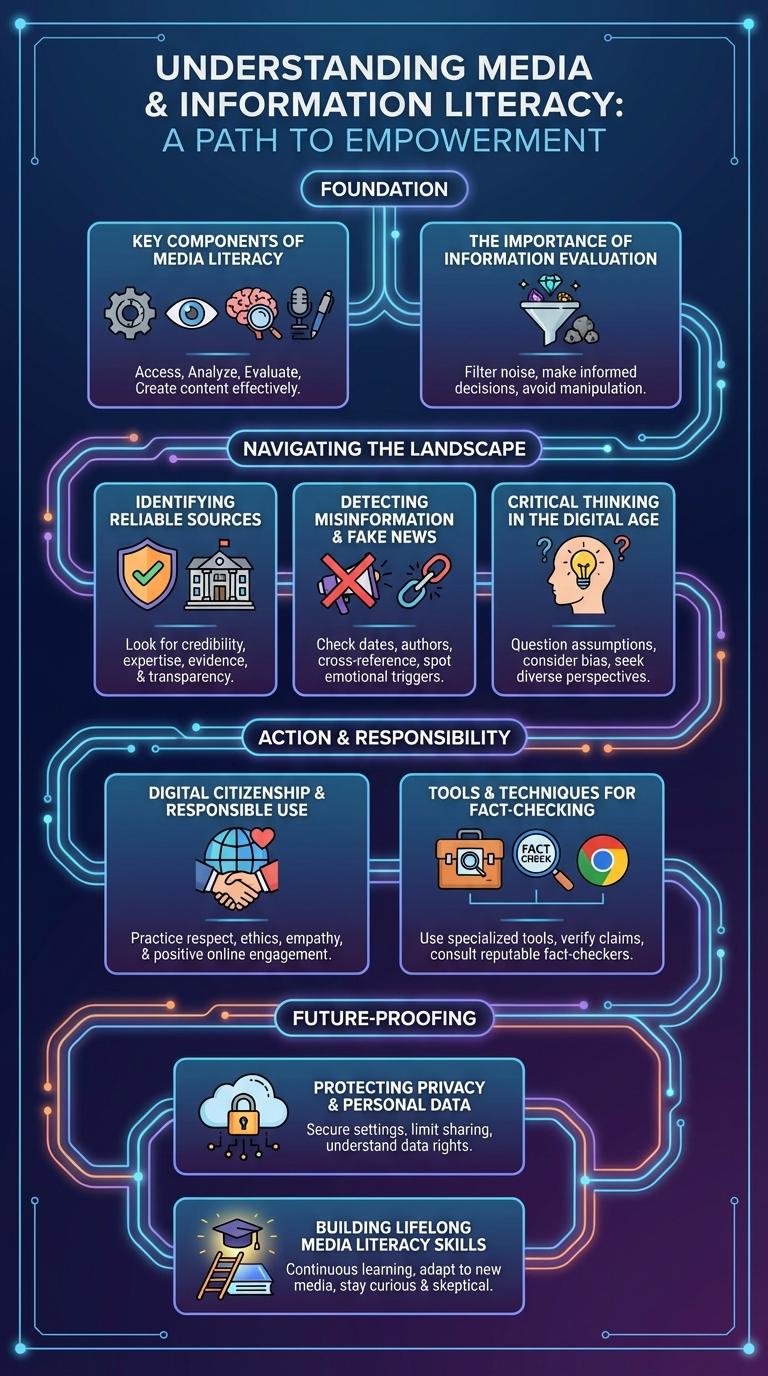
Understanding media and information literacy is crucial in today's digital age, empowering individuals to critically evaluate sources and discern credible content. This infographic highlights key skills to navigate diverse media landscapes effectively. Mastering media literacy fosters informed decision-making and responsible consumption of information.
Understanding Media and Information Literacy
Media and Information Literacy (MIL) empowers individuals to critically analyze, evaluate, and create media content. Understanding MIL enhances informed decision-making and responsible media consumption in a digital society.
- Critical Thinking - Media literacy cultivates the ability to discern credible sources and identify biases in information.
- Information Evaluation - Information literacy involves assessing the relevance, accuracy, and reliability of data across platforms.
- Effective Communication - MIL encourages clear and ethical communication using diverse media tools and formats.
Key Components of Media Literacy
What are the key components of media literacy? Media literacy involves understanding how media messages are created and for what purposes. It helps individuals critically evaluate and analyze the information they receive from various media sources.
How important is critical thinking in media literacy? Critical thinking is essential for discerning bias, misinformation, and propaganda in media content. It empowers consumers to make informed decisions based on reliable and objective information.
What role does understanding media languages play? Recognizing media languages, such as visuals, symbols, and narratives, allows deeper comprehension of messages beyond surface-level content. This component enriches the interpretation of media across different platforms.
How does awareness of media ownership impact media literacy? Awareness of who owns or controls media outlets sheds light on potential conflicts of interest or biases in content. Media literacy encourages scrutiny of these influences to better assess the trustworthiness of information.
Why is digital literacy crucial in modern media environments? Digital literacy equips users with skills to navigate online platforms safely and responsibly. This awareness prevents falling victim to cyber threats like fake news, phishing, and privacy invasion.
The Importance of Information Evaluation
Information evaluation is a critical skill in navigating today's vast media landscape. Understanding how to assess sources helps protect against misinformation and promotes informed decision-making.
- Credibility Assessment - Verifying the reliability of information sources ensures accuracy and trustworthiness.
- Bias Recognition - Identifying potential biases in media content allows for balanced perspectives.
- Fact-Checking Practices - Systematic fact-checking prevents the spread of false or misleading information.
Developing strong information evaluation skills empowers individuals to critically engage with media and enhances overall media literacy.
Identifying Reliable Sources
Media and information literacy empowers individuals to critically evaluate content for accuracy and credibility. Identifying reliable sources is essential to avoid misinformation and make informed decisions.
Look for sources with established authority, clear authorship, and transparent credentials. Cross-check information across multiple reputable platforms to ensure consistency and trustworthiness.
Detecting Misinformation and Fake News
Media and information literacy empowers individuals to critically evaluate the credibility of news sources. Detecting misinformation involves analyzing the authenticity of content, checking facts, and recognizing bias or manipulated images. Skills in verifying sources, cross-referencing information, and understanding media intent are essential to combat fake news effectively.
Digital Citizenship and Responsible Use
| Aspect | Details |
|---|---|
| Digital Citizenship | Understanding rights, responsibilities, and etiquette in digital spaces to promote respectful and ethical online interactions. |
| Responsible Use | Practicing safe and ethical behavior online, including protecting personal data and avoiding harmful content sharing. |
| Information Evaluation | Critically assessing online sources for accuracy, bias, and reliability before sharing or using information. |
| Privacy Awareness | Recognizing the importance of managing personal information and using privacy settings on digital platforms. |
| Online Safety | Implementing strategies to protect against cyberbullying, scams, and malicious content in digital environments. |
Critical Thinking in the Digital Age
Critical thinking in the digital age involves analyzing and evaluating information from multiple media sources to make informed decisions. Media and information literacy equips individuals with skills to discern credible content from misinformation and biases. Developing these skills fosters responsible digital citizenship and promotes a healthy information ecosystem.
Tools and Techniques for Fact-Checking
Fact-checking is essential for verifying the accuracy of information in today's media landscape. Effective tools and techniques help individuals discern truth from misinformation efficiently.
- Reverse Image Search - Enables verification of image authenticity by tracking its origin and usage across the web.
- Cross-Referencing Sources - Involves comparing information across multiple reputable sources to confirm consistency and credibility.
- Fact-Checking Websites - Platforms like Snopes and FactCheck.org provide expert analysis and verdicts on various claims and news stories.
Protecting Privacy and Personal Data
Media and information literacy empowers individuals to understand and manage their personal data in digital environments. Protecting privacy is essential to maintain control over sensitive information and prevent misuse.
Understanding how data is collected, stored, and shared helps users make informed decisions about their online activities. Strong privacy practices reduce the risk of identity theft, cyberbullying, and unauthorized surveillance. Adopting secure passwords, adjusting privacy settings, and recognizing phishing attempts are key strategies for safeguarding personal data.