
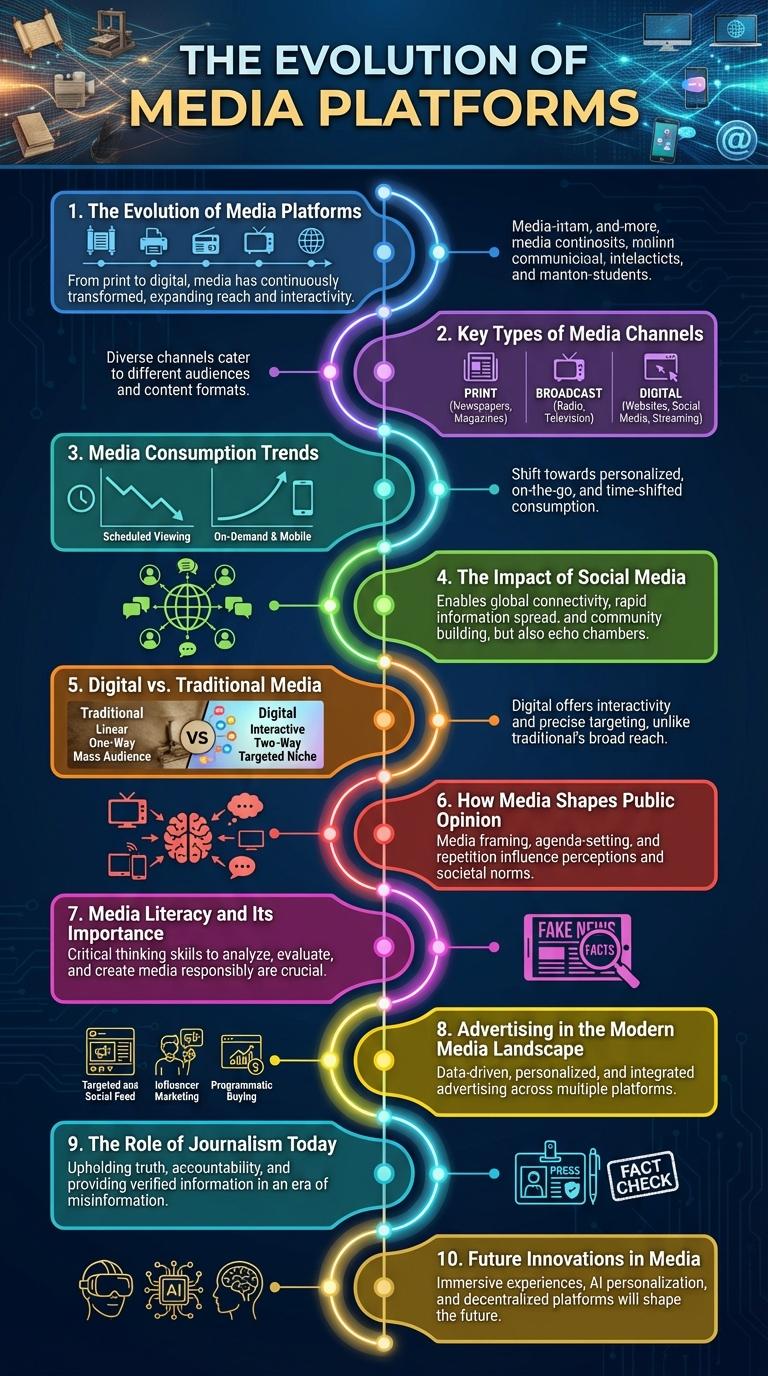
Media infographics visually present complex information about communication channels, audience engagement, and content distribution. They highlight key statistics and trends in digital, print, and broadcast media, making data more accessible and easy to understand. Effective use of graphics and concise text enables quick insights into media consumption patterns and industry dynamics.
The Evolution of Media Platforms
Media platforms have transformed significantly over the past century, shaping how information is consumed globally. From traditional print to digital streaming, each evolution reflects technological advances and changing audience preferences.
- Print Media - Newspapers and magazines dominated the early 20th century as primary information sources.
- Broadcast Media - Radio and television introduced real-time audio and visual content in mid-1900s.
- Digital Media - The internet enabled interactive, on-demand content, revolutionizing accessibility and engagement.
Key Types of Media Channels
Media channels serve as essential platforms for communication and information dissemination in various formats. Understanding the key types of media channels helps businesses and individuals target their audience effectively.
- Print Media - Includes newspapers, magazines, and brochures used for tangible information delivery.
- Broadcast Media - Encompasses television and radio, providing audio-visual and audio content to broad audiences.
- Digital Media - Comprises online platforms such as websites, social media, and streaming services for interactive and instant communication.
- Outdoor Media - Features billboards, transit ads, and posters that offer high-visibility advertising in public spaces.
- Direct Media - Consists of direct mail, telemarketing, and email marketing targeting specific individuals or groups.
Selecting the appropriate media channel is vital for optimizing reach and engagement with the intended audience.
Media Consumption Trends
Media consumption trends reveal a significant shift towards digital platforms, with over 70% of global users accessing content via smartphones and tablets. Streaming services have surpassed traditional TV, accounting for 55% of total video consumption in 2023. Social media remains a dominant channel, influencing 65% of purchase decisions through targeted content and advertisements.
The Impact of Social Media
Social media platforms have transformed how individuals and organizations communicate, enabling instant sharing of information globally. These platforms influence public opinion, shape trends, and drive consumer behavior in real-time.
Businesses leverage social media to enhance brand visibility, engage customers, and analyze market trends through data analytics. However, social media also raises concerns about privacy, misinformation, and mental health impacts across diverse user groups.
Digital vs. Traditional Media
What are the key differences between digital and traditional media? Digital media refers to content delivered through the internet, including social media, websites, and streaming platforms. Traditional media encompasses print newspapers, television, radio, and magazines.
How do audience engagement levels compare between digital and traditional media? Digital media offers interactive experiences with real-time feedback, while traditional media provides passive consumption with limited audience interaction.
What cost factors influence digital versus traditional media advertising? Digital media advertising typically has lower costs with targeted campaigns and measurable results. Traditional media often involves higher expenses for production and broad audience reach without precise targeting.
What are the common advantages of digital media over traditional media? Digital media enables instant content updates, personalization, and data analytics to optimize campaigns. Traditional media excels in brand credibility and reaching audiences without internet access.
Which media type is more effective for brand awareness and conversions? Digital media is effective for targeted marketing and driving direct conversions. Traditional media often creates strong brand recognition through mass exposure and trusted channels.
How Media Shapes Public Opinion
Media plays a crucial role in shaping public opinion by selecting which information to highlight and framing it in specific ways. News outlets, social media platforms, and entertainment channels all contribute to influencing the perceptions and attitudes of society.
The agenda-setting function of media determines the issues people consider important. Media framing impacts how audiences interpret events, often affecting emotional responses and opinions. Repeated exposure to particular narratives can reinforce biases and shape collective beliefs over time.
Media Literacy and Its Importance
| Aspect | Details |
|---|---|
| Definition | Media literacy is the ability to access, analyze, evaluate, and create media in various forms. |
| Key Skills | Critical thinking, understanding bias, recognizing misinformation, and ethical media creation. |
| Importance | Empowers individuals to make informed decisions, resist manipulation, and engage responsibly in digital environments. |
| Applications | Education, public awareness campaigns, digital citizenship, and journalism ethics. |
| Global Impact | Enhances democratic participation and reduces the spread of fake news worldwide. |
Advertising in the Modern Media Landscape
Advertising in the modern media landscape leverages digital platforms, social media, and traditional outlets to reach diverse audiences. Brands invest heavily in data-driven strategies to optimize ad targeting and engagement.
Mobile devices and streaming services dominate ad consumption, reshaping how companies allocate their marketing budgets. Influencer partnerships and personalized content enhance brand visibility and consumer interaction.
The Role of Journalism Today
Journalism remains a crucial pillar in shaping public opinion and safeguarding democracy. It provides verified information amidst the rapid spread of digital content.
- Information Accuracy - Journalism ensures the distribution of fact-checked news that combats misinformation.
- Accountability - Journalists hold power structures accountable by exposing corruption and injustice.
- Public Engagement - Journalism promotes civic participation by informing citizens on societal issues.