
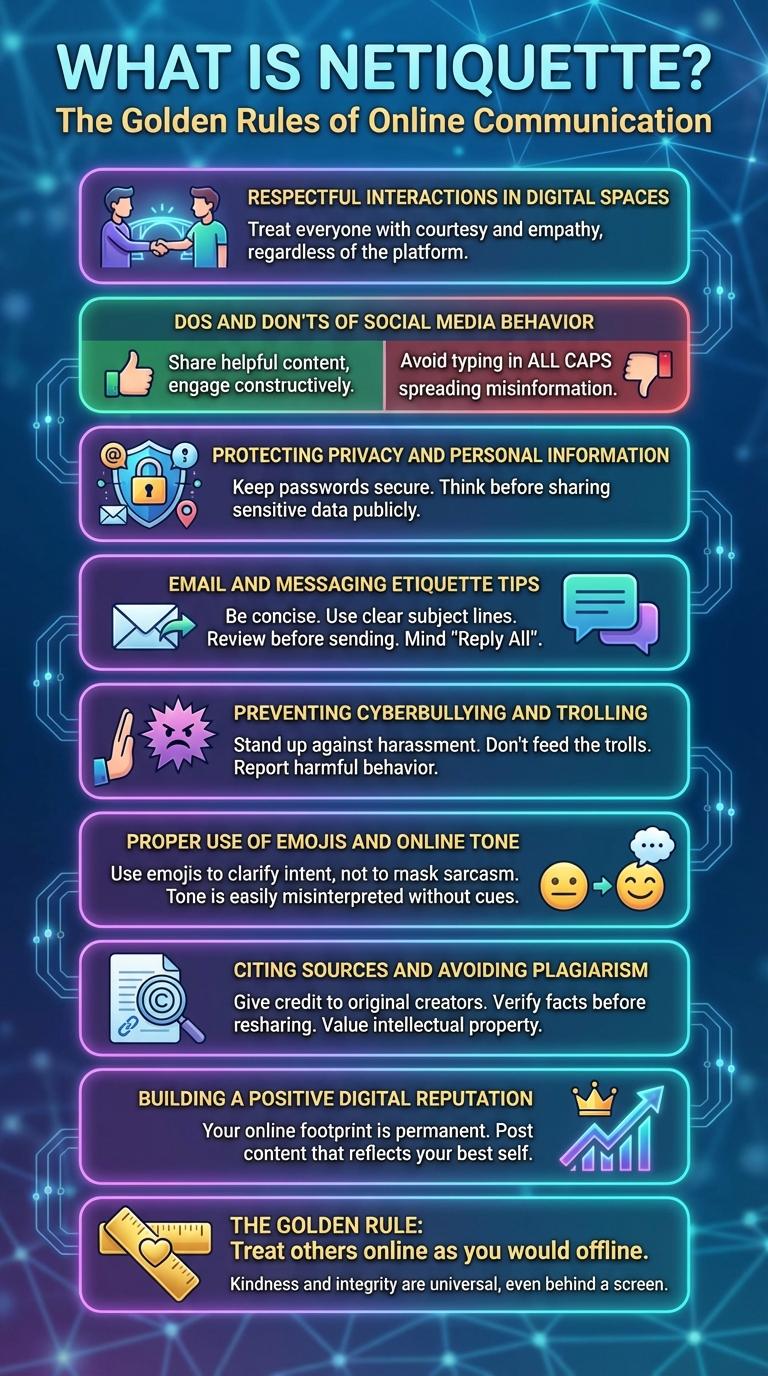
Understanding netiquette is essential for maintaining respectful and effective communication in digital environments. Clear guidelines help prevent misunderstandings and promote positive interactions across social media, emails, and online forums. Practicing proper online etiquette fosters a more inclusive and productive virtual community.
What is Netiquette?
Netiquette refers to the set of rules and guidelines for proper behavior and communication on the internet. It promotes respect, clarity, and kindness in online interactions. Understanding netiquette helps maintain positive digital environments and prevents misunderstandings.
The Golden Rules of Online Communication
Netiquette refers to the set of guidelines that govern respectful and effective online communication. Following these rules ensures positive interactions across digital platforms.
The Golden Rules of Online Communication include being respectful, clear, and concise in all messages. Avoiding misunderstandings starts with thoughtful wording and active listening during conversations.
Respectful Interactions in Digital Spaces
Respectful interactions in digital spaces are essential for fostering positive and meaningful online communication. Following netiquette guidelines helps maintain a friendly and inclusive online environment.
Understanding and practicing digital respect improves collaboration, reduces conflicts, and promotes a supportive community.
- Use polite language - Employ courteous words and tone to convey messages clearly and kindly.
- Respect privacy - Avoid sharing personal information or private conversations without consent.
- Avoid all caps - Writing in all capital letters is perceived as shouting and can be offensive.
- Be mindful of cultural differences - Recognize and appreciate diverse backgrounds to prevent misunderstandings.
- Respond thoughtfully - Take time to consider responses and avoid impulsive or aggressive replies.
Dos and Don'ts of Social Media Behavior
Netiquette refers to the set of rules for proper and respectful online communication. Observing these guidelines ensures positive interactions on social media platforms.
Do engage respectfully by using polite language and considering others' opinions. Do verify information before sharing to prevent misinformation. Don't post offensive content or engage in online arguments that escalate negativity.
Protecting Privacy and Personal Information
Protecting privacy and personal information is essential for maintaining safety and trust online. Practicing proper netiquette helps prevent data breaches and identity theft in digital communication.
- Limit Sharing Personal Details - Avoid posting sensitive information like home addresses and phone numbers on public platforms.
- Use Strong Passwords - Implement complex passwords to secure accounts and prevent unauthorized access.
- Respect Others' Privacy - Do not share private messages or photos without explicit consent from the owner.
Observing these guidelines fosters a secure and respectful online environment for all users.
Email and Messaging Etiquette Tips
Effective email and messaging etiquette ensures clear communication and professionalism in digital interactions. Following proper netiquette helps avoid misunderstandings and maintains respectful correspondence.
Use clear subject lines and concise messages to make your emails easy to read and respond to. Always proofread before sending and avoid using all caps, which can be perceived as shouting.
Preventing Cyberbullying and Trolling
Netiquette promotes respectful online communication to prevent cyberbullying and trolling, fostering a safer digital environment. Understanding the impact of words encourages users to think before posting, reducing harmful interactions. Engaging positively online helps build supportive communities and deters negative behavior.
Proper Use of Emojis and Online Tone
| Aspect | Guidelines |
|---|---|
| Proper Use of Emojis | Use emojis to clarify emotions and tone, avoiding misunderstandings. Choose emojis that match the context and audience. Avoid overusing emojis in professional or formal communication. |
| Online Tone | Maintain a respectful and clear tone. Avoid sarcasm or humor that may be misinterpreted. Use polite language to foster positive interactions and reduce conflicts. |
Citing Sources and Avoiding Plagiarism
Why is citing sources important in digital communication? Proper citation gives credit to original authors and supports your credibility. It helps avoid plagiarism by clearly distinguishing your ideas from others'.
How can you avoid plagiarism when sharing information online? Always attribute content to its source, whether quoting or paraphrasing. Use quotation marks and provide accurate references to maintain transparency and ethical writing.