
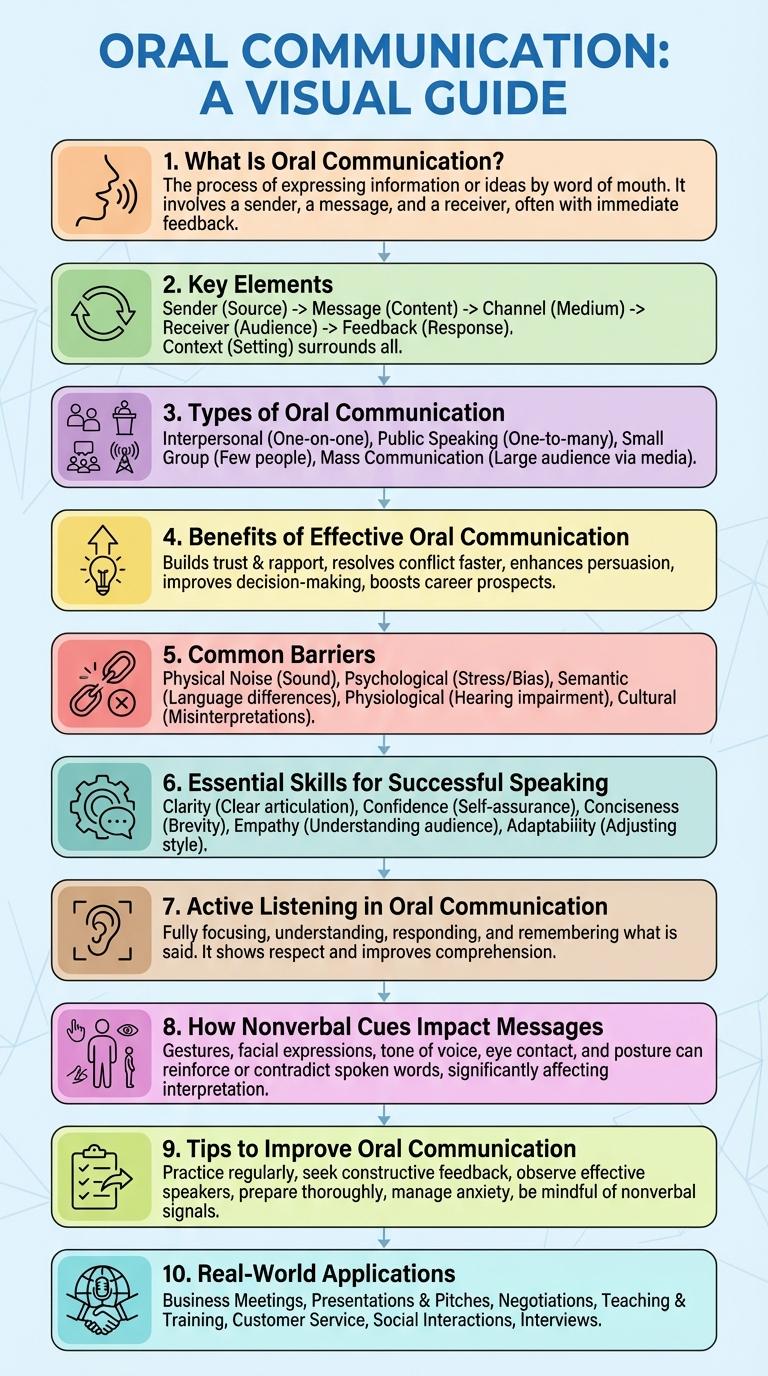
Effective oral communication enhances clarity, builds relationships, and facilitates collaboration in personal and professional settings. Infographics visually simplify complex communication techniques, making it easier to understand key principles such as active listening, nonverbal cues, and clear articulation. Mastering these skills leads to more engaging conversations and successful interactions.
What Is Oral Communication?
Oral communication is the process of expressing information or ideas through spoken words. It plays a crucial role in daily interactions, enabling effective exchange of messages between individuals or groups.
This form of communication includes conversations, speeches, presentations, and discussions. It relies on vocal tone, clarity, and body language to convey meaning and emotions effectively.
Key Elements of Oral Communication
Oral communication is a fundamental skill for effective interaction in both personal and professional settings. Mastering its key elements enhances clarity and understanding between speakers and listeners.
- Clarity - Expressing ideas clearly ensures the message is easily understood by the audience.
- Active Listening - Engaging fully with the speaker helps in comprehending and responding appropriately.
- Nonverbal Cues - Body language and facial expressions support and reinforce verbal messages.
- Confidence - A confident tone and posture increase the speaker's credibility and influence.
- Feedback - Receiving and giving constructive feedback improves communication effectiveness.
Understanding and applying these elements leads to more impactful and efficient oral communication.
Types of Oral Communication
What are the main types of oral communication? Oral communication includes various forms that facilitate effective message exchange. These types cater to different contexts and purposes.
| Type | Description |
|---|---|
| Interpersonal Communication | Direct, face-to-face conversations between two or more people allowing immediate feedback. |
| Group Communication | Interactions within a small group to share ideas, solve problems, or make decisions collaboratively. |
| Public Speaking | One person addresses a large audience, focusing on clear message delivery and audience engagement. |
| Telephonic Communication | Conversations held over the phone or similar devices enabling remote dialogue. |
| Meetings and Conferences | Formal or informal gatherings that enable discussion on specific topics or organizational matters. |
Benefits of Effective Oral Communication
Effective oral communication enhances understanding, builds stronger relationships, and fosters collaboration in personal and professional settings. It boosts confidence, reduces misunderstandings, and improves problem-solving abilities. Mastering oral communication skills leads to greater career opportunities and successful teamwork.
Common Barriers in Oral Communication
Effective oral communication is essential for clear message exchange but often hindered by various barriers. Recognizing common obstacles can improve understanding and interaction in conversations.
- Physical Barriers - Environmental factors such as noise, distance, or poor acoustics disrupt clear communication.
- Language Differences - Variations in language, dialect, or vocabulary cause misunderstandings.
- Emotional Barriers - Stress, anger, or anxiety can prevent open and clear expression of ideas.
Essential Skills for Successful Speaking
| Essential Skills | Description |
|---|---|
| Clarity | Express ideas in a clear, concise manner to avoid misunderstandings. |
| Active Listening | Engage fully with the audience's feedback and respond appropriately to questions and comments. |
| Confidence | Maintain a strong and assured voice to establish credibility and command attention. |
| Nonverbal Communication | Use body language, eye contact, and facial expressions to reinforce your spoken message. |
| Organization | Structure content logically with a clear introduction, body, and conclusion to guide listeners. |
Active Listening in Oral Communication
Active listening is a fundamental skill in oral communication that involves fully concentrating, understanding, and responding thoughtfully to the speaker. It enhances clarity, reduces misunderstandings, and fosters stronger interpersonal connections. Techniques include maintaining eye contact, providing feedback, and avoiding interruptions.
How Nonverbal Cues Impact Messages
Nonverbal cues play a crucial role in oral communication by conveying emotions and attitudes beyond spoken words. Facial expressions, gestures, and posture significantly influence how messages are interpreted and understood.
Body language can reinforce or contradict verbal messages, affecting the clarity and effectiveness of communication. Understanding these subtle signals enhances interpersonal connections and reduces misunderstandings in conversations.
Tips to Improve Oral Communication
Effective oral communication enhances clarity and builds stronger relationships. Mastering key techniques can significantly improve your speaking skills.
Practice active listening to understand your audience better. Use clear and concise language to convey your message effectively. Maintain eye contact and positive body language to engage listeners.