
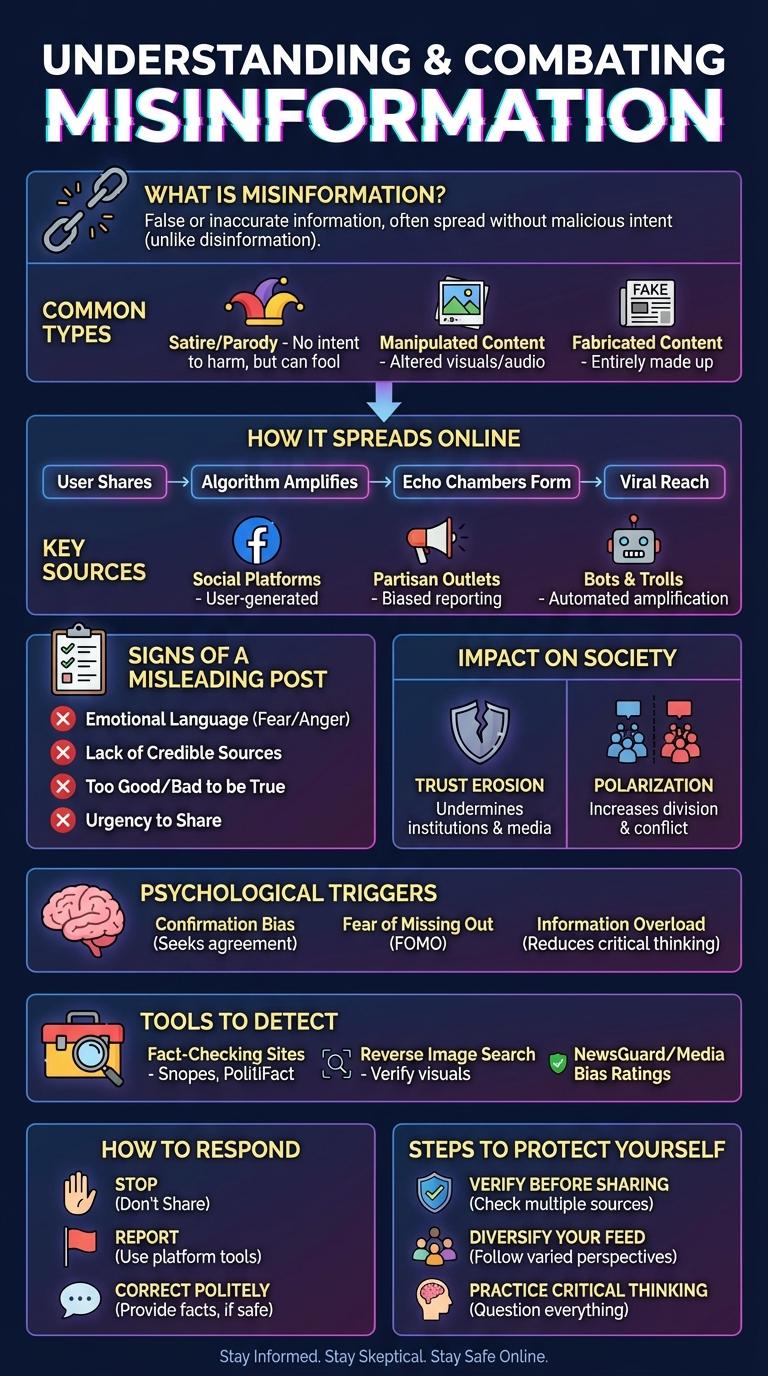
Misinformation spreads rapidly across social media platforms, creating widespread confusion and damaging public trust in reliable sources. Visualizing key data on misinformation highlights its impact on society, revealing patterns of false information and how it influences public opinion. Understanding these trends is crucial for developing effective strategies to combat inaccurate content and promote media literacy.
What is Misinformation?
Misinformation refers to false or inaccurate information spread without harmful intent. It often circulates widely across social media, causing confusion and misunderstanding.
- Unintentional Falsehoods - Misinformation involves sharing incorrect details without awareness of their inaccuracy.
- Wide Social Impact - It spreads rapidly online, influencing public opinion and decision-making processes.
- Distinction from Disinformation - Unlike disinformation, misinformation lacks deliberate intent to mislead.
Common Types of Misinformation
Misinformation spreads false or misleading information unintentionally. It affects public opinion and decision-making across various fields.
- False Context - Information is shared with an altered or missing context, causing misunderstanding.
- Imposter Content - Genuine sources or individuals are impersonated to give false credibility to the information.
- Fabricated Content - Completely false information is created to deceive or mislead.
- Misleading Content - Facts are presented in a way that leads to incorrect conclusions.
- Manipulated Content - Images, videos, or texts are edited or distorted to change the truth.
Recognizing these common types helps in critically evaluating the information encountered daily.
How Misinformation Spreads Online
| Source | How It Spreads |
|---|---|
| Social Media Platforms | Rapid sharing through algorithms that prioritize engaging content, often without fact-checking. |
| User Sharing | Users unknowingly repost false information, amplifying reach and visibility. |
| Fake News Websites | Publish fabricated stories designed to attract clicks and generate ad revenue. |
| Automated Bots | Mass produce and distribute misinformation to manipulate public opinion. |
| Confirmation Bias | Individuals share misinformation that aligns with their existing beliefs, reinforcing false narratives. |
Key Sources of False Information
Misinformation often originates from unreliable social media accounts, clickbait websites, and unverified news outlets. These sources prioritize sensationalism over accuracy, leading to widespread false information. Understanding the key sources helps individuals critically evaluate the content they encounter online.
Signs of a Misleading Post
How can you identify a misleading post? Look for exaggerated claims that lack evidence. Check if the post uses emotional language to provoke reactions rather than facts.
What details in a post suggest it might be false? Notice if the source is unfamiliar or unreliable. Verify if the post avoids credible citations or references.
Why should you be wary of images used in posts? Misleading posts often use altered or out-of-context images. Reverse image search can help confirm authenticity.
How do headlines reveal misinformation? Sensational headlines that don't match the article's content are red flags. They aim to grab attention rather than inform accurately.
What role do comments play in spotting misinformation? A lack of comments or overwhelmingly one-sided opinions may indicate manipulation. Genuine posts usually have diverse and balanced discussions.
Impact of Misinformation on Society
Misinformation significantly disrupts societal trust and hampers effective decision-making. It spreads rapidly, influencing public opinion and behaviors in harmful ways.
The impact on health, politics, and social cohesion is profound, leading to increased polarization and confusion. False information undermines democratic processes by distorting facts and misleading voters. Addressing misinformation requires coordinated efforts across technology, education, and policy sectors.
Psychological Triggers Behind Believing Lies
Misinformation exploits cognitive biases such as confirmation bias, where individuals favor information that aligns with their existing beliefs. Emotional triggers like fear and anger amplify the acceptance of false information by reducing critical thinking. Repetition of false claims increases familiarity, making lies feel more truthful over time.
Tools to Detect Misinformation
Detecting misinformation requires specialized tools that analyze content accuracy and source credibility. These tools leverage artificial intelligence and fact-checking databases to identify false or misleading information quickly.
Popular tools include fact-checking websites, browser extensions, and AI-powered platforms that evaluate news articles and social media posts. Using these resources helps users verify information before sharing, reducing the spread of misinformation online.
How to Respond to Misinformation
Responding to misinformation effectively protects truth and fosters informed communities. Understanding the best approaches ensures clear communication and reduces false information spread.
- Verify Facts - Check reliable sources before accepting or sharing information.
- Correct Gently - Address misinformation with respectful and clear explanations.
- Promote Media Literacy - Encourage critical thinking skills to recognize false content.