
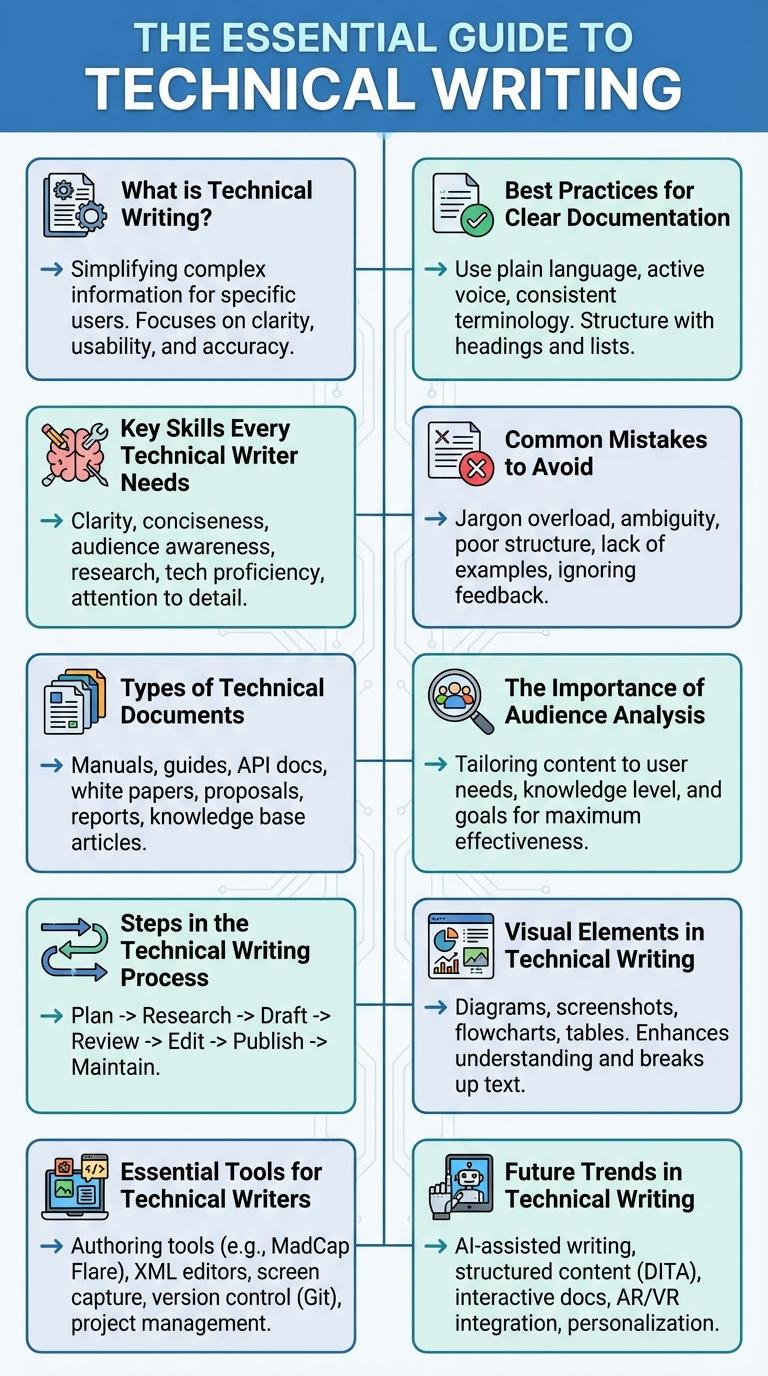
Technical writing transforms complex information into clear, concise content that enhances comprehension and usability. Infographics serve as powerful tools to visualize technical concepts, making data more accessible and engaging for diverse audiences. This infographic highlights key elements and best practices that optimize technical documentation for effective communication.
What is Technical Writing?
Technical writing is a specialized form of communication designed to convey complex information clearly and accurately. It focuses on producing documents such as manuals, reports, and instructions for technical fields.
Technical writers translate technical jargon into understandable content for diverse audiences. They use precise language and structured formats to improve comprehension and usability. This writing style supports industries like engineering, software development, and healthcare by enhancing knowledge transfer.
Key Skills Every Technical Writer Needs
Technical writing requires a precise blend of clear communication and subject matter expertise. Mastery of these key skills ensures the creation of accurate, user-friendly documentation.
Essential skills include strong writing and editing abilities, along with proficiency in research and technical comprehension. Familiarity with tools such as content management systems and diagramming software enhances efficiency.
Types of Technical Documents
What are the main types of technical documents? Technical documents serve various purposes across industries, helping users understand complex information. Common types include manuals, reports, and proposals.
| Type | Description |
|---|---|
| User Manuals | Guides that explain how to operate products or software effectively. |
| Technical Reports | Detailed documents presenting research findings or project status. |
| Standard Operating Procedures (SOPs) | Step-by-step instructions for completing routine tasks safely and consistently. |
| White Papers | Authoritative reports offering solutions or insights on technical issues. |
| Proposals | Documents outlining plans or suggestions to secure project approval or funding. |
Steps in the Technical Writing Process
Technical writing requires a clear, structured approach to communicate complex information effectively. Following a defined process ensures accuracy, clarity, and usability for the target audience.
The technical writing process begins with researching the topic thoroughly to gather accurate data. Next, planning the document structure helps organize content logically for better reader comprehension.
Drafting the document involves writing detailed and precise information, focusing on clarity and technical accuracy. Reviewing and revising help eliminate errors and improve overall quality before finalization.
Finally, formatting the document according to standards enhances readability and professionalism. Publishing the document ensures it reaches the intended audience and serves its intended purpose effectively.
Essential Tools for Technical Writers
Technical writing requires precision, clarity, and consistency to effectively communicate complex information. Using the right tools enhances productivity and quality in creating technical documents.
- Authoring Software - Tools like Microsoft Word and Adobe FrameMaker provide robust environments for drafting and formatting detailed technical content.
- Version Control Systems - Git and Subversion help technical writers manage document revisions and collaborate seamlessly with teams.
- Diagramming Tools - Applications such as Microsoft Visio and Lucidchart enable the creation of clear visual aids to complement technical narratives.
- Content Management Systems - Platforms like Confluence and SharePoint organize and distribute technical documents efficiently within organizations.
- Spell Check and Grammar Tools - Programs like Grammarly improve accuracy by detecting errors and enhancing the readability of technical writing.
Best Practices for Clear Documentation
Technical writing requires clarity and precision to effectively convey complex information. Following best practices ensures documentation is user-friendly and accessible.
Clear documentation improves user comprehension and reduces errors in application or implementation.
- Use Simple Language - Avoid jargon and complex terms to make content easily understandable.
- Organize Content Logically - Structure information with headings and subheadings for easy navigation.
- Incorporate Visual Elements - Use diagrams and charts to support and clarify textual information.
- Maintain Consistency - Apply uniform terminology, formatting, and style throughout the document.
- Provide Examples - Include practical examples to illustrate key concepts and instructions.
Common Mistakes to Avoid
Technical writing requires clarity, precision, and audience awareness to effectively communicate complex information. Common mistakes include using jargon without explanation, vague instructions, and inconsistent formatting. Avoid these errors to enhance readability and ensure your message is accurately conveyed.
The Importance of Audience Analysis
Understanding the audience is crucial in technical writing to ensure clarity and effectiveness. Audience analysis helps tailor content to meet the specific needs and expertise of readers.
- Improves Clarity - Knowing the audience allows writers to use appropriate language and explanations that match their knowledge level.
- Enhances Engagement - Tailored content resonates better, keeping readers interested and motivated to continue reading.
- Increases Usability - Content designed with the audience in mind is easier to navigate and apply in practical situations.
Effective audience analysis leads to technical documents that are accessible, relevant, and user-friendly.