
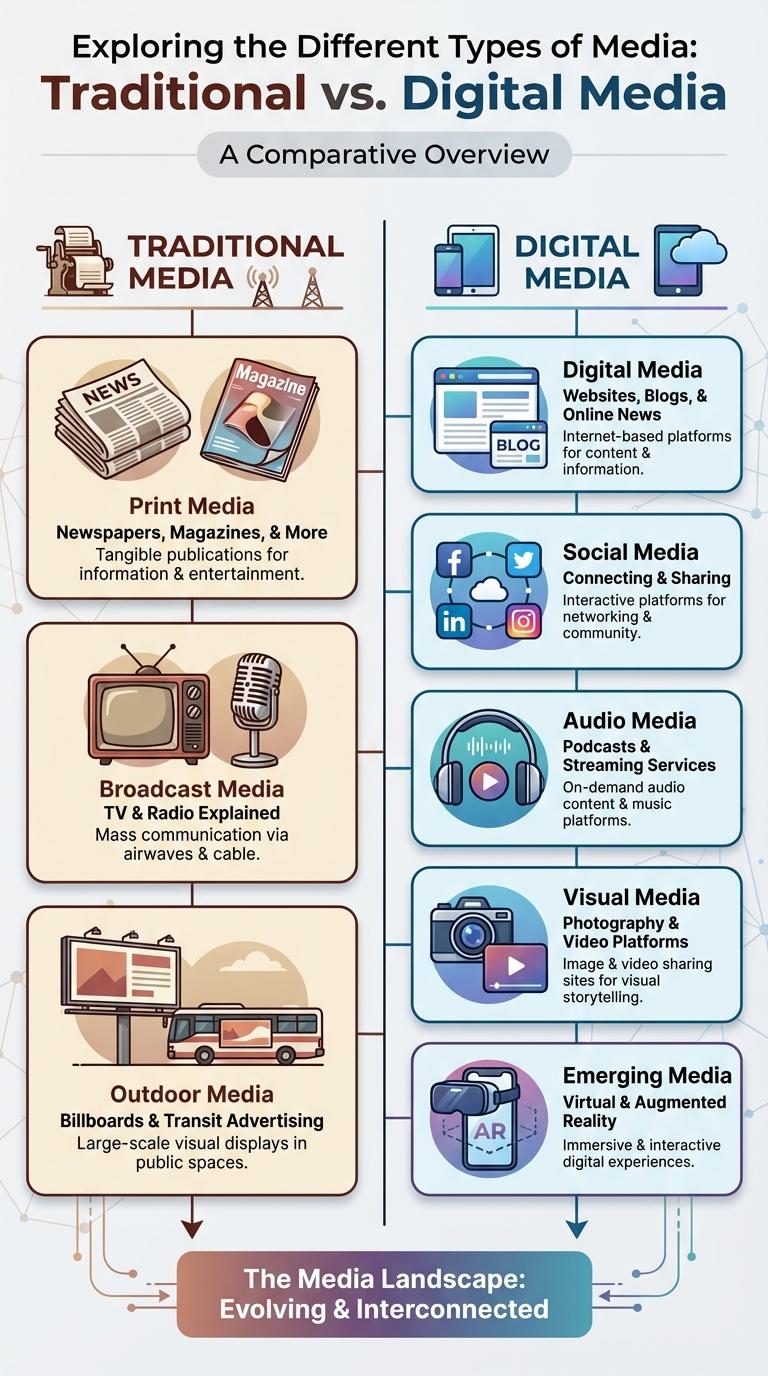
Different types of media play a crucial role in how information is communicated and consumed across various platforms. Visual, audio, and digital media each offer unique ways to engage audiences and convey messages effectively. Understanding these media types enhances the ability to create targeted and impactful content.
Exploring the Different Types of Media
What are the different types of media used for communication and information sharing? Media can be broadly categorized into traditional and digital forms, each serving unique purposes and audiences. Understanding these types helps in effectively targeting content and reaching diverse populations.
Traditional vs. Digital Media
Media channels are broadly categorized into Traditional Media and Digital Media based on their mode of communication and audience engagement. Traditional Media includes newspapers, television, radio, and magazines, which rely on one-way communication and have a broad, often local, reach. Digital Media encompasses platforms like social media, websites, and streaming services, offering interactive, real-time content distribution with global accessibility.
Print Media: Newspapers, Magazines, & More
Print media remains a vital communication channel, encompassing newspapers, magazines, brochures, and flyers. Newspapers provide daily news coverage and in-depth reports, reaching a wide and diverse audience. Magazines focus on specific interests, offering detailed articles, visuals, and advertising targeted to niche markets.
Broadcast Media: TV & Radio Explained
Broadcast media includes television and radio, two of the most influential channels of mass communication. These platforms deliver audio-visual and audio content to wide audiences in real time, shaping public opinion and culture.
- Television - Combines visual images and sound to present news, entertainment, and educational programming to viewers.
- Radio - Uses audio signals to broadcast music, talk shows, and news, accessible on various devices globally.
- Reach and Accessibility - TV requires a screen for viewing, while radio can be received through simpler, portable devices, increasing its accessibility.
Digital Media: Websites, Blogs, & Online News
Digital media encompasses a wide range of platforms that deliver content through the internet. Websites, blogs, and online news are key components driving information dissemination and user engagement.
- Websites - Central hubs for organizations and individuals to present information, services, and products on the internet.
- Blogs - Frequently updated personal or professional journals that provide opinions, tutorials, or news on various topics.
- Online News - Digital platforms that publish timely news articles, offering real-time updates and multimedia content to global audiences.
Social Media: Connecting & Sharing
Social media platforms enable users to connect and share content instantly across the globe. These platforms foster communication through text, images, videos, and live streams.
Popular social media types include networking sites, video-sharing platforms, and microblogging services. They play a critical role in marketing, news dissemination, and community building.
Outdoor Media: Billboards & Transit Advertising
| Type of Outdoor Media | Key Features |
|---|---|
| Billboards | Large-scale advertisements, high visibility, strategic placement along highways and urban areas, effective for brand awareness and broad audience reach. |
| Transit Advertising | Ads placed on buses, taxis, trains, and transit shelters, mobile exposure, targets commuters, combines wide reach with localized targeting in urban centers. |
Audio Media: Podcasts & Streaming Services
Audio media encompasses various platforms where sound is the primary format for content delivery. Among these, podcasts and streaming services stand out as prominent formats that offer on-demand audio experiences.
Podcasts provide episodic series on diverse topics, accessible via subscriptions and downloads. Streaming services deliver vast libraries of music, audiobooks, and podcasts, allowing users to listen anytime via internet connection.
Visual Media: Photography & Video Platforms
Visual media encompasses a range of formats that convey information primarily through images and moving visuals. Photography and video platforms serve as key channels for sharing visual content globally.
Photography captures moments, stories, and messages through still images, often used in journalism, advertising, and social media. Video platforms like YouTube and Vimeo allow creators to share dynamic content, including tutorials, entertainment, and documentaries. These platforms enhance engagement by combining visual storytelling with audio elements.