
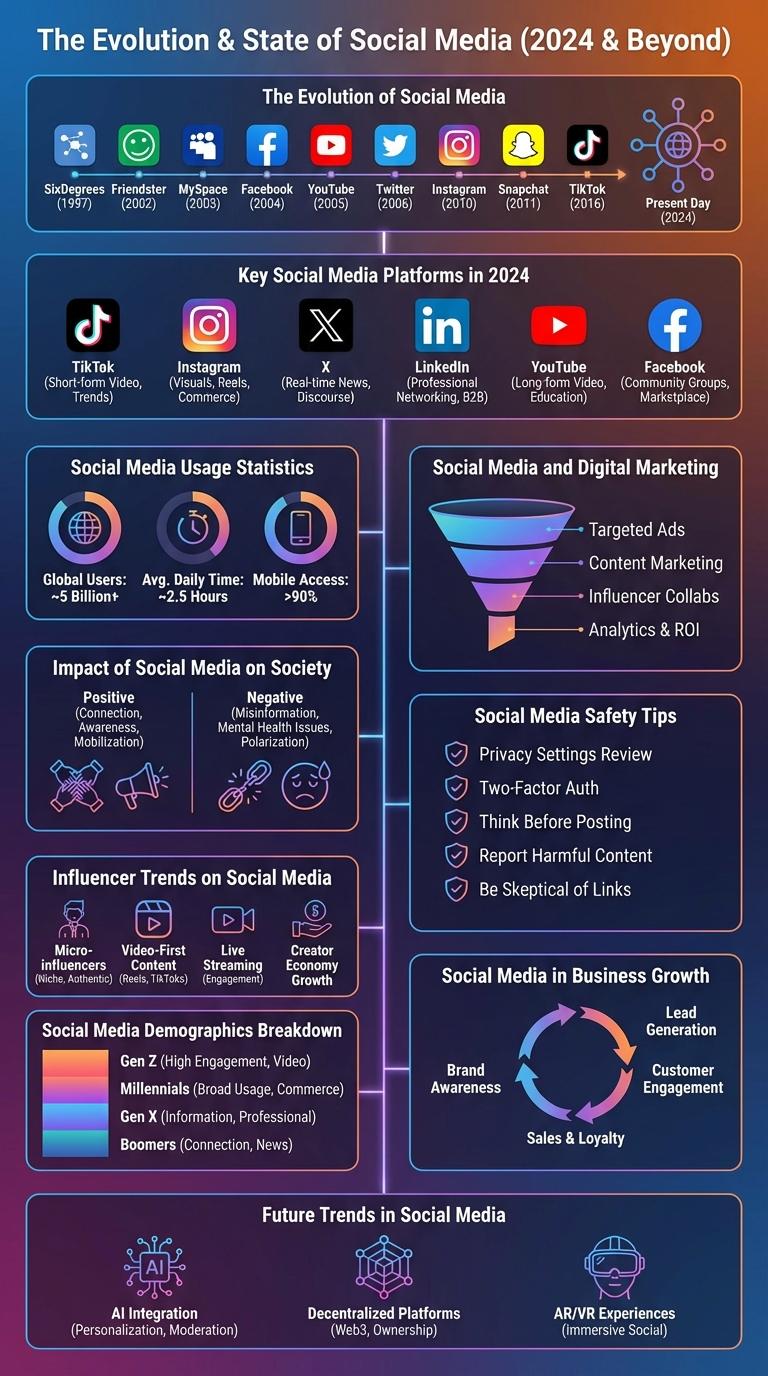
Infographics simplify complex information by visually representing data related to social media usage, trends, and demographics. They highlight key statistics such as user engagement rates, platform popularity, and content sharing habits. These visuals help marketers and individuals quickly grasp essential insights for effective social media strategies.
The Evolution of Social Media
How has social media evolved over the years to shape modern communication?
Social media platforms have transformed from simple networking sites into multifaceted digital ecosystems. This evolution reflects changes in technology, user behavior, and content consumption patterns.
| Year | Key Development |
|---|---|
| 1997 | Launch of Six Degrees, the first recognizable social media platform |
| 2004 | Facebook introduces user profiles and newsfeed |
| 2006 | Twitter popularizes microblogging with 140-character posts |
| 2010 | Instagram launches, focusing on photo and video sharing |
| 2020 | TikTok rises, emphasizing short-form video content and AI-driven feeds |
Key Social Media Platforms in 2024
Social media platforms continue to evolve rapidly in 2024, shaping digital communication and marketing strategies worldwide. Key platforms dominate global user engagement, each offering unique features and capabilities.
Meta's Facebook remains a leader with over 2.9 billion monthly active users, focusing on community building and targeted advertising. TikTok has surged with short-form video content, attracting younger audiences and innovative content creators.
Social Media Usage Statistics
Social media platforms host over 4.7 billion active users globally as of 2024. Instagram and TikTok show the fastest growth, especially among users aged 16-34. On average, individuals spend nearly 2.5 hours daily engaging with social media content.
Impact of Social Media on Society
Social media has transformed the way people connect and communicate globally. It influences culture, behavior, and the spread of information on a massive scale.
Social media platforms enable instant sharing of news and personal stories, shaping public opinion and social movements. The widespread use of social media affects mental health, with increased awareness of issues like anxiety and depression linked to online interactions. Businesses leverage social media for marketing, customer engagement, and brand building, driving significant economic impact.
Social Media and Digital Marketing
Social media platforms are essential tools in digital marketing strategies, enabling businesses to reach targeted audiences effectively. Popular platforms like Facebook, Instagram, and LinkedIn offer diverse advertising options to boost brand visibility and engagement.
Content marketing combined with social media enhances customer interaction and drives website traffic. Data analytics from these platforms provide insights to optimize campaigns and maximize return on investment.
Social Media Safety Tips
Social media platforms offer vast opportunities for connection but also pose privacy and security risks. Following essential safety tips helps protect personal information and maintain a secure online presence.
Stay informed and cautious to navigate the digital world safely.
- Use strong, unique passwords - Create complex passwords for each account to prevent unauthorized access and reduce the risk of hacking.
- Enable two-factor authentication - Add an extra layer of security by requiring a second verification step during login processes.
- Manage privacy settings - Regularly review and customize privacy options to control who can view your posts and personal information.
- Be cautious with friend requests - Accept connections only from known or trusted individuals to avoid scams and phishing attempts.
- Avoid sharing sensitive information - Refrain from posting details such as your location, financial data, or passwords that could compromise your security.
Influencer Trends on Social Media
Influencer trends on social media continue to evolve rapidly, shaping online engagement strategies. Brands leverage these trends to enhance reach and authenticity in digital marketing.
- Rise of Micro-Influencers - Micro-influencers with smaller, engaged audiences deliver higher trust and niche targeting.
- Video Content Dominance - Short-form videos on platforms like TikTok and Instagram Reels drive greater user interaction and brand visibility.
- Authenticity and Transparency - Audiences prefer influencers who maintain genuine, relatable content and disclose partnerships clearly.
Tracking these influencer trends is essential for effective social media marketing strategies in 2024.
Social Media Demographics Breakdown
Social media platforms attract diverse age groups and demographics worldwide. Understanding the breakdown helps marketers tailor content effectively.
- Younger Generations Dominate - Users aged 18-29 represent the largest group, with over 70% active on at least one platform.
- Growing Senior Presence - Adults aged 65 and over show increasing social media adoption, rising by 34% in recent years.
- Gender Distribution Varies - Some platforms have a higher percentage of female users, while others are more balanced between males and females.
Social Media in Business Growth
| Key Aspect | Impact on Business Growth |
|---|---|
| Brand Awareness | Increases visibility and recognition among target audiences, leading to higher customer engagement. |
| Customer Engagement | Enhances interaction through comments, shares, and likes, building stronger brand loyalty. |
| Lead Generation | Drives qualified leads by targeting specific demographics using paid and organic social campaigns. |
| Market Insights | Provides real-time data on customer preferences and competitor strategies for informed decision-making. |
| Sales Growth | Boosts revenue by converting social media followers into paying customers through effective promotions. |