
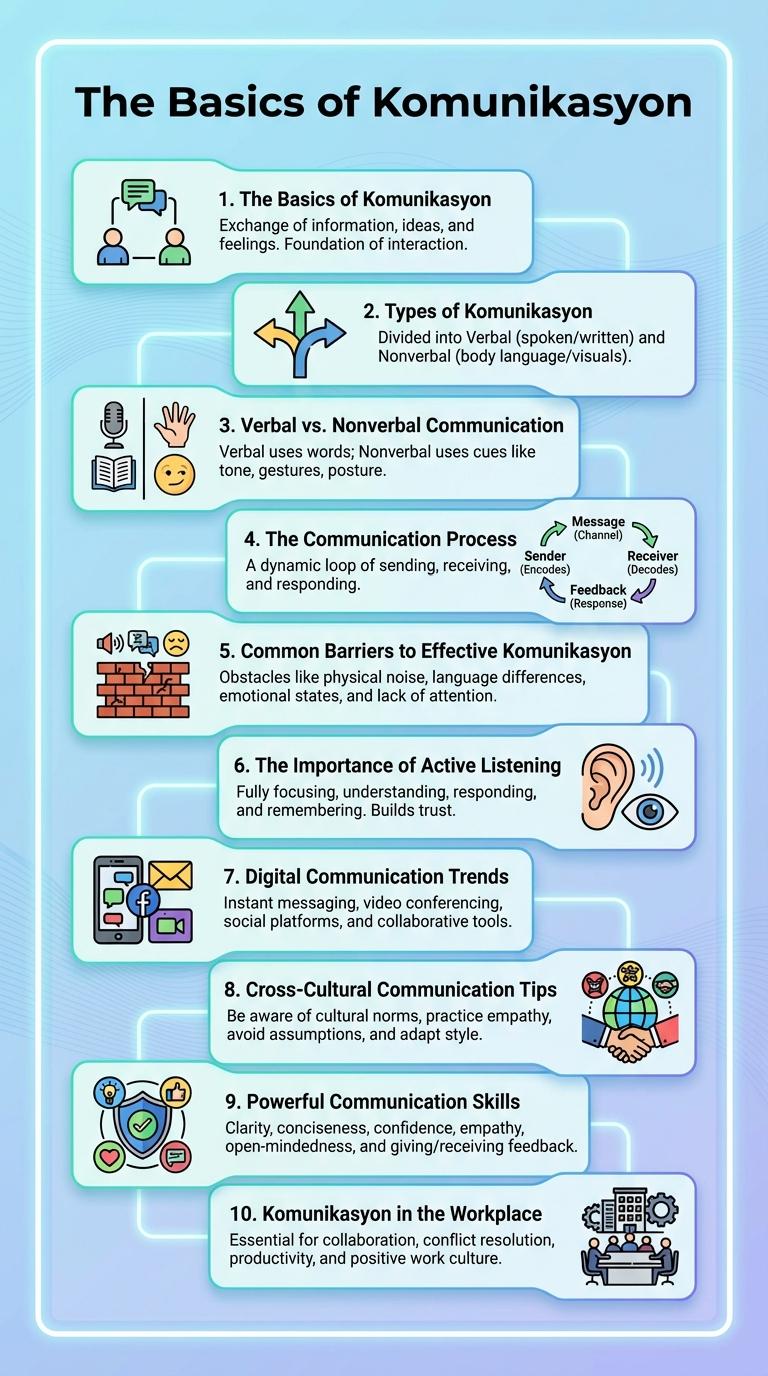
Effective komunikasyon is essential for clear information sharing and understanding in any setting. Visual tools like infographics simplify complex messages by combining text and visuals for better engagement. Infographics enhance comprehension, retention, and communication efficiency across diverse audiences.
The Basics of Komunikasyon
Komunikasyon is the process of exchanging information, ideas, and emotions between individuals or groups. It involves verbal, non-verbal, and written methods to convey messages effectively.
Understanding the basics of komunikasyon helps improve relationships, collaboration, and problem-solving. Key elements include the sender, message, medium, receiver, and feedback.
Types of Komunikasyon
Komunikasyon is essential for conveying messages effectively in various contexts. Understanding its different types enhances clarity and connection between individuals.
- Verbal Communication - Involves the use of spoken or written words to share information.
- Nonverbal Communication - Includes gestures, facial expressions, and body language that convey messages without words.
- Visual Communication - Employs images, symbols, and infographics to represent ideas and data.
- Formal Communication - Structured communication that follows organizational protocols and hierarchies.
- Informal Communication - Casual exchange of information without strict rules or formal settings.
Verbal vs. Nonverbal Communication
Communication is divided into verbal and nonverbal types, each playing a vital role in conveying messages effectively. Verbal communication uses spoken or written words, allowing clear and direct exchanges. Nonverbal communication includes body language, facial expressions, and gestures, often revealing emotions and attitudes beyond words.
The Communication Process
| Stage | Description |
|---|---|
| Sender | The originator of the message who encodes and transmits information. |
| Message | The encoded information or idea that the sender wishes to communicate. |
| Channel | The medium through which the message travels (e.g., verbal, written, digital). |
| Receiver | The person or audience who decodes and interprets the message. |
| Feedback | The receiver's response that indicates understanding or reaction to the message. |
Common Barriers to Effective Komunikasyon
What are the common barriers to effective komunikasyon? Communication often breaks down due to language differences and cultural misunderstandings. These obstacles prevent clear message exchange and can lead to conflict.
How does noise affect komunikasyon? Environmental noise or distractions interfere with hearing and understanding messages. This barrier reduces the accuracy of information transfer between parties.
Why is emotional interference a barrier in komunikasyon? Strong emotions like anger or stress can cloud judgment and distort messages. Emotional barriers hinder open and honest communication, creating misunderstandings.
What role do assumptions play in communication breakdowns? Preconceived notions and biases can lead to misinterpretation of messages. Assumptions block effective listening and accurate comprehension.
How do physical barriers hinder effective komunikasyon? Physical distance or lack of proper communication tools limits interaction. These barriers reduce opportunities for timely and clear exchanges of information.
The Importance of Active Listening
Active listening plays a crucial role in effective communication by ensuring that messages are accurately received and understood. It promotes empathy and reduces misunderstandings.
Engaging in active listening helps build trust between speakers and listeners. It involves paying full attention, avoiding interruptions, and providing feedback. These practices enhance collaboration and strengthen relationships in personal and professional settings.
Digital Communication Trends
Digital communication continues to evolve rapidly, shaping how individuals and businesses interact globally. The rise of new technologies drives significant changes in communication patterns and preferences.
- Increased Mobile Usage - Over 75% of digital communication now occurs via mobile devices, emphasizing the shift towards on-the-go connectivity.
- Growth of Video Communication - Video messaging and conferencing platforms have seen a 40% surge in usage over the past two years.
- Integration of AI - Artificial intelligence powers chatbots and personalized communication, enhancing customer engagement and response times.
Adapting to digital communication trends is essential for effective and efficient information exchange in today's digital landscape.
Cross-Cultural Communication Tips
Cross-cultural communication involves exchanging information effectively between individuals from diverse cultural backgrounds. Understanding cultural differences enhances mutual respect and minimizes misunderstandings.
Key tips include active listening, being open-minded, and avoiding assumptions about others' intentions. Adapting language and non-verbal cues fosters clearer and more respectful interactions in multicultural settings.
Powerful Communication Skills
Powerful communication skills enhance clarity, build trust, and foster meaningful connections. Mastering verbal and non-verbal cues improves message delivery and audience engagement. Effective communication drives collaboration, problem-solving, and leadership success.