
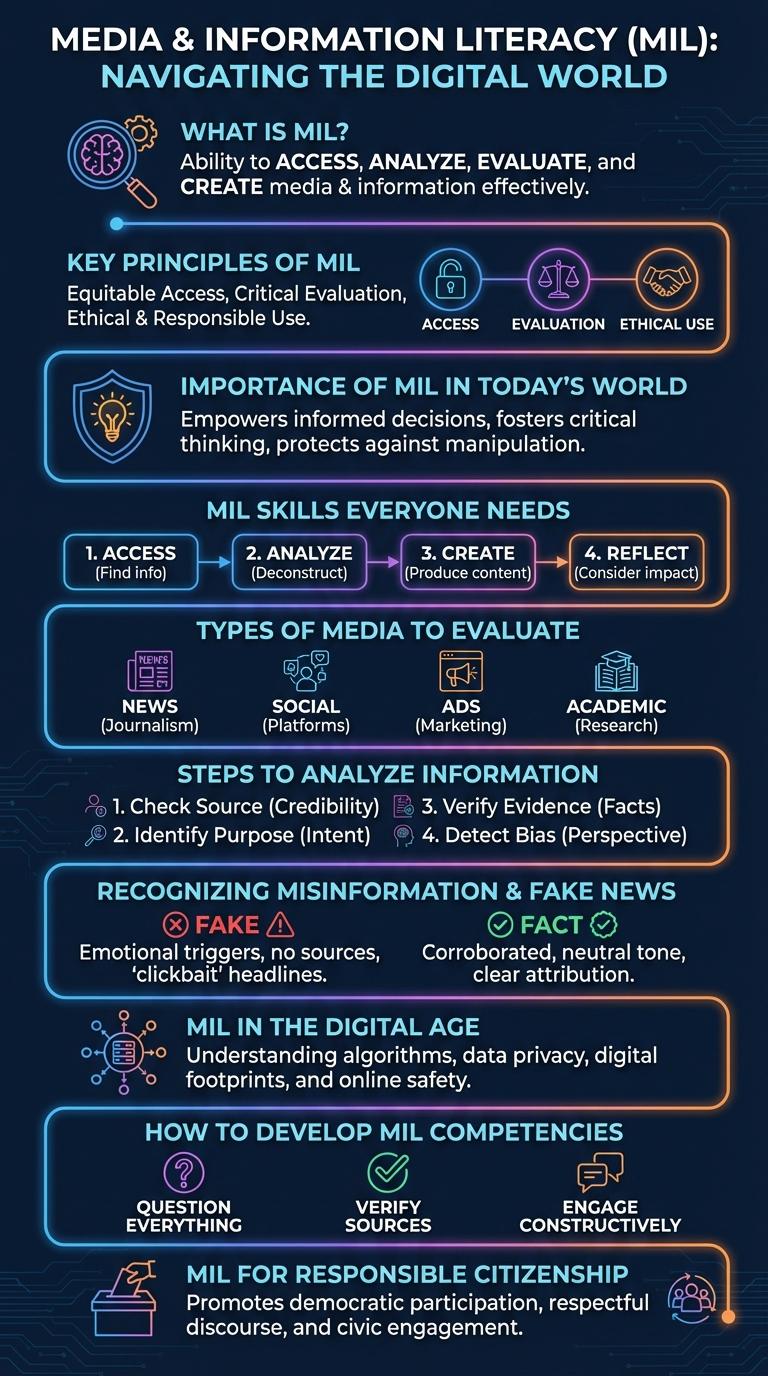
An infographic about MIL visually breaks down complex information into easily understandable graphics, enhancing comprehension and retention. It highlights key concepts, statistics, and processes related to Media and Information Literacy, making the content accessible to a wide audience. This visual approach supports learners in developing critical thinking and digital skills essential for navigating today's information landscape.
What is MIL?
Media and Information Literacy (MIL) equips individuals with the skills to critically analyze and create media messages. It promotes informed participation in digital and traditional media landscapes.
- Understanding Media Messages - MIL helps interpret the purpose and content of various media formats for better comprehension.
- Critical Thinking Skills - It fosters the ability to evaluate information sources for credibility and bias.
- Responsible Media Use - MIL encourages ethical and effective use of media and information technologies.
Key Principles of Media and Information Literacy
| Key Principles | Description |
|---|---|
| Access | Ability to locate, retrieve, and use media and information from diverse sources effectively. |
| Analyze | Critical evaluation of media messages and information for accuracy, bias, and reliability. |
| Create | Production of meaningful content for various media platforms with responsible communication. |
| Reflect | Thoughtful consideration of the impact of media messages on individuals and society. |
| Act | Engagement in informed decision-making and ethical use of media and information. |
Importance of MIL in Today's World
Media and Information Literacy (MIL) empowers individuals to critically analyze media content and navigate the digital landscape effectively. It fosters informed decision-making and promotes responsible consumption of information.
MIL is crucial in combating misinformation and enhancing digital citizenship in today's interconnected world. It supports democratic participation by enabling people to access, evaluate, and create information responsibly.
MIL Skills Everyone Needs
Media and Information Literacy (MIL) empowers individuals to critically analyze and effectively use information in various formats. Developing MIL skills is essential for navigating today's complex digital landscape.
- Critical Thinking - The ability to evaluate information sources and distinguish between credible content and misinformation.
- Digital Communication - Skills for responsibly sharing information across digital platforms while respecting ethical standards.
- Information Evaluation - Competence in assessing the relevance, accuracy, and bias of information for informed decision-making.
Types of Media to Evaluate
What are the main types of media to evaluate in a military information environment? Military information evaluation focuses on traditional media, digital platforms, and social media channels. Each type offers unique insights into public perception and operational impact.
| Media Type | Key Characteristics |
|---|---|
| Traditional Media | Newspapers, TV, radio; widely trusted sources, slower distribution |
| Digital Platforms | Official websites, blogs; direct communication channels with controlled content |
| Social Media | Facebook, Twitter, Instagram; rapid information spread, high engagement, subject to misinformation |
| Military Communications | Internal networks, secure channels; critical for operational security and direct messaging |
Analyzing these media types helps assess information flow, control narratives, and counter misinformation effectively in military contexts. Understanding media influence supports strategic decision-making and operational success.
Steps to Analyze Information
Analyzing information effectively requires a structured approach to ensure accurate understanding and decision-making. Each step in the process plays a crucial role in transforming raw data into actionable insights.
Start by gathering relevant data from credible sources to form the foundation of your analysis. Next, organize the information into categories or themes for easier examination. Finally, evaluate the data critically to identify patterns, inconsistencies, and key takeaways that inform strategic decisions.
Recognizing Misinformation & Fake News
Misinformation and fake news spread rapidly across social media, impacting public perception and decision-making. Key indicators include sensational headlines, lack of credible sources, and inconsistent facts. Verifying information through trusted outlets and fact-checking websites helps maintain an informed and accurate understanding.
MIL in the Digital Age
Media and Information Literacy (MIL) is essential for navigating the complexities of the digital age. It empowers individuals to critically evaluate digital content and participate effectively in online environments.
- Digital Literacy Skills - MIL promotes the ability to access, analyze, and create digital content responsibly.
- Critical Thinking - MIL enhances the capacity to question sources and identify misinformation on digital platforms.
- Online Safety - MIL educates users on protecting personal data and maintaining privacy in virtual spaces.
Mastering MIL in the digital age supports informed decision-making and strengthens digital citizenship.
How to Develop MIL Competencies
Media and Information Literacy (MIL) competencies empower individuals to critically analyze content and use information effectively. Developing these skills enhances digital citizenship and promotes responsible media consumption.
Start by improving critical thinking through evaluating information sources for reliability and bias. Practice creating and sharing content ethically to strengthen communication and collaboration abilities.