
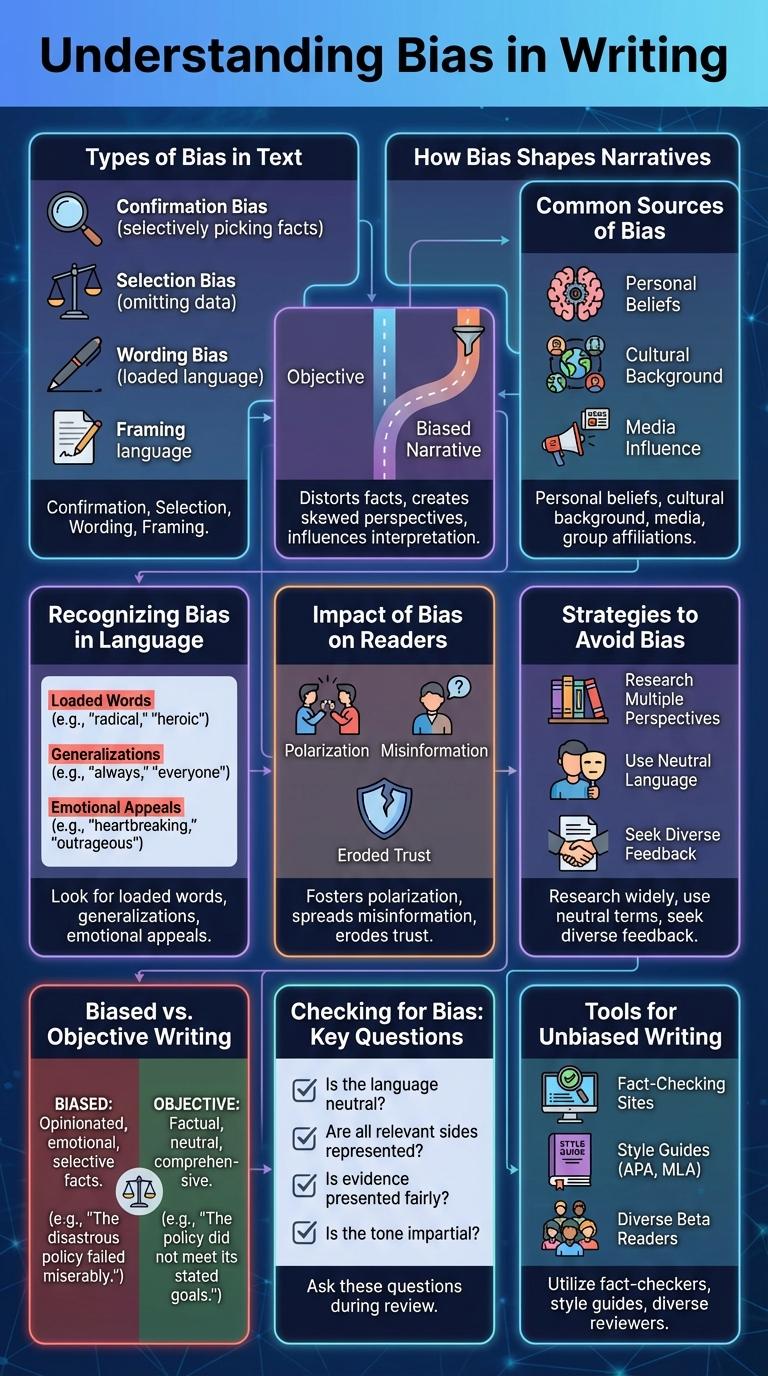
Bias in writing distorts the clarity and fairness of information, influencing readers' perspectives and understanding. Recognizing common types of bias helps writers create more balanced and objective content. This infographic highlights key forms of bias and offers strategies to minimize their impact in writing.
Understanding Bias in Writing
Bias in writing refers to the presence of prejudice or favoritism that influences how information is presented. Recognizing bias is essential to ensure fairness, accuracy, and credibility in communication.
Common types of bias include selection bias, confirmation bias, and cultural bias, each affecting content differently. Understanding these biases helps readers critically evaluate sources and promotes balanced writing.
Types of Bias in Text
Bias in writing distorts the presentation of information, leading to unfair or unbalanced perspectives. Recognizing different types of bias helps in creating more accurate and objective texts.
- Confirmation Bias - Favoring information that supports existing beliefs while ignoring contradictory evidence.
- Selection Bias - Choosing data or examples that only represent a specific viewpoint, excluding others.
- Stereotyping - Generalizing groups or individuals based on preconceived notions without sufficient evidence.
- Framing Bias - Presenting information in a way that influences interpretation by emphasizing certain aspects.
- Language Bias - Using words or phrases that convey judgment or emotion, affecting neutrality.
Understanding these biases enables writers to produce fairer and more credible content.
How Bias Shapes Narratives
Bias in writing influences the way stories and information are presented, often shaping readers' perceptions. Recognizing these biases is key to understanding the underlying perspectives in narratives.
- Selection Bias - Authors may highlight certain facts while omitting others to support a specific viewpoint.
- Language Bias - Word choice can evoke emotions or judgments, subtly guiding audience opinions.
- Confirmation Bias - Writers often emphasize information that aligns with their existing beliefs, reinforcing specific narratives.
Common Sources of Bias
Bias writing distorts information by injecting subjective perspectives and unfair preferences. Recognizing common sources of bias helps improve the credibility and accuracy of written content.
- Personal Bias - Authors' beliefs and experiences influence the presentation of information, leading to partial viewpoints.
- Selection Bias - Choosing specific data or examples while ignoring others skews the overall message and misleads readers.
- Confirmation Bias - Emphasizing evidence that supports preexisting opinions and dismissing contradictory facts compromises objectivity.
Recognizing Bias in Language
Recognizing bias in language involves identifying words or phrases that unfairly influence the reader's perception. Biased language often includes stereotypes, emotionally charged terms, or exclusory expressions that can distort meaning. Awareness of these elements helps promote objective and inclusive communication.
Impact of Bias on Readers
Bias in writing influences how readers perceive information, often leading to distorted understanding. It shapes opinions and can reinforce stereotypes unintentionally.
When readers encounter biased content, their ability to form balanced judgments diminishes. This can result in polarized viewpoints and reduced trust in the source. Recognizing and addressing bias is essential for fostering critical thinking and informed decision-making.
Strategies to Avoid Bias
How can writers effectively avoid bias in their writing? Writers should use inclusive language and verify facts from multiple credible sources. Maintaining awareness of personal assumptions helps create balanced and fair content.
Biased vs. Objective Writing
Bias writing distorts facts by injecting personal opinions, emotions, or prejudices. It steers the reader towards a particular viewpoint rather than presenting balanced information.
Objective writing relies on facts, evidence, and neutral language to ensure clarity and fairness. It allows readers to form their own conclusions based on unbiased data.
Checking for Bias: Key Questions
| Key Question | Purpose |
|---|---|
| Who is the author? | Identify the background, expertise, and possible affiliations that might influence the perspective. |
| What is the source? | Determine the publication or platform to evaluate credibility and potential agenda. |
| Are multiple viewpoints represented? | Check if the writing includes diverse perspectives or is one-sided. |
| Is evidence provided? | Assess if claims are supported by data, facts, or verifiable references. |
| What language is used? | Analyze for emotional, persuasive, or loaded words that may indicate bias. |