
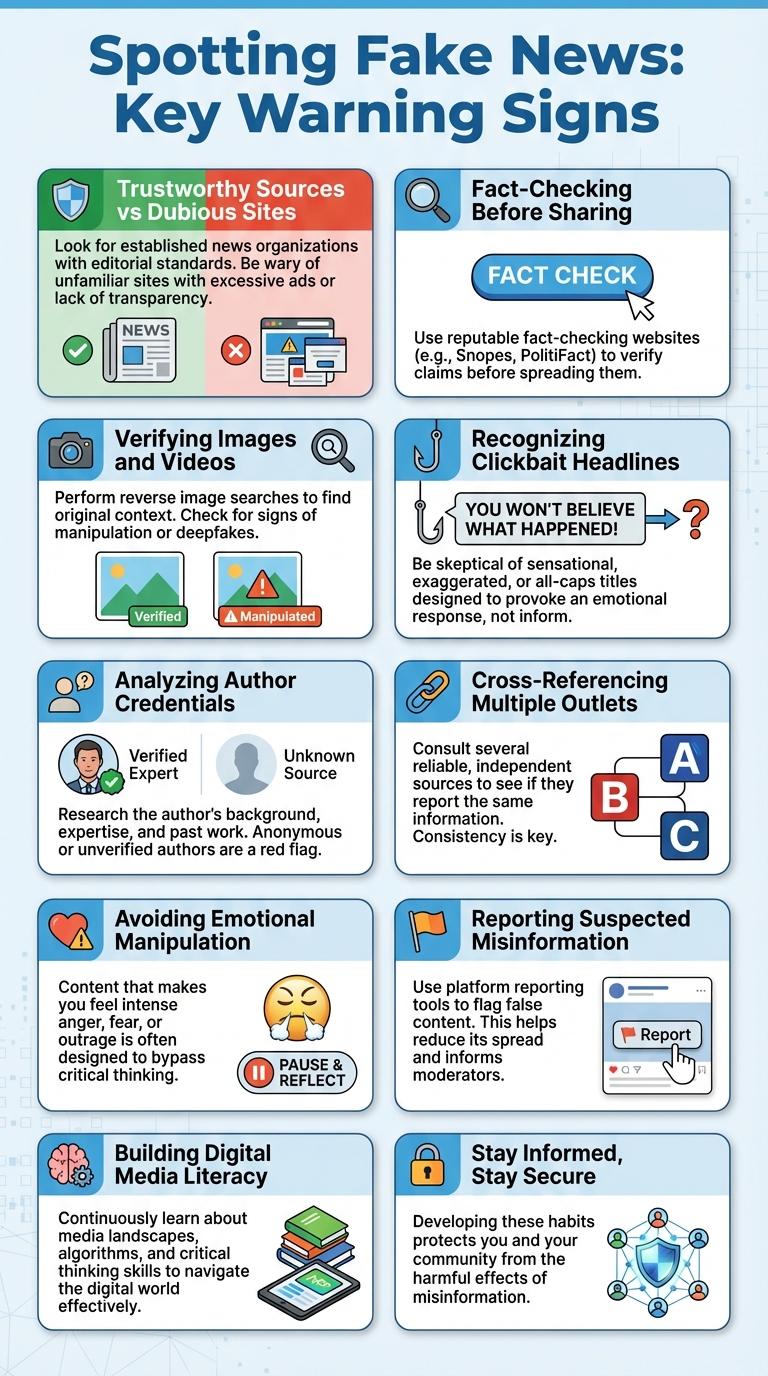
Recognizing fake news requires critical evaluation of sources and verifying information before sharing. Fact-checking websites and reliable news outlets offer tools to distinguish true stories from misinformation. Understanding common tactics used in fake news helps protect against spreading false information.
Spotting Fake News: Key Warning Signs
Fake news often features sensational headlines designed to provoke strong emotions. Verify the source's credibility before trusting the content.
Check for spelling and grammar errors, as legitimate news outlets maintain high editorial standards. Suspicious images or altered videos can also indicate false information.
Trustworthy Sources vs Dubious Sites
Distinguishing between trustworthy sources and dubious sites is essential to avoid falling victim to fake news. Reliable information strengthens understanding, while misleading content fosters confusion and mistrust.
- Check Source Credentials - Trustworthy sources have verified authors and clear editorial standards.
- Evaluate Website Design - Reputable sites maintain professional layouts without excessive ads or pop-ups.
- Cross-Verify Information - Reliable facts appear consistently across multiple credible platforms.
Fact-Checking Before Sharing
Fact-checking before sharing is crucial to prevent the spread of fake news. Verifying information ensures that only accurate content reaches your audience.
Use reputable fact-checking websites such as Snopes, FactCheck.org, or PolitiFact to confirm claims. Cross-reference multiple reliable sources to validate the news. Be cautious of sensational headlines and examine the author's credibility before sharing.
Verifying Images and Videos
Verifying images and videos is crucial to avoid spreading fake news. Using reliable tools and techniques helps confirm the authenticity of visual content.
- Reverse Image Search - Use services like Google Reverse Image or TinEye to find the original source and check if the image has been manipulated or taken out of context.
- Check Metadata - Analyze image or video metadata to verify the date, location, and device information, which helps confirm authenticity.
- Cross-Reference with Trusted Sources - Compare visual content with credible news outlets and official statements to ensure accuracy.
Always approach visual media critically to maintain information integrity and prevent misinformation spread.
Recognizing Clickbait Headlines
| Tip | Description |
|---|---|
| Examine the Headline | Look for sensational or exaggerated language designed to provoke strong emotions. |
| Check for Source Credibility | Verify if the headline is from a reputable or recognized news outlet. |
| Be Skeptical of All Caps and Excessive Punctuation | Headlines in all caps or with multiple exclamation marks often indicate clickbait. |
| Look for Vague or Misleading Information | Clickbait headlines often use ambiguity to entice clicks without providing clear facts. |
| Cross-Check the Article Content | Read beyond the headline to ensure the story matches the headline claims. |
Analyzing Author Credentials
Analyzing author credentials is crucial for identifying credible sources and avoiding fake news. Verifying the background and expertise of the author helps ensure the information is trustworthy and accurate.
- Check Author's Expertise - Confirm the author's qualifications, professional background, and area of specialization to assess their credibility.
- Review Previous Work - Analyze other articles or publications by the author to evaluate consistency and reliability in their reporting.
- Verify Professional Affiliations - Look for memberships or associations with reputable organizations, academic institutions, or recognized media outlets.
Cross-Referencing Multiple Outlets
How can cross-referencing multiple outlets help avoid fake news? Cross-referencing involves checking the same news story across different reliable sources to verify its accuracy. This practice reduces the risk of accepting false information by comparing facts reported by various trusted media.
Avoiding Emotional Manipulation
Emotional manipulation often distorts facts to provoke strong reactions, making it crucial to stay calm and think critically. Verify information through reputable sources before sharing or reacting to news. Recognize emotional triggers in headlines and analyze the content objectively to avoid spreading misinformation.
Reporting Suspected Misinformation
Reporting suspected misinformation helps prevent the spread of fake news and protects public discourse. Identifying and flagging false content on social media platforms empowers fact-checkers to take timely action.
Use official reporting tools on websites or apps to flag suspicious posts. Provide clear explanations and evidence to support your claim, increasing the chances of quick content review and removal.