
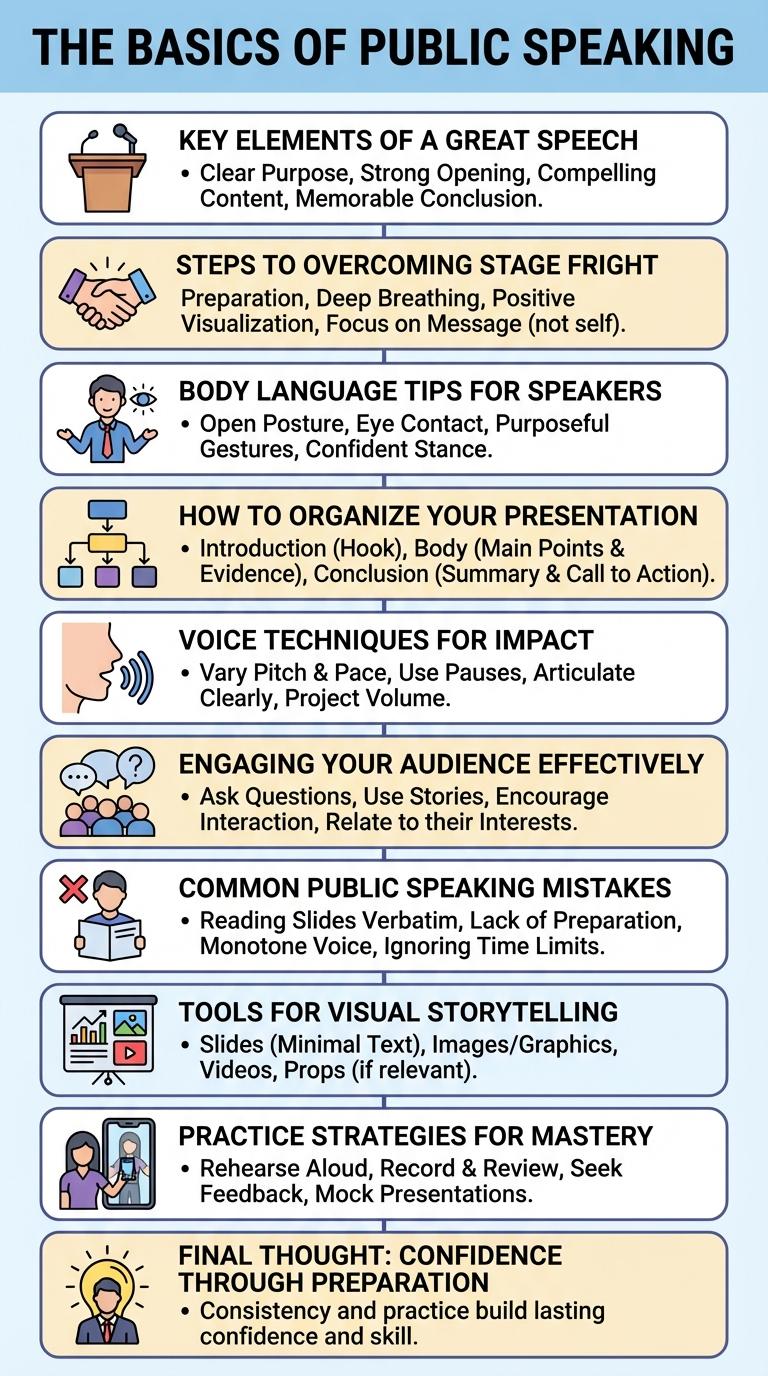
Public speaking is a vital skill that enhances communication, boosts confidence, and influences audiences effectively. Mastering techniques such as clear articulation, audience engagement, and body language can transform any speech into a powerful message. This infographic highlights key strategies and tips to help speakers deliver impactful presentations with ease.
The Basics of Public Speaking
Public speaking is the art of delivering a message effectively to an audience through verbal communication. Key elements include clarity, confidence, and audience engagement to ensure the message is understood and impactful. Mastering body language, voice modulation, and structured content are essential to successful public speaking.
Key Elements of a Great Speech
Effective public speaking relies on several key elements that engage and persuade the audience. A great speech combines clear structure, confident delivery, and meaningful content to leave a lasting impact.
Clarity involves organizing ideas logically with a strong opening and memorable conclusion. Confidence is conveyed through body language, eye contact, and vocal variety. Content must be relevant, well-researched, and tailored to the audience's interests and needs.
Steps to Overcoming Stage Fright
Overcoming stage fright is essential for confident and effective public speaking. Understanding actionable steps can transform anxiety into powerful communication.
- Prepare Thoroughly - Familiarity with your material reduces uncertainty and builds confidence before stepping on stage.
- Practice Regularly - Repeated rehearsals in front of a mirror or friends help normalize the experience of speaking publicly.
- Use Relaxation Techniques - Deep breathing and visualization calm nerves and improve focus prior to speaking.
- Engage with the Audience - Making eye contact and connecting with listeners decreases feelings of isolation and fear.
- Start Small - Begin with brief speeches to gradually build comfort and reduce overwhelming sensations.
Implementing these strategies consistently leads to increased confidence and mastery over stage fright.
Body Language Tips for Speakers
Effective body language enhances public speaking by conveying confidence and engaging the audience. Maintain open posture, use purposeful gestures, and make consistent eye contact to build trust and connection. These nonverbal cues help reinforce your message and improve audience retention.
How to Organize Your Presentation
Effective organization of your presentation enhances audience understanding and retention. Clear structure guides listeners through your message seamlessly.
Start with a compelling introduction that outlines your main points. Follow with body sections that support each point with evidence and examples.
Voice Techniques for Impact
Mastering voice techniques enhances public speaking effectiveness by engaging the audience and emphasizing key points. Proper vocal control helps convey confidence, clarity, and emotion, making messages memorable.
- Pitch Variation - Changing pitch prevents monotony and highlights important ideas, keeping listeners attentive.
- Volume Control - Adjusting volume emphasizes critical content and maintains audience interest throughout the speech.
- Pausing Strategically - Using pauses allows the speaker to create suspense, emphasize points, and give listeners time to absorb information.
Engaging Your Audience Effectively
Engaging your audience effectively in public speaking requires capturing their attention from the start. Use storytelling and relatable examples to make your message memorable.
Maintain eye contact and use purposeful gestures to create a connection. Vary your tone and pace to keep the audience interested and emphasize key points.
Common Public Speaking Mistakes
| Mistake | Description |
|---|---|
| Lack of Preparation | Insufficient practice leads to disorganized content and increased anxiety. |
| Monotone Voice | Speaking without vocal variation causes audience disengagement. |
| Overusing Fillers | Excessive use of "um," "like," and "you know" reduces speaker credibility. |
| Poor Eye Contact | Failing to connect visually with the audience diminishes trust and attention. |
| Ignoring Audience | Not adapting to audience reactions loses engagement and relevance. |
Tools for Visual Storytelling
Effective public speaking involves integrating visual storytelling tools to enhance audience engagement and message clarity. Visual aids support the speaker by making complex information more understandable and memorable.
- Slide Decks - Tools like PowerPoint and Google Slides organize key points and visuals for structured presentations.
- Infographics - Visual representations of data simplify information, making it easily digestible to the audience.
- Video Clips - Short videos add dynamic storytelling elements that capture attention and illustrate concepts.