
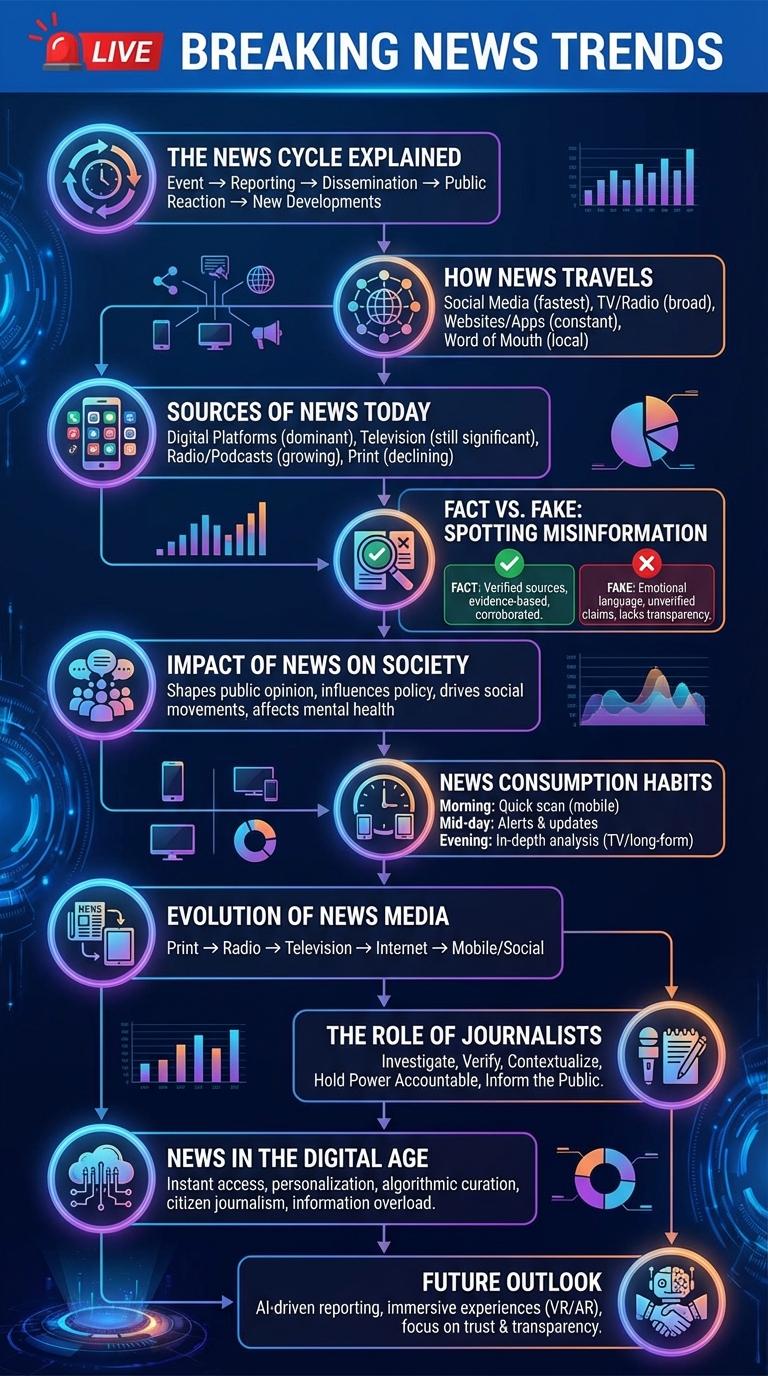
News infographics transform complex information into visually engaging content that enhances comprehension and retention. By combining data, images, and concise text, they present key facts and trends in an easily digestible format. This approach helps audiences grasp current events quickly and stay informed.
Breaking News Trends
What are the latest trends in breaking news consumption? Breaking news is increasingly accessed via mobile devices and social media platforms, reflecting a shift towards instant, on-the-go updates. Audiences prefer live streaming and real-time alerts to stay informed about critical events as they unfold.
How is technology shaping the delivery of breaking news? Artificial intelligence and machine learning help news organizations rapidly verify facts and personalize content for readers. Interactive infographics and visual storytelling enhance engagement by making complex information easier to understand.
What types of stories dominate breaking news headlines? Political developments, natural disasters, and major global events frequently drive breaking news coverage. These stories often generate widespread attention due to their immediate impact on society and the economy.
Which platforms lead in breaking news distribution? Twitter, Facebook, and dedicated news apps are primary sources for real-time news updates worldwide. These platforms utilize push notifications and trending algorithms to prioritize urgent stories for users.
How do audiences verify the credibility of breaking news? Fact-checking organizations and trusted news outlets play a vital role in combating misinformation. Users increasingly look for verified sources and cross-reference multiple reports before accepting information as accurate.
The News Cycle Explained
The news cycle is the continuous process through which news is gathered, reported, and disseminated. Understanding this cycle helps reveal how stories evolve and impact public perception.
- News Gathering - Journalists collect information from sources, events, and leads to create initial reports.
- Publication - News organizations publish or broadcast stories to inform the public quickly.
- Follow-up Reporting - Subsequent updates and analyses build on the original news to provide deeper insight.
The speed and frequency of the news cycle shape how audiences receive and respond to current events.
How News Travels
News travels through various channels, reaching audiences rapidly across the globe. The speed and accuracy of news dissemination depend on the medium and technology used.
- Traditional Media - Newspapers, television, and radio deliver news in scheduled formats with editorial oversight.
- Digital Platforms - Websites and social media provide instantaneous news updates accessible worldwide.
- Word of Mouth - Personal communication spreads news informally through conversations and social networks.
Sources of News Today
| Source | Percentage of Use |
|---|---|
| Social Media | 53% |
| Television | 42% |
| Online News Websites | 37% |
| Radio | 16% |
| Print Newspapers | 14% |
Fact vs. Fake: Spotting Misinformation
Fact vs. Fake: Spotting Misinformation is crucial in today's digital age where news spreads rapidly. Identifying credible sources helps protect individuals from deception and promotes informed decisions.
Check the source of the news and verify the author's credentials to ensure reliability. Look for supporting evidence and cross-reference with trusted news organizations. Beware of sensational headlines and emotionally charged language designed to mislead readers.
Impact of News on Society
News shapes public opinion by providing timely information on social, political, and economic issues. It influences societal behavior, drives awareness, and encourages community engagement. Access to accurate news fosters transparency, accountability, and informed decision-making in society.
News Consumption Habits
News consumption habits have transformed significantly with the rise of digital media platforms. Audiences now access news through a variety of devices and sources, reflecting diverse preferences and behaviors.
Understanding these habits is crucial for media organizations aiming to engage with their audiences effectively.
- Mobile Devices Dominance - Over 70% of news consumers access news primarily through smartphones and tablets, highlighting the shift towards mobile-first news consumption.
- Social Media Influence - Approximately 55% of adults receive news updates via social media platforms, underscoring their role as key news distributors.
- Preference for Visual Content - Infographics, videos, and images are preferred by 60% of users, making visual storytelling essential for capturing audience attention.
Evolution of News Media
The evolution of news media spans from traditional print newspapers to digital platforms accessible worldwide. Early news dissemination relied heavily on physical distribution, limiting speed and reach.
With the rise of radio and television, news became more immediate and visual, transforming public engagement. The digital age introduced social media and online news, enabling real-time updates and interactive content.
The Role of Journalists
Journalists play a critical role in delivering accurate and timely news to the public. They investigate, verify facts, and provide context to ensure reliable information reaches audiences.
Their work helps promote transparency, hold power accountable, and foster informed communities. Ethical journalism supports democracy by giving voice to diverse perspectives and uncovering important issues.