
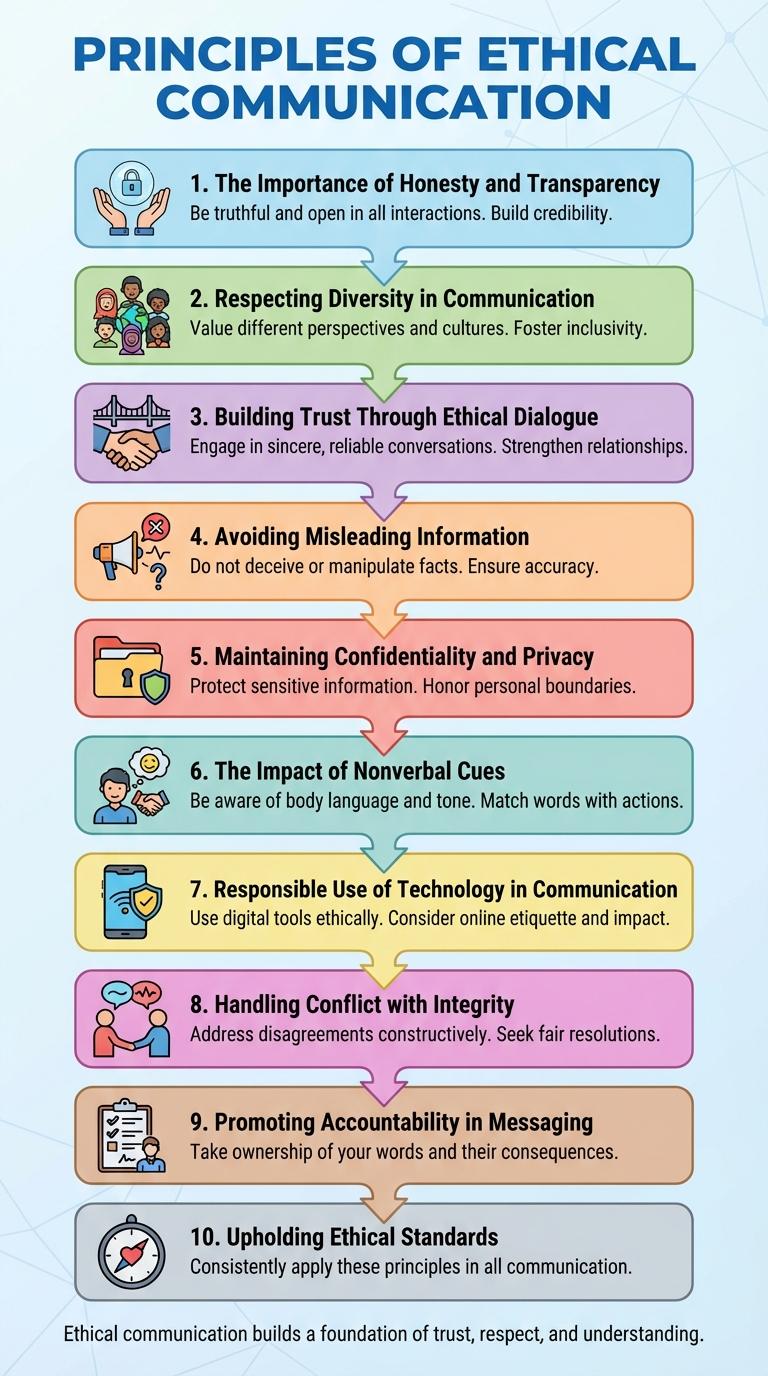
Ethical communication fosters trust and respect by ensuring honesty, transparency, and fairness in every interaction. Practicing ethical communication helps prevent misunderstandings and promotes a positive, inclusive environment. Clear adherence to ethical standards strengthens relationships and enhances organizational reputation.
Principles of Ethical Communication
Ethical communication is essential for building trust, fostering respect, and promoting transparency in all interactions. Understanding its core principles ensures messages are conveyed with integrity and fairness.
- Honesty - Communicating truthfully and avoiding deception to maintain credibility.
- Respect - Valuing others' viewpoints and expressing ideas courteously.
- Responsibility - Being accountable for the content and impact of your communication.
- Fairness - Presenting information impartially and considering diverse perspectives.
- Transparency - Disclosing relevant information clearly to prevent misunderstandings.
The Importance of Honesty and Transparency
Why is honesty essential in ethical communication? Honesty builds trust between parties and fosters a meaningful exchange of information. Transparent communication prevents misunderstandings and strengthens relationships.
Respecting Diversity in Communication
Ethical communication values the diversity of cultures, identities, and perspectives in every interaction. Respecting diversity fosters open dialogue and mutual understanding.
- Inclusive Language - Use words that acknowledge and honor different backgrounds and avoid stereotypes.
- Cultural Sensitivity - Understand and respect cultural norms and practices when communicating.
- Active Listening - Pay close attention to others' viewpoints to promote empathy and reduce misunderstandings.
Building Trust Through Ethical Dialogue
Building trust through ethical dialogue involves transparency, honesty, and respect in all communications. Ethical communication ensures that messages are clear, truthful, and considerate of diverse perspectives. This approach fosters stronger relationships and promotes a positive reputation for individuals and organizations alike.
Avoiding Misleading Information
| Key Principle | Explanation |
|---|---|
| Accuracy | Present data and facts truthfully without distortion or omission. |
| Clarity | Use clear and straightforward language to prevent misunderstandings. |
| Transparency | Disclose sources and potential biases to maintain trustworthiness. |
| Context | Provide full background information to avoid misinterpretation. |
| Verification | Double-check facts and figures before sharing or publishing. |
Maintaining Confidentiality and Privacy
Maintaining confidentiality and privacy is essential in ethical communication to build trust and protect sensitive information. It ensures that personal or proprietary data is shared only with authorized individuals.
Effective confidentiality practices include secure data handling, clear privacy policies, and respecting boundaries in all communications. Upholding these standards prevents information misuse and fosters a trustworthy environment.
The Impact of Nonverbal Cues
Nonverbal cues play a crucial role in ethical communication by conveying sincerity, respect, and empathy beyond spoken words. These cues include facial expressions, body language, gestures, and eye contact.
Understanding and interpreting nonverbal signals accurately helps prevent misunderstandings and builds trust between communicators. Ethical communicators are mindful of their own nonverbal behaviors to ensure alignment with their verbal messages. Consistency between verbal and nonverbal communication enhances transparency and fosters ethical interactions.
Responsible Use of Technology in Communication
Ethical communication demands the responsible use of technology to foster trust and transparency. Embracing digital tools with integrity strengthens meaningful connections across diverse platforms.
- Privacy Protection - Safeguard personal and sensitive information when communicating through digital channels to maintain confidentiality and respect.
- Accuracy in Messaging - Ensure all shared information is truthful and verified to prevent misinformation and uphold ethical standards.
- Respectful Interaction - Utilize technology to engage respectfully with others, avoiding harassment and promoting positive dialogue.
Adopting responsible technology practices in communication enhances credibility and supports ethical relationships.
Handling Conflict with Integrity
Handling conflict with integrity involves honest, respectful communication that seeks to understand differing perspectives while maintaining fairness. Ethical communicators prioritize transparency and avoid manipulation or deceit during disagreements.
Effective conflict resolution requires active listening and empathy to foster mutual respect and trust. Maintaining integrity in communication ensures that all parties feel valued, promoting long-term positive relationships.