
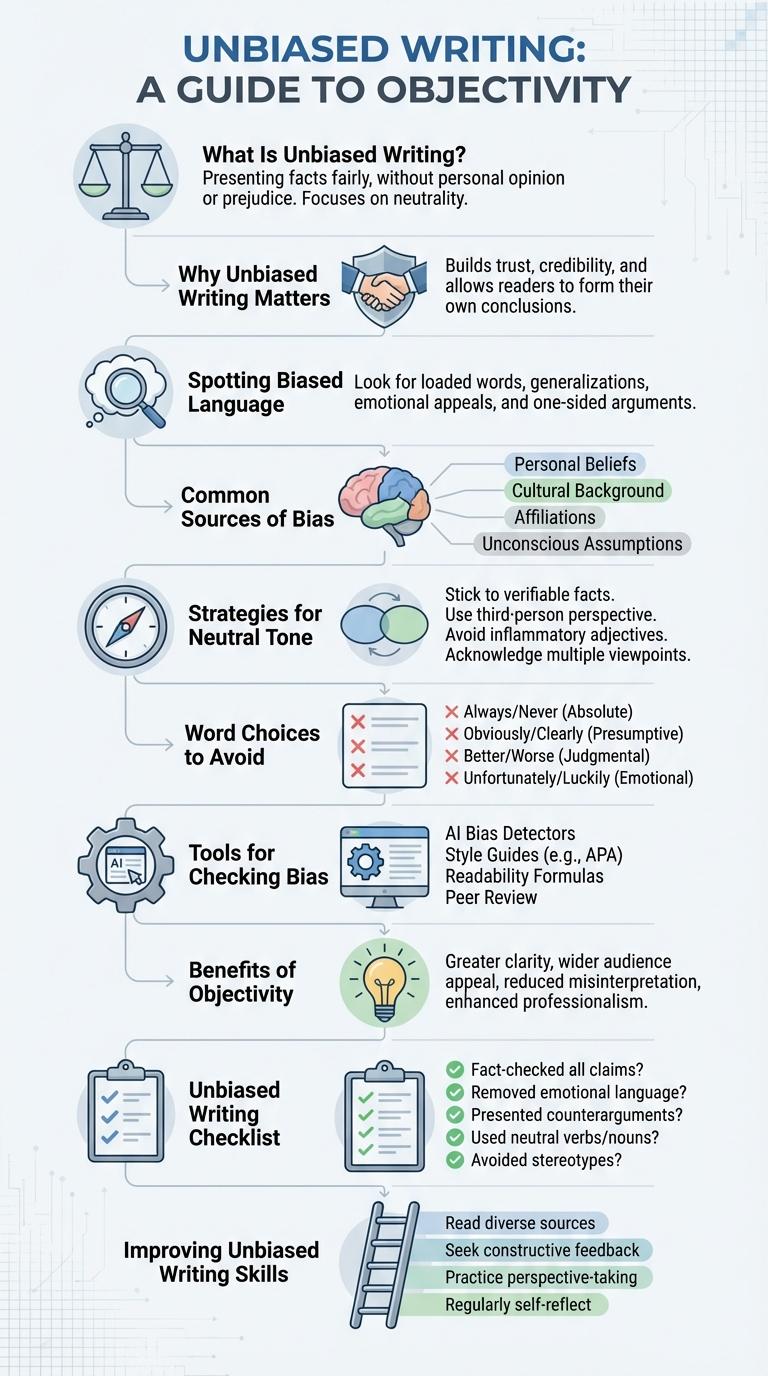
Unbiased writing ensures clear, fair communication by avoiding stereotypes, prejudices, and subjective opinions. It relies on factual information and balanced perspectives to present ideas accurately. This approach fosters trust and credibility, making content accessible to diverse audiences.
What Is Unbiased Writing?
Unbiased writing presents information fairly, without letting personal opinions or prejudices influence the content. It relies on verified facts and balanced perspectives to ensure accuracy and credibility. This style helps readers form their own informed opinions based on objective data.
Why Unbiased Writing Matters
Unbiased writing ensures information is presented fairly and accurately, fostering trust between the writer and the reader. It eliminates personal prejudice, allowing diverse perspectives to be understood clearly.
Maintaining neutrality helps prevent misinformation and promotes informed decision-making. Clear, objective content supports respectful communication and inclusivity across all audiences.
Spotting Biased Language
Spotting biased language is essential for maintaining objectivity in writing. Biased language can subtly influence the reader's perception and undermine the credibility of the content.
Unbiased writing uses neutral terms that avoid judgment or stereotyping. Look for words that imply unfair assumptions or generalizations about groups or individuals. Replacing loaded words with accurate, respectful language fosters trust and clarity in communication.
Common Sources of Bias
Unbiased writing is essential for clear, objective communication. Recognizing common sources of bias helps writers maintain neutrality and credibility.
- Personal Beliefs - Writers may unintentionally insert their own opinions or values into the text.
- Cultural Perspectives - Cultural background can influence language choices and assumptions about the audience.
- Selective Evidence - Emphasizing certain facts while ignoring others leads to skewed representation of information.
- Emotional Language - Using charged or loaded words can sway reader perception subtly.
- Stereotyping - Overgeneralizations about groups or ideas reduce the complexity of subjects discussed.
Identifying and mitigating these biases strengthens the integrity of written content.
Strategies for Neutral Tone
Maintaining a neutral tone is essential for unbiased writing, ensuring information is presented fairly without personal judgment. Strategies include using objective language and avoiding emotionally charged words.
Focus on presenting facts supported by evidence, and balance viewpoints by acknowledging multiple perspectives equally. Consistent use of third-person narration helps minimize subjective influence and reinforces impartiality.
Word Choices to Avoid
| Word Choices to Avoid | Reason to Avoid |
|---|---|
| Always / Never | Overgeneralizes and limits perspective |
| Crazy / Insane | Stigmatizes mental health and lacks professionalism |
| He / She (when gender irrelevant) | Assumes gender, excludes non-binary individuals |
| Victim / Culprit without evidence | Imposes bias or judgment prematurely |
| Cheap / Expensive (without context) | Conveys subjective value judgments |
Tools for Checking Bias
Unbiased writing ensures information is presented fairly without personal or cultural prejudice. Various tools assist writers in detecting and eliminating bias to maintain neutrality.
- Gender Decoder - Identifies gender-coded language to promote inclusive writing.
- BiasFinder - Scans text for biased phrases and suggests neutral alternatives.
- Hemingway Editor - Highlights complex sentences that may obscure impartiality.
Benefits of Objectivity
Unbiased writing enhances credibility by presenting information fairly and accurately, fostering trust with readers. Objectivity eliminates personal bias, enabling clearer communication and more persuasive arguments based on facts. Emphasizing objectivity improves decision-making by providing balanced perspectives and reducing misunderstandings.
Unbiased Writing Checklist
Unbiased writing ensures content is fair, objective, and free from personal prejudice. Using a checklist helps maintain clarity and neutrality throughout the text.
- Use neutral language - Avoid emotionally charged or subjective words to maintain objectivity.
- Verify facts - Confirm all information with reliable sources to prevent misinformation.
- Avoid stereotypes - Refrain from generalizations based on race, gender, or background.
- Present multiple perspectives - Include diverse viewpoints to provide balanced coverage.
- Check tone and style - Ensure the tone is professional and respectful without bias.