
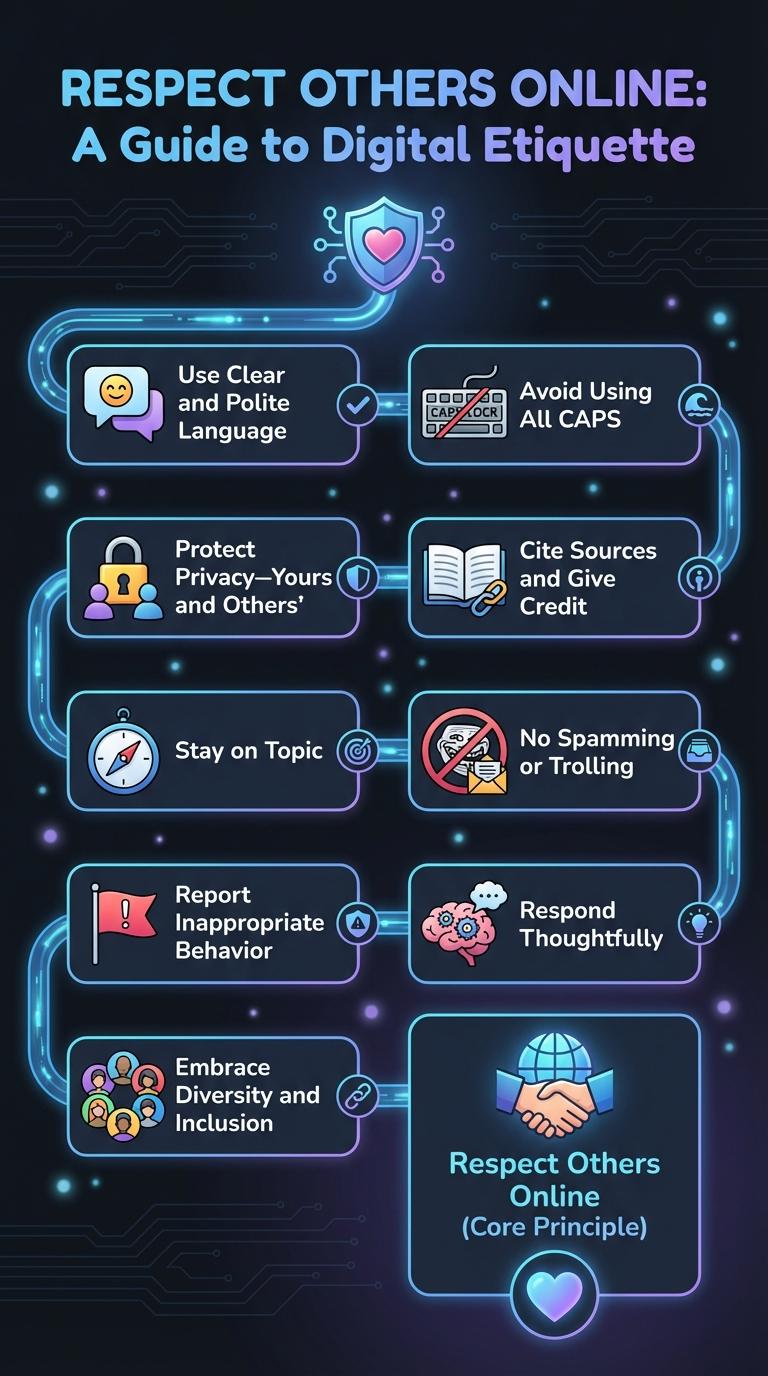
Mastering the 10 rules of netiquette enhances online communication by promoting respect, clarity, and kindness across digital platforms. Understanding these guidelines helps prevent misunderstandings and fosters positive interactions in emails, social media, and forums. Clear netiquette supports a healthier, more engaging online community for everyone.
Respect Others Online
Respecting others online is crucial for positive digital interactions. Always use polite language and avoid offensive comments to foster a friendly environment. Remember that behind every screen is a real person deserving kindness.
Listen actively and acknowledge different perspectives with openness and empathy. Refrain from personal attacks or cyberbullying to maintain respectful communication. Practicing these behaviors strengthens online communities and builds trust among users.
Respect privacy by not sharing personal information without consent. Give credit to original content creators to honor intellectual property rights. Following these rules ensures a safer and more respectful internet experience for everyone.
Use Clear and Polite Language
Use clear and polite language to ensure your message is easily understood and respectful. Avoid using slang, jargon, or aggressive tones that may confuse or offend the reader. Politeness fosters positive online interactions and builds a respectful digital community.
Avoid Using All CAPS
Using all capital letters in online communication is often perceived as shouting and can come across as aggressive or rude. It reduces the readability of the message and can alienate your audience.
To maintain a positive tone, avoid typing entire sentences or paragraphs in all caps. Use standard capitalization rules to ensure clarity and professionalism. Respect others by conveying your message thoughtfully without resorting to aggressive typing styles.
Cite Sources and Give Credit
Citing sources and giving credit online fosters respect and trust among digital communities. Proper attribution prevents plagiarism and supports intellectual property rights.
- Always attribute original authors - Mention the creator's name and link to the original content when sharing information.
- Use quotation marks for direct quotes - Clearly indicate when text is copied word-for-word with quotation marks and a citation.
- Provide context for referenced material - Explain how the source relates to your content to enhance clarity and credibility.
Protect Privacy-Yours and Others'
Protecting privacy online is a crucial aspect of proper netiquette. Never share personal information about yourself or others without explicit consent.
Respect boundaries by avoiding unsolicited sharing of photos, messages, or private details. Secure your accounts with strong passwords to safeguard your information.
Stay on Topic
| Rule | Description |
|---|---|
| Stay on Topic | Maintain focus on the subject of the conversation or forum thread to ensure clear and relevant communication. Avoid tangents and unrelated content. |
| Clarity | Write messages that are clear and easy to understand to prevent miscommunication and confusion. |
| Respect | Show politeness and consideration in all online interactions to foster a positive environment. |
| Use Proper Language | Employ correct spelling and grammar to enhance readability and professionalism. |
| Avoid SHOUTING | Refrain from using all caps, which can be interpreted as yelling or aggressive behavior. |
No Spamming or Trolling
What does it mean to avoid spamming in online communication? Spamming involves sending irrelevant or repetitive messages that disrupt conversations and annoy participants. Respect others by sharing meaningful and concise content.
Why is trolling harmful to online communities? Trolling aims to provoke or insult others, causing conflicts and a negative environment. Maintaining respect and positivity keeps discussions productive and enjoyable.
How can you recognize spamming behavior? Frequent unsolicited messages or promotional content that doesn't relate to the topic are common signs of spamming. Avoid such practices to foster a trustworthy communication space.
What are effective strategies to avoid being a troll? Think before posting, respect differing opinions, and refrain from inflammatory comments. Constructive interactions build stronger and more welcoming communities.
How does respecting netiquette improve online experiences? Following standards like no spamming or trolling promotes respectful, meaningful conversations. This creates a safer and more engaging digital environment for everyone.
Respond Thoughtfully
Respond Thoughtfully is a crucial rule of netiquette that promotes respectful and meaningful online communication. Taking time to consider your replies helps maintain positive digital interactions and prevents misunderstandings.
- Pause Before Replying - Reflect on the message to avoid impulsive or emotional responses that can escalate conflicts.
- Address Points Clearly - Respond directly to the main ideas to show you understand and value the conversation.
- Use Respectful Language - Choose words that convey politeness and prevent offending others, fostering a friendly online environment.
Thoughtful responses contribute to constructive discussions and enhance mutual respect across digital platforms.
Report Inappropriate Behavior
Reporting inappropriate behavior is essential to maintaining a respectful online environment. Addressing harmful content helps protect users and encourages positive interactions.
Use platform-specific tools to report offensive messages or comments accurately. Providing clear details ensures swift and effective action by moderators.