
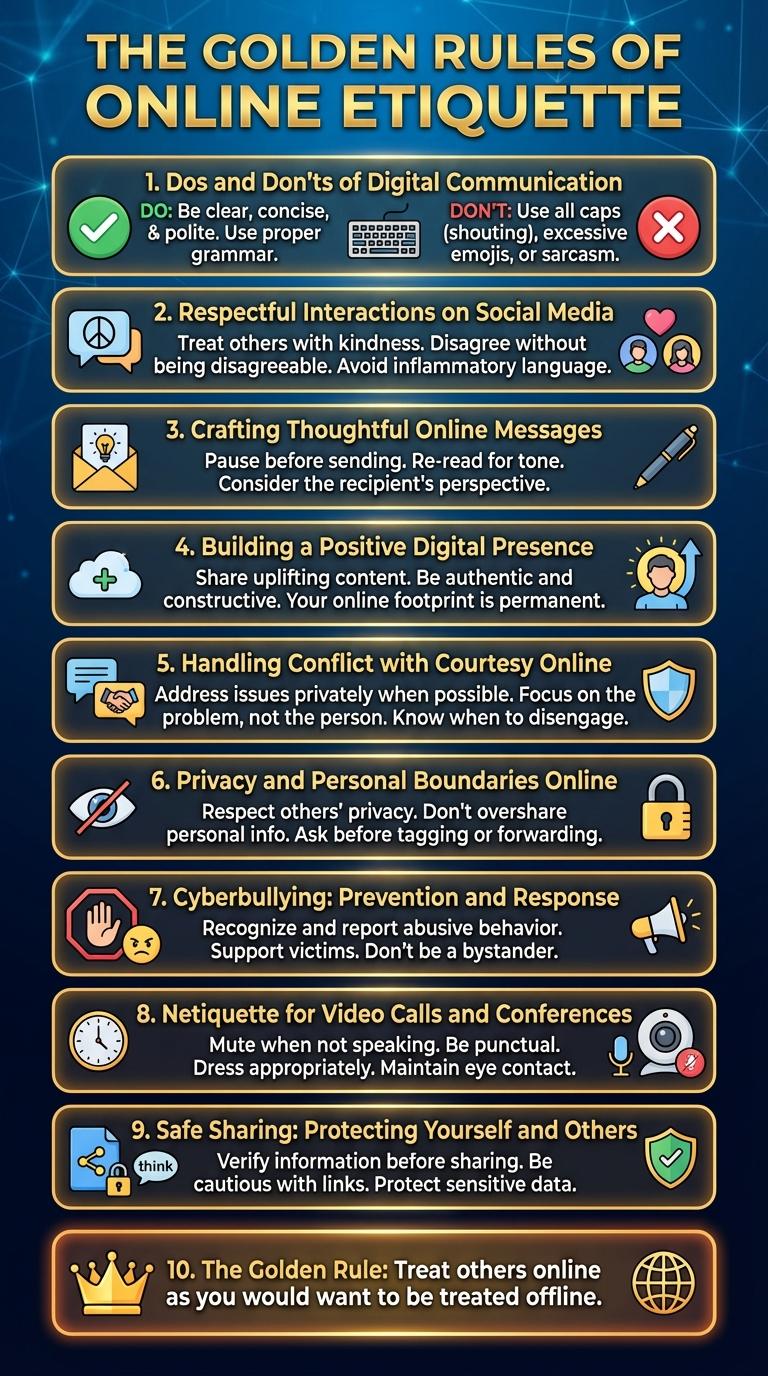
Mastering online etiquette is essential for respectful and effective digital communication. Understanding how to behave appropriately in virtual interactions helps prevent misunderstandings and fosters positive relationships. This infographic highlights key rules and best practices for maintaining professionalism and kindness on the internet.
The Golden Rules of Online Etiquette
| The Golden Rules of Online Etiquette | Description |
|---|---|
| Be Respectful | Maintain politeness and avoid offensive language in all online communications. |
| Think Before You Post | Consider the impact and permanence of your online messages before sharing. |
| Protect Privacy | Respect personal information and avoid sharing sensitive details without consent. |
| Avoid ALL CAPS | Using all capital letters is perceived as shouting and can be interpreted as rude. |
| Respond Promptly | Reply to messages and emails in a timely manner to show consideration and professionalism. |
Dos and Don'ts of Digital Communication
Online etiquette is essential for clear and respectful digital communication. Knowing the dos and don'ts helps maintain positive interactions across platforms.
Do use polite language and respond promptly to messages. Avoid typing in all caps and refrain from sending excessive emojis. Respect others' privacy by not sharing personal information without consent.
Respectful Interactions on Social Media
Respectful interactions on social media foster positive communication and build trust among users. Practicing good online etiquette helps create a welcoming digital environment for everyone.
- Think Before You Post - Consider the impact of your words on others before sharing content.
- Use Polite Language - Maintain a courteous tone to encourage constructive conversations.
- Avoid Personal Attacks - Focus on ideas, not individuals, to prevent conflicts and misunderstandings.
Crafting Thoughtful Online Messages
How can you craft thoughtful online messages to improve communication?
Clear and considerate messages foster positive interactions and reduce misunderstandings. Taking time to review your words ensures your intent is respectful and easily understood.
Building a Positive Digital Presence
Building a positive digital presence begins with respectful and clear communication in all online interactions. Consistently sharing accurate information and acknowledging diverse perspectives foster trust and credibility. Maintaining professionalism across social media, emails, and forums strengthens your reputation and encourages constructive engagement.
Handling Conflict with Courtesy Online
Handling conflict with courtesy online is essential for maintaining respectful digital interactions. Proper online etiquette helps prevent misunderstandings and promotes constructive communication.
- Stay Calm - Take a moment before responding to avoid reacting impulsively and escalating the conflict.
- Use Respectful Language - Choose words carefully to convey your point without offending or attacking others.
- Focus on Issues, Not Individuals - Address disagreements by discussing the topic instead of targeting people personally.
Courteous conflict resolution fosters positive online environments and encourages meaningful dialogue.
Privacy and Personal Boundaries Online
Maintaining privacy online is essential to protect personal information from unauthorized access. Sharing sensitive data only with trusted sources helps safeguard your digital identity.
Respecting personal boundaries means avoiding intrusive questions or unsolicited messages. Online interactions should reflect the same respect for privacy as face-to-face communication.
Cyberbullying: Prevention and Response
Cyberbullying represents a serious threat to online safety, impacting mental health and community well-being. Effective prevention and response strategies are essential to foster respectful digital interactions.
Understanding the signs of cyberbullying and promoting positive online behavior helps create safer virtual environments.
- Recognize Cyberbullying - Identify repeated abusive messages, threats, or exclusion tactics targeting individuals online.
- Report Incidents Promptly - Use platform reporting tools and notify trusted authorities to address harmful content swiftly.
- Support Victims - Provide emotional assistance and encourage seeking professional help to mitigate psychological effects.
Netiquette for Video Calls and Conferences
Online etiquette, or netiquette, is essential for professional video calls and conferences to ensure clear communication and respect among participants. Proper behavior fosters productive and positive virtual interactions.
Always mute your microphone when not speaking to minimize background noise and distractions. Maintain eye contact by looking at the camera, and dress appropriately as you would for an in-person meeting.