
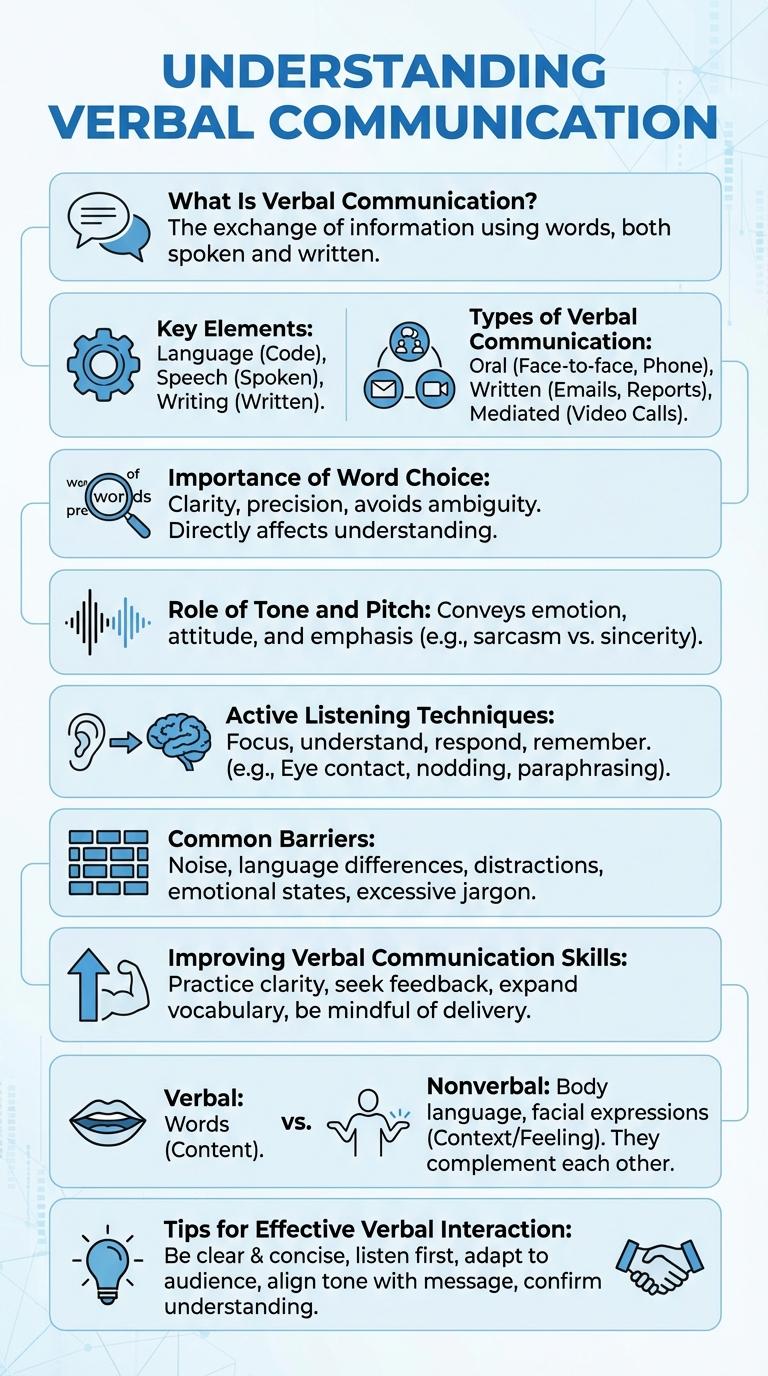
Verbal communication plays a crucial role in daily interactions, shaping how ideas are shared and understood. Clear and effective spoken language enhances relationships, resolves conflicts, and drives collaboration across diverse settings. Mastering verbal communication skills boosts confidence and ensures messages are conveyed with clarity and impact.
What Is Verbal Communication?
Verbal communication is the process of conveying messages through spoken words. It involves the use of language to express thoughts, ideas, and emotions effectively.
This form of communication plays a crucial role in everyday interactions, helping individuals share information clearly. Understanding verbal communication enhances personal and professional relationships.
Key Elements of Verbal Communication
Verbal communication hinges on clear articulation, effective listening, and appropriate tone. These key elements ensure the message is accurately conveyed and understood by the receiver. Mastering these components enhances interpersonal interactions and reduces misunderstandings.
Types of Verbal Communication
Verbal communication encompasses various types that facilitate effective information exchange. These types include interpersonal communication, public speaking, group discussions, telephonic conversations, and presentations. Understanding each type helps improve clarity, engagement, and overall communication skills.
Importance of Word Choice
Effective verbal communication hinges on precise word choice to convey clear messages. Selecting the right words enhances understanding and strengthens interpersonal connections.
- Clarity - Choosing specific words reduces ambiguity and ensures the listener accurately interprets the message.
- Tone Control - Word choice shapes the emotional tone, influencing how the message is received and perceived.
- Audience Engagement - Tailoring vocabulary to the audience's background maintains interest and fosters better communication.
Role of Tone and Pitch
Verbal communication relies heavily on tone and pitch to convey emotions and intentions. These vocal elements shape how messages are perceived and understood by listeners.
- Tone reflects emotion - The speaker's tone reveals feelings such as anger, happiness, or uncertainty behind the words.
- Pitch controls emphasis - Variations in pitch highlight important points and guide listener attention.
- Tone and pitch influence clarity - Proper modulation improves message clarity and reduces misunderstandings.
Mastering tone and pitch enhances effective verbal communication across all contexts.
Active Listening Techniques
What are the key active listening techniques in verbal communication?
Active listening enhances understanding and builds trust in conversations. Techniques include maintaining eye contact, nodding, and providing verbal feedback.
How does paraphrasing improve communication?
Paraphrasing confirms the listener's comprehension of the speaker's message. It reduces misunderstandings and demonstrates attentiveness.
Why is asking open-ended questions important in active listening?
Open-ended questions encourage detailed responses and deeper discussion. They help clarify thoughts and feelings without leading the speaker.
What role does nonverbal communication play in active listening?
Nonverbal cues like facial expressions and body language support verbal interactions. They signal engagement and empathy during conversations.
How does summarizing aid effective communication?
Summarizing consolidates key points and reinforces the message. It ensures all parties share a clear understanding before moving forward.
Common Barriers to Verbal Communication
Verbal communication involves the clear exchange of ideas through spoken words. Effective verbal communication is essential for understanding and collaboration in various settings.
Common barriers to verbal communication include language differences, where unclear or unfamiliar words cause misunderstandings. Other barriers include distractions, emotional interference, and physical impairments affecting speech or hearing.
Improving Verbal Communication Skills
Verbal communication skills are essential for effective interaction in both personal and professional settings. Improving these skills enhances clarity, reduces misunderstandings, and builds stronger relationships.
Active listening plays a crucial role in verbal communication by ensuring understanding and engagement. Practicing clear articulation and appropriate tone helps convey messages effectively. Regular feedback and constructive criticism foster continuous improvement in verbal communication abilities.
Verbal vs. Nonverbal Communication
| Aspect | Verbal Communication | Nonverbal Communication |
|---|---|---|
| Definition | Use of spoken or written words to convey messages. | Transmission of messages through body language, gestures, facial expressions. |
| Medium | Speech, writing, sign language. | Body posture, eye contact, tone, facial expressions. |
| Clarity | Generally explicit and clear. | Often implicit, can vary by culture. |
| Purpose | Conveys specific information or ideas. | Expresses emotions, attitudes, and reinforces verbal messages. |
| Examples | Conversations, speeches, emails. | Smiling, nodding, body gestures, eye movements. |