
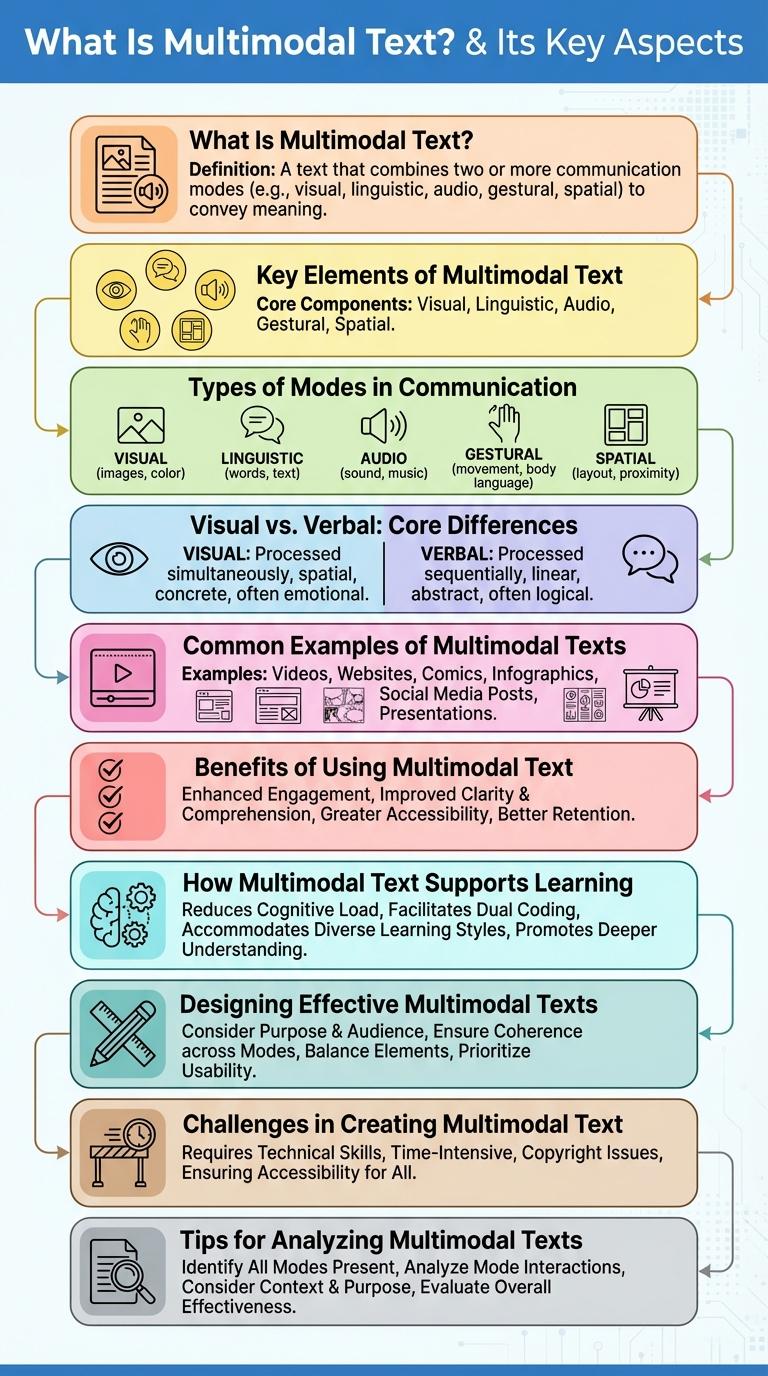
Multimodal text integrates various communication modes such as images, text, audio, and video to enhance understanding and engagement. Infographics represent a powerful example by combining visual elements with concise information for quick comprehension. This approach leverages different sensory channels to convey complex data effectively and memorably.
What Is Multimodal Text?
Multimodal text combines different modes of communication such as written words, images, sounds, and gestures to convey meaning. It enhances understanding by engaging multiple senses simultaneously.
Multimodal texts include formats like videos, advertisements, websites, and graphic novels. Each mode contributes unique information that complements the other elements. This integration creates richer and more dynamic communication experiences.
Key Elements of Multimodal Text
Multimodal text combines various modes of communication to create a richer, more engaging experience. These elements work together to convey meaning beyond traditional text alone.
Understanding key elements helps analyze and create effective multimodal texts in diverse contexts.
- Visuals - Images, colors, and layout contribute to the meaning and emotional impact of the text.
- Typography - Font style, size, and arrangement influence readability and tone.
- Audio - Sounds and spoken words enhance context and engagement.
- Gestures - Body language and facial expressions provide nonverbal cues that support communication.
- Spatial Design - The organization and arrangement of elements guide the reader's attention and interpretation.
Types of Modes in Communication
Multimodal texts combine various modes of communication such as visual, auditory, and linguistic elements to convey meaning effectively. Common types of modes include images, speech, gestures, writing, and music, each adding a unique layer of understanding. These modes work together to enhance the audience's engagement and interpretation of the message.
| Mode | Description |
|---|---|
| Visual | Images, graphics, colors, and spatial arrangements |
| Auditory | Sounds, music, tone, and speech |
| Linguistic | Written or spoken language, including text and dialogue |
| Gestural | Body language, facial expressions, and movements |
| Spatial | Arrangement and organization of elements in space |
Visual vs. Verbal: Core Differences
Multimodal text integrates multiple modes of communication, primarily visual and verbal elements, to enhance meaning and engagement. Understanding the core differences between visual and verbal modes helps in analyzing and creating effective multimodal texts.
- Nature of Communication - Visual mode communicates through images, colors, shapes, and symbols, while verbal mode relies on written or spoken language.
- Processing in the Brain - Visual information is processed holistically and quickly, whereas verbal information is processed sequentially and analytically.
- Function in Texts - Visual elements provide immediate impact and emotional resonance, whereas verbal elements offer detailed explanations and precise information.
Common Examples of Multimodal Texts
| Type of Multimodal Text | Common Examples |
|---|---|
| Print Media | Magazines, Advertisements, Posters |
| Digital Media | Websites, Blogs, Social Media Posts |
| Audio-Visual | Videos, Films, Podcasts with Images |
| Interactive Media | Video Games, Educational Apps, Interactive eBooks |
| Presentations | PowerPoint Slides, Infographics, Slide Decks |
Benefits of Using Multimodal Text
Multimodal texts integrate various modes of communication, such as images, sound, and written language, to enhance understanding and engagement. They cater to diverse learning styles, making information more accessible and memorable.
Using multimodal texts promotes critical thinking by encouraging viewers to interpret multiple layers of meaning. These texts also increase motivation and creativity, supporting deeper learning experiences across different subjects.
How Multimodal Text Supports Learning
Multimodal text combines visual, auditory, and linguistic elements to enhance comprehension and engagement. It supports diverse learning styles by integrating images, sound, and written words, making information accessible and memorable. This approach fosters critical thinking and deeper understanding through the interaction of multiple modes of communication.
Designing Effective Multimodal Texts
What are the key elements in designing effective multimodal texts? Effective multimodal texts seamlessly integrate visual, auditory, and textual components to enhance comprehension. Balancing these elements ensures that information is accessible and engaging for diverse audiences.
How can visuals improve the impact of multimodal texts? High-quality images and graphics provide clear context, reinforce messages, and capture attention. Strategic use of color, layout, and typography guides the reader through the content effortlessly.
Why is the alignment of modes important in multimodal text design? Cohesive alignment between text, sound, and visuals creates a unified experience that supports the overall message. Disjointed or conflicting modes can confuse the audience and diminish effectiveness.
What role does audience consideration play in multimodal design? Understanding the target audience's preferences, literacy levels, and cultural background informs mode selection and presentation style. Tailored multimodal texts resonate more deeply and facilitate better engagement.
How do interactive elements enhance multimodal texts? Interactive features like clickable links, embedded videos, and animations invite active participation and deeper exploration. These components promote retention and allow users to control their learning pace.
Challenges in Creating Multimodal Text
Creating multimodal texts involves integrating various modes such as images, text, audio, and video to convey a unified message. This integration requires careful coordination to ensure all elements complement each other effectively.
One major challenge is maintaining coherence across different modes, as mismatched content can confuse the audience. Additionally, technical skills and software proficiency are essential to seamlessly blend these diverse elements into a cohesive presentation.