
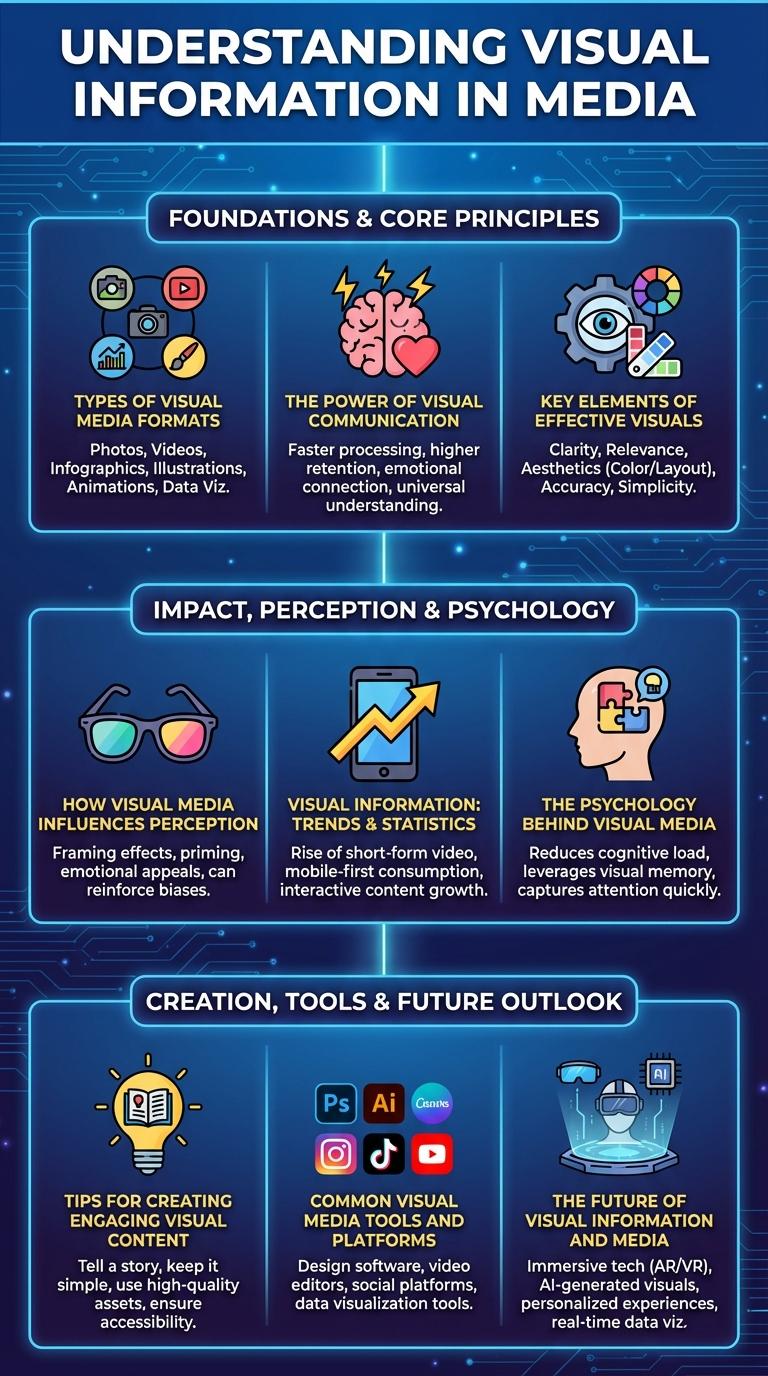
Visual information and media transform complex data into easily digestible graphics that enhance understanding and retention. Infographics combine images, charts, and minimal text to communicate messages quickly and effectively. This engaging format caters to diverse audiences by simplifying concepts and highlighting key points.
Understanding Visual Information in Media
Visual information in media communicates ideas through images, graphics, and videos, enhancing audience understanding. It leverages design elements like color, typography, and layout to convey messages effectively. Mastery of visual information enables clearer storytelling and deeper engagement with content.
Types of Visual Media Formats
Visual information is conveyed through various media formats that enhance communication and understanding. These formats cater to different contexts and audiences by utilizing distinct visual elements.
- Images - Static pictures that capture moments or concepts for quick recognition.
- Videos - Moving visuals combined with audio to present dynamic and engaging content.
- Infographics - Visual representations of data or knowledge designed to simplify complex information.
- Animations - Sequential images that create the illusion of motion, used for explanations or storytelling.
- Presentations - Structured slides combining text, visuals, and multimedia to communicate messages effectively.
Understanding these visual media formats helps optimize the delivery and impact of information.
The Power of Visual Communication
Visual communication transforms complex data into easily digestible content, enhancing understanding and retention. Media leveraging images, videos, and graphics captures attention more effectively than text alone.
- Enhances Memory - Visuals improve information recall by up to 65%, making messages more memorable.
- Increases Engagement - Content with relevant images receives 94% more views than text-only posts.
- Facilitates Quick Comprehension - Infographics condense data into clear visuals, enabling faster decision-making.
Key Elements of Effective Visuals
Effective visuals convey complex information quickly and clearly, enhancing audience understanding and retention. Key elements include clarity, relevance, and aesthetic appeal.
Clarity ensures the message is easily understood without confusion. Relevance aligns visuals with the content and audience needs, making the information meaningful. Aesthetic appeal draws attention and encourages engagement, balancing color, typography, and layout.
How Visual Media Influences Perception
| Visual Media Aspect | Influence on Perception |
|---|---|
| Color Usage | Colors trigger emotional responses and shape mood, affecting interpretation of content. |
| Image Framing | Focus and composition guide viewer attention, highlighting specific elements and altering meaning. |
| Symbolism and Icons | Recognizable symbols create immediate associations and convey complex ideas quickly. |
| Typography | Font style and size impact readability and tone, influencing message reception. |
| Visual Hierarchy | Arrangement of visual elements establishes importance, directing how information is processed. |
Visual Information: Trends and Statistics
Visual information continues to dominate digital media consumption worldwide. Understanding key trends and statistics sheds light on its growing influence.
- 75% of people remember visual content - Visuals improve information retention compared to text alone.
- Video accounts for 82% of all internet traffic - Streaming and video platforms drive this massive data flow.
- Infographics increase web traffic by 12% - Engaging visuals drive higher user interaction on websites.
The Psychology Behind Visual Media
Visual media leverages the brain's natural preference for images to enhance information retention and emotional impact. Colors, shapes, and layouts influence perception and guide attention, making content more engaging and memorable. Understanding these psychological principles helps create effective infographics that communicate complex ideas quickly and clearly.
Tips for Creating Engaging Visual Content
Visual information and media play a crucial role in capturing audience attention and conveying messages effectively. Engaging visual content enhances understanding and retention of information.
Use clear, high-quality images and maintain consistent color schemes to create visually appealing content. Incorporate concise text and icons to complement visuals without overwhelming the viewer.
Common Visual Media Tools and Platforms
What are the most common visual media tools and platforms used today? Visual media tools and platforms enable effective communication through images, videos, and graphics. They play a vital role in marketing, education, and entertainment sectors worldwide.
| Tool/Platform | Description |
|---|---|
| Adobe Photoshop | Industry-standard software for photo editing and graphic design. |
| Canva | User-friendly online design tool for creating graphics and presentations. |
| YouTube | Popular video-sharing platform for content creators and marketers. |
| Social media platform centered on visual content sharing and engagement. | |
| Figma | Collaborative interface design tool used for prototyping and UX design. |