
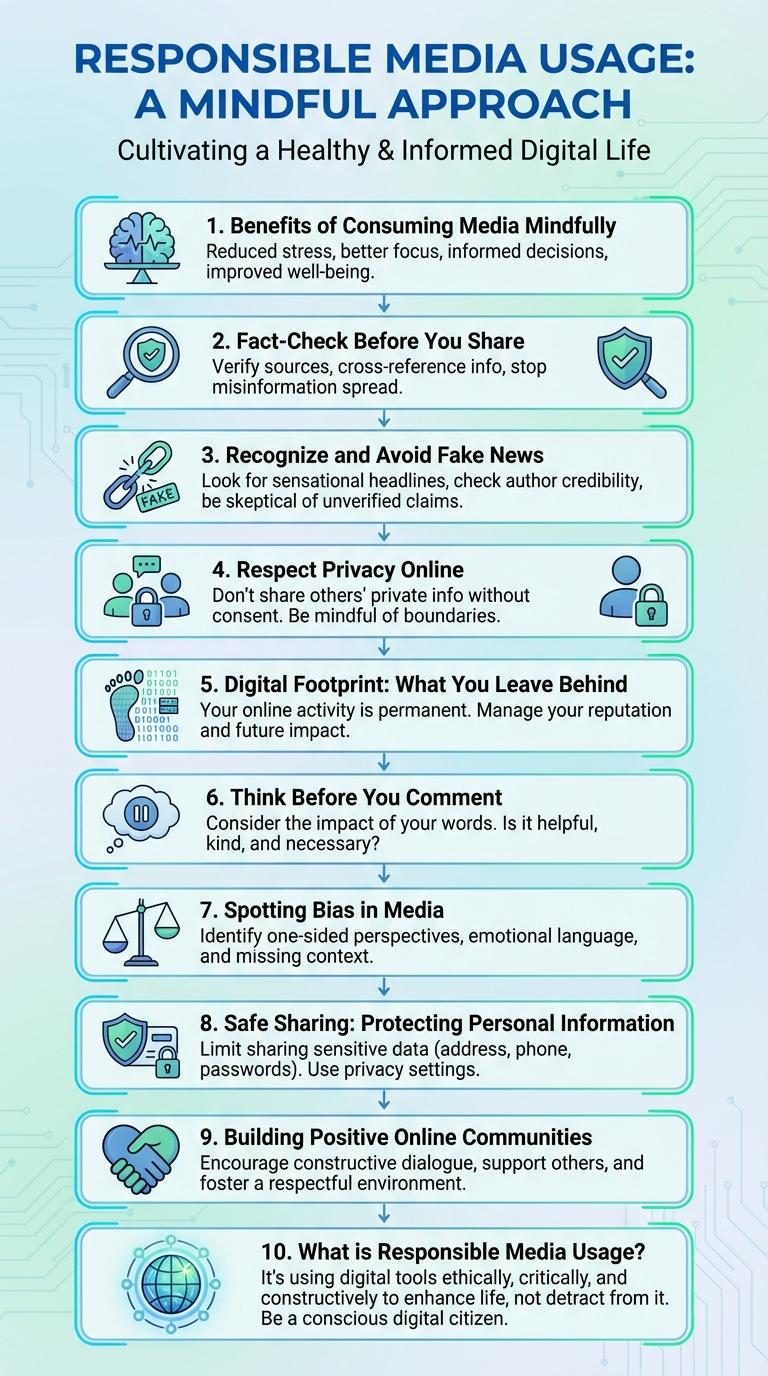
Promoting responsible media use is essential in today's digital age, where information spreads rapidly across multiple platforms. Understanding how to critically evaluate content and practice ethical sharing habits helps reduce misinformation and protect personal privacy. Infographics provide a clear and engaging way to highlight key principles for mindful media consumption and communication.
What is Responsible Media Usage?
Responsible media usage involves critically analyzing content before sharing or engaging with it to prevent the spread of misinformation. It requires respecting privacy, avoiding harmful or offensive material, and promoting positive, respectful communication online. Understanding the impact of digital footprints helps users make informed decisions and contribute to a healthier media environment.
Benefits of Consuming Media Mindfully
Consuming media mindfully enhances critical thinking and helps individuals discern credible information from misinformation. It promotes mental well-being by reducing exposure to harmful or overwhelming content. Mindful media use fosters meaningful engagement and supports informed decision-making in daily life.
Fact-Check Before You Share
Fact-checking before sharing information on media platforms ensures that only accurate and reliable content is spread. This practice helps prevent the circulation of misinformation and protects public trust.
Verify sources by cross-referencing multiple reputable outlets and using fact-checking websites to confirm claims. Sharing verified information promotes responsible media use and supports informed decision-making.
Recognize and Avoid Fake News
| Key Point | Details |
|---|---|
| Verify Sources | Check credibility of news outlets and authors before trusting information. |
| Cross-Check Facts | Compare news with multiple reputable sources to confirm accuracy. |
| Identify Sensationalism | Be cautious of exaggerated headlines or emotionally charged content designed to mislead. |
| Check Publication Date | Ensure the news is current and relevant by verifying the date of publication. |
| Use Fact-Checking Tools | Utilize trusted fact-checkers like Snopes, FactCheck.org, or PolitiFact for verification. |
Respect Privacy Online
Respecting privacy online is essential for maintaining trust and safety in digital spaces. Being mindful about the information shared protects both yourself and others from potential harm.
- Think Before You Share - Avoid posting personal details that could compromise your or others' privacy.
- Use Privacy Settings - Adjust social media and app settings to control who can see your information.
- Respect Others' Boundaries - Do not share photos, messages, or personal information without permission.
Practicing privacy respect online fosters a safer and more respectful digital community.
Digital Footprint: What You Leave Behind
Your digital footprint is the trail of data you leave through your online activities. Understanding this footprint helps you manage your privacy and reputation effectively.
Being mindful of what you share online can protect you from unwanted exposure and long-term consequences.
- Permanent Records - Online posts, comments, and interactions often remain accessible indefinitely, shaping your digital history.
- Privacy Settings - Adjusting privacy controls limits who can see your content and reduces data collection by third parties.
- Data Awareness - Recognize that websites and apps collect information that contributes to your digital footprint and can affect your digital identity.
Think Before You Comment
Responsible media use begins with thoughtful engagement. Think before you comment to create a positive online environment.
Pause and consider the impact of your words before posting. Avoid spreading misinformation or harmful content. Your comments shape digital communities and influence others.
Spotting Bias in Media
Spotting bias in media is essential for consuming information critically. Bias can shape how facts are presented and influence public perception.
Look for loaded language, selective facts, and one-sided stories to identify bias. Trust diverse sources to gain a balanced understanding of any topic.
Safe Sharing: Protecting Personal Information
Protecting personal information is essential for safe sharing on media platforms. Being mindful of what you share helps prevent identity theft and privacy breaches.
- Limit Personal Details - Avoid sharing sensitive information like home address, phone number, or financial data online.
- Use Privacy Settings - Adjust social media settings to control who can see your posts and personal information.
- Think Before Posting - Reflect on the potential impact and reach of your content before sharing it publicly.