
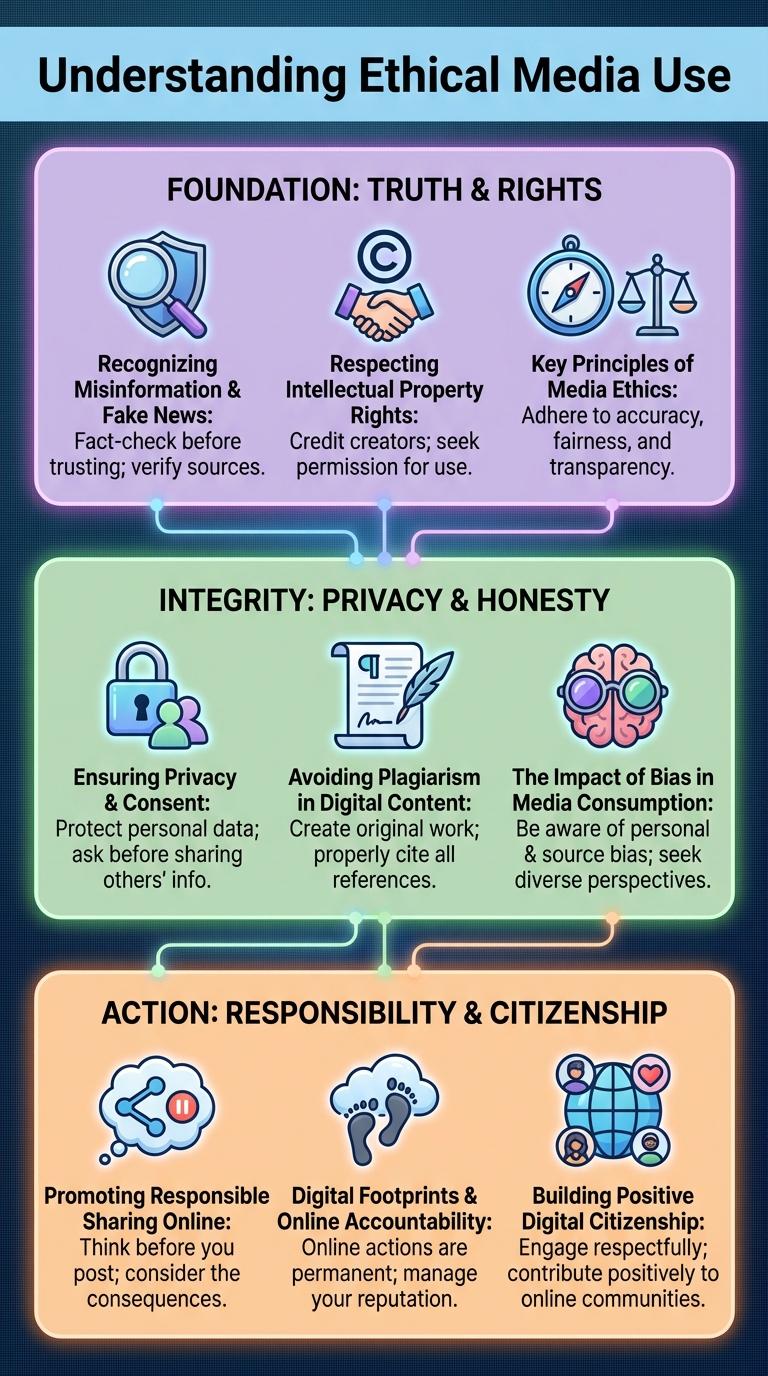
Ethical media use promotes responsible consumption and sharing of information, ensuring accuracy, respect, and privacy in digital interactions. It encourages critical evaluation of sources to prevent misinformation and supports respectful communication across platforms. Practicing ethical media habits fosters a trustworthy and respectful online environment.
Understanding Ethical Media Use
Ethical media use involves consuming and sharing information responsibly, respecting the rights and dignity of all individuals involved. Understanding ethical media use requires awareness of content accuracy, privacy rights, and the impact of misinformation.
Recognizing bias and verifying sources guard against spreading false or harmful information. Ethical media practices promote truthful communication and foster a respectful online environment.
Key Principles of Media Ethics
Ethical media use is grounded in transparency, accuracy, and respect for privacy. These principles ensure that information is shared responsibly and trust is maintained between media creators and audiences.
Key principles of media ethics include honesty, fairness, accountability, and avoiding harm. Adhering to these guidelines promotes integrity and fosters a trustworthy media environment.
Recognizing Misinformation and Fake News
Ethical media use requires the ability to identify and critically evaluate misinformation and fake news. Recognizing false information helps maintain trust and promotes accurate knowledge sharing online.
- Check Sources - Verify the credibility of the website or author before accepting information as true.
- Analyze Headlines - Be cautious of sensational or misleading headlines designed to provoke emotional reactions.
- Cross-Reference Facts - Compare information across multiple reliable outlets to confirm accuracy.
Practicing these steps cultivates responsible media consumption and supports a well-informed community.
Respecting Intellectual Property Rights
What does respecting intellectual property rights mean in media use? It involves acknowledging and crediting original creators' work to avoid plagiarism and copyright infringement. Respecting these rights supports creativity and legal media consumption.
Ensuring Privacy and Consent
Ethical media use requires safeguarding user privacy and obtaining clear consent before sharing personal information. Respecting these principles builds trust and promotes responsible digital interactions.
- Data Protection - Secure methods must be applied to protect personal data from unauthorized access.
- Transparent Consent - Users should be fully informed and voluntarily agree before their data is collected or used.
- Respect User Rights - Allow individuals to control their information and opt out of data sharing whenever they choose.
Avoiding Plagiarism in Digital Content
Ethical media use requires avoiding plagiarism by properly crediting original sources when creating digital content. Utilizing quotation marks, citations, and references ensures respect for intellectual property rights. Employing plagiarism detection tools helps maintain content originality and trustworthiness.
Promoting Responsible Sharing Online
Using media ethically is essential for maintaining trust and credibility online. Promoting responsible sharing helps prevent misinformation and protects digital communities.
- Verify Before Sharing - Check the accuracy of information from reliable sources before posting.
- Respect Privacy - Avoid sharing personal details or sensitive content without consent.
- Encourage Positive Engagement - Share content that fosters respectful and constructive discussions.
The Impact of Bias in Media Consumption
| Aspect | Impact |
|---|---|
| Selective Exposure | Reinforces existing beliefs, limits perspective diversity, increases polarization. |
| Source Credibility | Trust in biased sources reduces critical evaluation and spreads misinformation. |
| Framing Effect | Shapes audience perception by emphasizing specific angles or omissions in media. |
| Algorithmic Filtering | Personalizes content, creating echo chambers and limiting exposure to differing views. |
| Emotional Manipulation | Bias in stories can exploit emotions to influence opinions and behavior unjustly. |
Digital Footprints and Online Accountability
Understanding digital footprints is crucial for ethical media use, as every online action leaves a trace that can impact personal reputation and privacy. Responsible online behavior involves being aware of the information shared, ensuring accuracy, and respecting the rights of others. Maintaining online accountability promotes a safer digital environment and fosters trust within online communities.